
When you have coordination challenges, turn to Runsheng Transformer for help
It's all about making things easy, building partnerships, and providing a point of contact.
A 220kv power transformer is a high-voltage power transformer designed to operate on 220 kV transmission networks. It sits at the heart of the grid, stepping voltage down from the transmission level to 110 kV, 35 kV or 10 kV so that electricity can be distributed safely to regional substations, industrial parks and urban load centers. It also works in reverse, stepping up generator output for long-distance transmission.
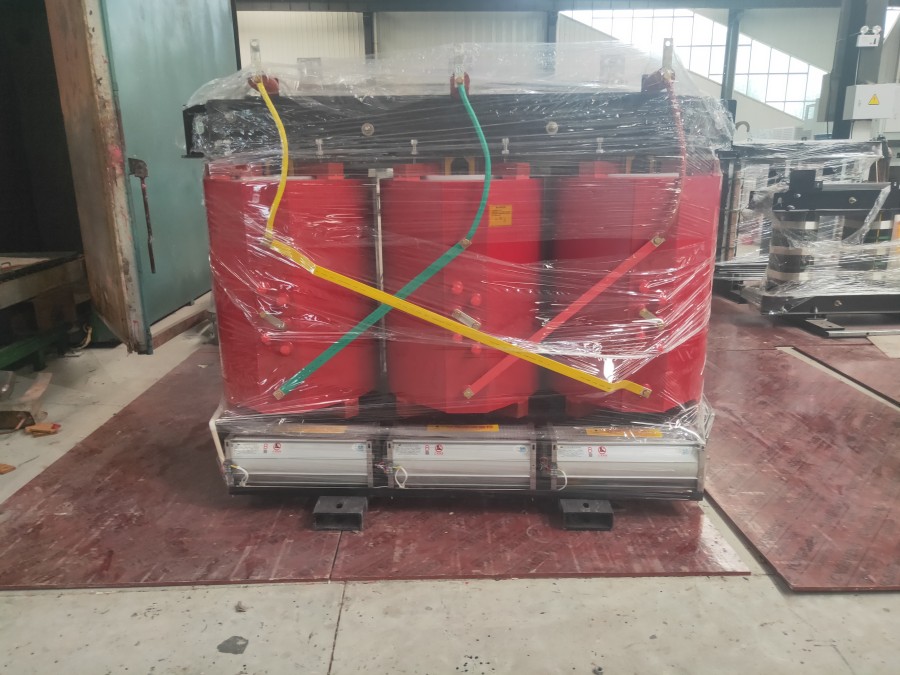
Because 220 kV is a critical voltage level in most national grids, this equipment must combine high capacity, low loss and exceptional dielectric strength. A typical unit is oil-immersed, three-phase, and equipped with an on-load tap changer (OLTC) so that voltage can be regulated while the transformer stays energized.
The working principle is the same as any transformer: alternating current in the primary winding creates a magnetic flux in the core, which induces a voltage in the secondary winding. The ratio of turns determines the voltage ratio. What makes the 220 kV class different is scale and stress management.
When you compare quotations for a 220kv power transformer, the specification sheet matters more than the headline price. Insist on these items:
Loss values deserve special attention. Over a 25–30 year service life, the capitalized cost of losses can exceed the initial purchase price, so a slightly higher-priced, low-loss design is often the cheaper choice.
These units are installed in transmission substations, large industrial complexes, mining and metallurgy sites, railway traction substations, and increasingly in renewable energy projects. Wind and solar farms with large installed capacity rely on 220 kV step-up transformers and preassembled substation equipment to feed power into the grid. Data centers and heavy manufacturing plants that need a dedicated high-voltage supply also use them at the boundary of the plant.
As a power transformer manufacturer serving both domestic and international projects, Runsheng Transformer Co., Ltd. supplies oil-immersed transformers such as the S11, S13, S20 and S22 series, dry-type SCB10, SCB13, SCB14 and SCB18 models, SH15 and SCBH15 amorphous alloy transformers, plus 35 kV and below preassembled substations and high/low-voltage switchgear. Every unit ships with manuals, inspection reports, test certificates and lifelong quality tracking.
Whichever brand you ultimately select, apply the same checklist:
Buying directly from the manufacturer removes trading-company markups, shortens the supply chain and gives you direct access to the design engineers who can adjust parameters to your load profile. It also makes spare parts, technical support and warranty service far easier to obtain. For distribution-level projects, oil-immersed transformers purchased factory-direct typically offer the best balance of price, quality and delivery time.
A 220kv power transformer is a long-life, high-value asset. Treat the purchase as an engineering decision rather than a simple price comparison: define your load and voltage requirements, specify losses and impedance precisely, verify the manufacturer's testing capability, and buy from a source that provides complete documentation and long-term support. Do that, and you avoid the most expensive mistakes in high-voltage procurement.
For transformer selection support, quotations and technical documentation, contact Runsheng Transformer Co., Ltd.:
Phone: +86 13406394988
E-mail: runsheng@7813transformer.com
WhatsApp: 008613508930968

Runsheng Transformer Co., Ltd. is a professional manufacturer of power transformers, specializing in oil-immersed transformers (S20, S11, S13), SH15 amorphous alloy transformers, S13 series 10KV 3D magnetic path wound-core transformers, D10 single-phase wound-core transformers, as well as mining transformers, rectifier transformers, surge arrestor transformers, load-tap-changing transformers, and custom-engineered special transformers.
WhatsApp & Wechat

No. 6, Intersection of Mount Huangshan Road and Changjiang Road, Liaocheng High tech Industrial Development Zone, Shandong, China


