
When you have coordination challenges, turn to Runsheng Transformer for help
It's all about making things easy, building partnerships, and providing a point of contact.
A power transformer is the static electromagnetic device that steps voltage up for transmission or down for distribution and final use. Because it has no moving parts, its quality is decided almost entirely at the design and manufacturing stage: core material, winding conductor, insulation structure, and process control. That is exactly why two units with the same nameplate rating can behave very differently after five or ten years in service, and why procurement deserves more attention than a simple price comparison.
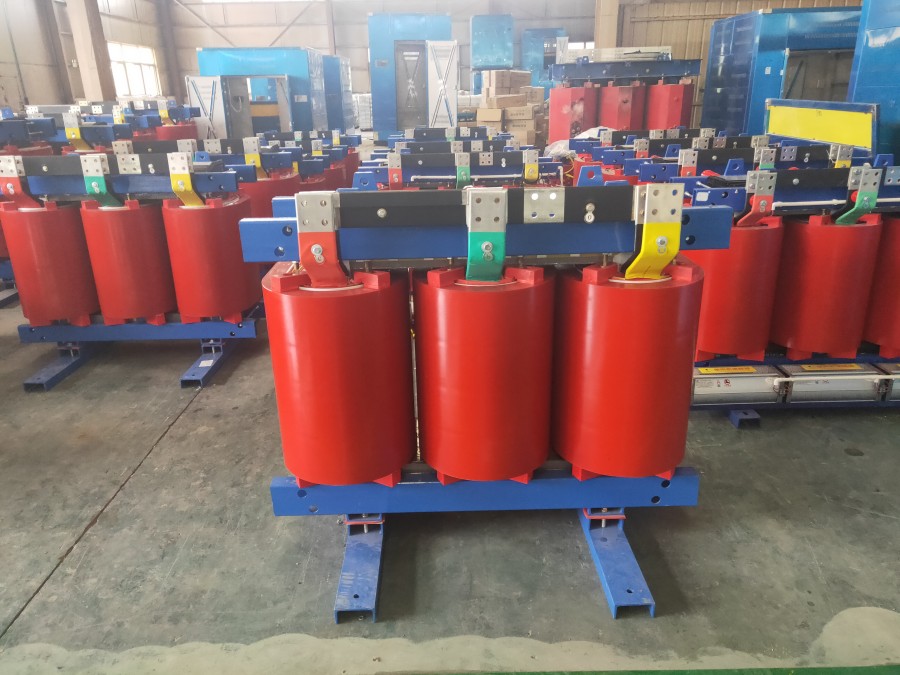
In practical terms, a power transformer does three jobs at once. It changes voltage to a level your loads and switchgear can safely handle, it isolates circuits from one another, and it carries the load current with the lowest losses the budget allows. Every specification you write — capacity, voltage ratio, loss level, cooling method, tap range — is ultimately a trade-off between initial investment and lifetime energy cost.
Price tags are easy to compare; operating cost is not. Before you request quotations, fix the following parameters, because they drive both the purchase price and the electricity bill for the next two decades.
Distribution transformers sit closest to the end user, serving industrial parks, commercial buildings, residential communities and public infrastructure. Renewable energy transformer units connect wind and solar farms to the grid, where wide load swings place extra demands on thermal design. Mining, metallurgy, chemical plants and rail systems rely on rectifier and special transformers sized for harmonic-rich and heavily fluctuating duty. Above the distribution level, compact substation and preassembled substation packages combine the transformer with high low voltage switchgear so that civil works, cabling and commissioning can be simplified on site.
When you buy from the production line rather than from a reseller, the margin taken by each intermediary disappears from the invoice. More importantly, technical questions — loss level, impedance, tap configuration, enclosure, cable entry direction — can be answered by the people who actually build the unit. A manufacturer such as Runsheng Transformer Co., Ltd. covers S22, S20, S11 and S13 oil-immersed transformers, SCB13, SCB14 and SCB18 dry-type transformers, SH15 amorphous alloy transformers, three-dimensional wound core units, custom special transformers, and 35kV and below preassembled and compact substations with high low voltage switchgear — so the specification can be matched to the application instead of being forced into a catalogue item.
Factory-direct supply also means consistent quality control across the order, factory testing before shipment, and one point of contact for lifetime quality tracking. Products are manufactured to national standards and delivered complete with manuals, inspection reports and test certificates, which keeps acceptance inspections and future maintenance straightforward.
Viewed this way, choosing a power transformer is less about finding the cheapest nameplate and more about total cost of ownership. A well-specified unit from a manufacturer that documents every step will usually cost less over its service life than a bargain unit that fails early, and the savings are predictable rather than assumed.
For specifications, drawings or pricing on oil-immersed, dry-type, amorphous alloy and custom transformers, contact Runsheng Transformer Co., Ltd. — phone: +86 13406394988, e-mail: runsheng@7813transformer.com, WhatsApp: 008613508930968.

Runsheng Transformer Co., Ltd. is a professional manufacturer of power transformers, specializing in oil-immersed transformers (S20, S11, S13), SH15 amorphous alloy transformers, S13 series 10KV 3D magnetic path wound-core transformers, D10 single-phase wound-core transformers, as well as mining transformers, rectifier transformers, surge arrestor transformers, load-tap-changing transformers, and custom-engineered special transformers.
WhatsApp & Wechat

No. 6, Intersection of Mount Huangshan Road and Changjiang Road, Liaocheng High tech Industrial Development Zone, Shandong, China


