
High Voltage Power Transformer Buying Guide: How to Avoid Overpaying and Get Factory-Direct Quality

A high voltage power transformer is the quiet workhorse of every modern grid. It raises voltage so electricity can travel long distances with low losses, then lowers it again before power reaches factories, data centers, hospitals, metro lines and residential neighborhoods. For the people who actually buy one — project engineers, EPC contractors, plant managers and distributors — knowing how the equipment is built, which parameters matter and where the cost really comes from is the difference between a dependable 30-year asset and an expensive mistake.
High Voltage Power Transformer Buying Guide: How to Avoid Overpaying and Get Factory-Direct Quality

What a High Voltage Power Transformer Actually Does

Working on the principle of electromagnetic induction, the unit transfers electrical energy between two or more windings that share a common magnetic core. Because the voltage ratio is fixed by the turns ratio between the primary and secondary windings, the same basic design can step voltage up, step it down, or isolate two systems at the same voltage level. In practice, transformers in this class serve several distinct roles:

  • Step-up duty: raising generator output to transmission voltage at power stations, including wind and solar farms.
  • Step-down duty: reducing transmission voltage at substations for regional distribution.
  • Distribution duty: supplying industrial and commercial loads, typically at 35 kV and below, through distribution transformers.
  • Special duty: rectifier, mining, furnace, traction and capacity-regulating applications where the load profile is far from a clean sine wave.

Inside the Unit: Core, Windings and Insulation

Two transformers with the same nameplate rating can differ enormously in build quality. The main cost and performance factors live inside the tank:

  • Magnetic core: cold-rolled grain-oriented (CRGO) silicon steel laminations, or, in high-efficiency designs, amorphous alloy ribbon with much lower no-load loss. Wound-core and stacked-core constructions each suit different capacity ranges.
  • Windings: copper or aluminum conductors, in round, rectangular or foil form, with paper or enamel insulation. Copper content is one of the largest single items in the bill of materials.
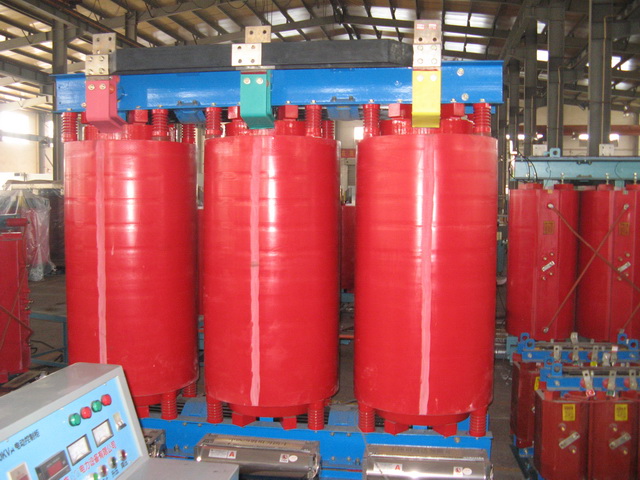
  • Insulation system: oil-paper insulation for oil-immersed units, cast resin or vacuum-pressure impregnated (VPI) insulation for dry-type units.
  • Tap changer: off-circuit (no-load) taps for occasional voltage adjustment, or an on-load tap changer (OLTC) when the voltage must be regulated under load.
  • Cooling: natural oil natural air (ONAN), oil natural air forced (ONAF), or air natural / air forced (AN/AF) for dry-type designs, selected according to capacity and site conditions.

The Main Types You Will Be Quoted On

Most tenders come down to a choice between three families. Choosing the wrong one raises cost and risk far more than shopping around for the last few percent of discount.

  • Oil-immersed transformers: the standard for high capacity and outdoor substations. Models such as the S11, S13, S20 and S22 series represent different efficiency tiers, from conventional to very low-loss designs. Excellent overload capability and heat dissipation.
  • Dry-type transformers: the SCB10, SCB13, SCB14, SCB18 and SGB10 series, typically cast-resin or VPI construction. No oil means no fire hazard and no oil containment, which is why they dominate indoor installations, tunnels, metros, high-rise buildings and hospitals. They cost more per kVA at higher ratings.
  • Amorphous alloy transformers: the SH15 and SCBH15 series, built around a metal-glass alloy core that can cut no-load loss dramatically — an attractive option for utilities and renewable energy projects where the unit is energized around the clock.

Key Parameters to Confirm Before Ordering

A quotation that lists only a price is not a quotation. Insist on these details, ideally on a single datasheet:

  • Rated capacity in kVA or MVA, and continuous overload expectation.
  • Voltage ratio, vector group and frequency.
  • Impedance percentage and its tolerance band.
  • No-load loss and load loss, stated at a defined reference temperature.
  • Cooling class, temperature rise limits and altitude correction.
  • Insulation level (lightning impulse and power-frequency withstand) for both windings.
  • Tap range and tap step; whether an OLTC is required.
  • Applicable standards — IEC 60076, GB 1094, IEEE C57.12.00 and the local grid code.

Where the Price Really Comes From

Transformer prices are driven by raw material content, not by marketing. Copper and CRGO silicon steel prices move with global commodity markets, so two manufacturers quoting the same rating weeks apart can legitimately differ. Beyond materials, the biggest price levers are:

  • Efficiency tier: a higher-efficiency unit (for example an S13, S20 or S22 class oil-immersed transformer) costs more up front but reduces no-load loss every hour for 20 to 30 years. Evaluate total owning cost, not purchase price alone.
  • Core material: amorphous alloy versus grain-oriented silicon steel.
  • Conductor: copper versus aluminum, and the actual cross-section used.
  • Tap changer type: an OLTC can add significant cost compared with an off-circuit tap link.
  • Testing scope and documentation: routine tests, type tests and third-party witnessing all have a cost — and a value.

The cheapest bid often wins by shrinking copper section, using a lower core grade or skipping tests. That saving is repaid many times over in higher losses, shorter service life and unscheduled outages.

How to Buy Factory-Direct Without Cutting Corners

Buying from the production source removes distributor margins and gives you direct access to the engineers who will build the unit. To get the benefit without the risk, work through a short checklist:

  • Ask for a technical offer that matches your specification line by line, not just a headline price.
  • Request routine test reports with the shipment, and type test certificates for the model family.
  • Confirm core grade, conductor material and loss values in writing on the contract.
  • Verify the manufacturer's production scope — a partner that already builds S22, S20, S11 and S13 oil-immersed transformers, SCB13, SCB14 and SCB18 dry-type transformers, SH15 amorphous alloy units, mining and rectifier transformers, plus 35KV and below preassembled substations, compact substations and high/low-voltage switchgear, can usually supply the whole package from one drawing set.
  • Confirm delivery documentation: manuals, inspection reports, test certificates and traceability records.
  • Check that lifelong quality tracking and after-sales support are included, not offered as an extra.

Runsheng Transformer Co., Ltd. works to exactly this model — a transformer manufacturer keeping a broad inventory, offering oil-immersed transformers at factory-direct prices, with every unit shipped against national standards and backed by manuals, inspection reports, test certificates and lifelong quality tracking. The company also builds custom-designed special transformers when a project does not fit a catalogue rating.

Installation and Lifetime Care

Good hardware still needs correct handling. Oil-immersed units require periodic dissolved gas analysis, oil dielectric testing, silica gel and breather maintenance, bushing inspection and infrared scanning of connections. Dry-type units need clean cooling ducts, dust removal and regular winding-resistance checks. Keep the nameplate data and routine test reports on file — they are the baseline against which every future reading is compared.

Final Thoughts

A high voltage power transformer is a long-life capital item, so the buying decision should be based on loss performance, verified materials, certification and support rather than the lowest number on a spreadsheet. Compare total owning cost, insist on documentation, and deal directly with the factory that builds the unit. For specifications, drawings or a line-by-line quotation, contact: phone +86 13406394988, e-mail runsheng@7813transformer.com, WhatsApp 008613508930968.

When you have coordination challenges, turn to Runsheng Transformer for help
It's all about making things easy, building partnerships, and providing a point of contact.