
When you have coordination challenges, turn to Runsheng Transformer for help
It's all about making things easy, building partnerships, and providing a point of contact.
A distribution transformer is the final voltage conversion step in the electrical chain before power reaches homes, workshops, commercial buildings, and industrial equipment. It takes medium voltage from a 10 kV or 35 kV distribution line and steps it down to the low voltage that end users can safely consume, typically 400 V three-phase or 230 V single-phase. Because it sits closest to the load, it runs longer hours than any other transformer in the network, and its efficiency, heat behaviour, and reliability directly shape your electricity bill and downtime risk.
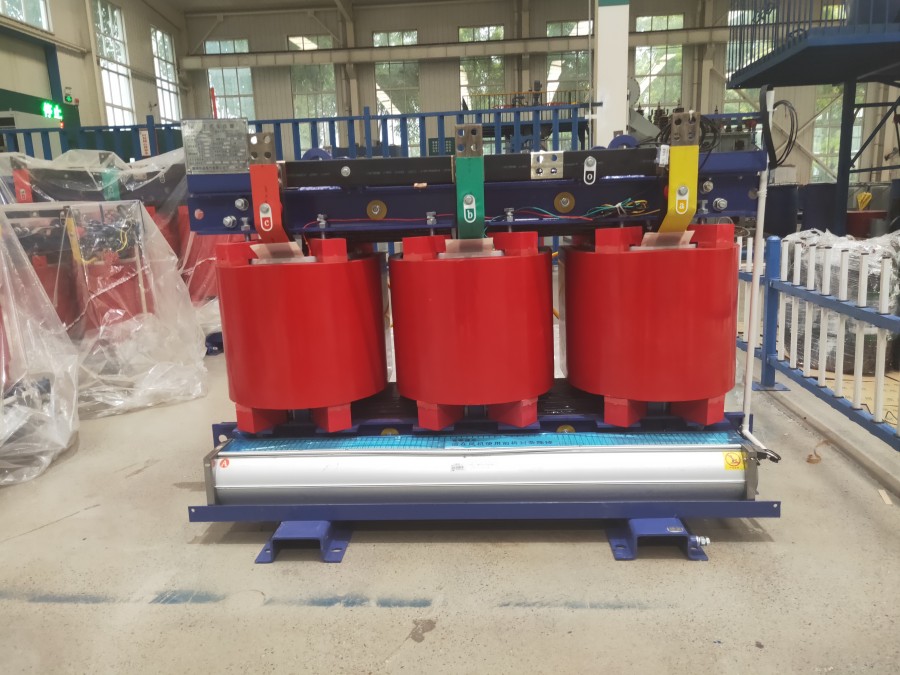
In practical terms, the equipment is a static device with no moving parts: a laminated or wound magnetic core, copper or aluminium windings, insulation, a cooling medium, and a tank or enclosure. Power transfers between windings through electromagnetic induction, so there is nothing to wear out mechanically, only insulation and cooling to manage over a service life that can exceed twenty years.
The first procurement decision is the cooling and insulation medium, because it determines where the unit can be installed and how much maintenance it needs.
Two units with the same kVA rating can differ in price by a third. The gap comes from these variables:
The most common mistake is comparing nameplate kVA alone. A low-priced unit with poor core steel and thin insulation will lose more energy in a year than the purchase-price saving, and it will run hotter, ageing insulation faster. Watch for these traps:
Specification accuracy protects you long after delivery. Ask for compliance with IEC 60076 or GB 1094 and GB/T 6451 for oil-immersed units, and confirm energy efficiency classification against the applicable national grade. Every unit should arrive with an operation manual, factory inspection report, test certificate, nameplate data, and a traceable serial number for lifetime quality tracking. These are the paperwork items that matter during insurance review, grid inspection, and warranty claims.
Because the equipment is bulky and heavy, freight and intermediary margins form a large share of the landed price. Sourcing directly from the manufacturer removes trading layers, gives you direct access to design engineers for custom special transformers, and makes spare parts and technical support far easier later. As a power transformer manufacturer, Runsheng Transformer Co., Ltd. produces S22, S20, S11, and S13 oil-immersed transformers, SCB13, SCB14, and SCB18 dry-type transformers, and SH15 amorphous alloy transformers, along with mining transformers, rectifier transformers, and 35 kV and below preassembled substation equipment and high/low-voltage switchgear. Products are delivered with manuals, inspection reports, test certificates, and lifelong quality tracking.
Once installed, a distribution transformer needs only modest attention: periodic oil testing and top-up for oil-immersed units, cleaning of cooling ducts and dust inspection for dry-type units, checking terminal torque, and monitoring temperature and load balance. Rebalancing single-phase loads on the low-voltage side is one of the cheapest efficiency improvements available, and keeping the unit within its rated temperature rise does more for lifespan than any repair.
Getting the fundamentals right at the specification stage — correct capacity, correct construction, documented efficiency, and a supplier who stands behind the equipment — is what separates a transformer that quietly pays for itself from one that quietly drains your budget.
For sizing help, quotations, or custom special transformer requirements, contact Runsheng Transformer Co., Ltd.: phone +86 13406394988, e-mail runsheng@7813transformer.com, WhatsApp 008613508930968.

Runsheng Transformer Co., Ltd. is a professional manufacturer of power transformers, specializing in oil-immersed transformers (S20, S11, S13), SH15 amorphous alloy transformers, S13 series 10KV 3D magnetic path wound-core transformers, D10 single-phase wound-core transformers, as well as mining transformers, rectifier transformers, surge arrestor transformers, load-tap-changing transformers, and custom-engineered special transformers.
WhatsApp & Wechat

No. 6, Intersection of Mount Huangshan Road and Changjiang Road, Liaocheng High tech Industrial Development Zone, Shandong, China


