
When you have coordination challenges, turn to Runsheng Transformer for help
It's all about making things easy, building partnerships, and providing a point of contact.
A 110kv power transformer is a static electrical device used to step voltage up or down inside a 110 kV transmission and distribution network. It normally sits between the higher-voltage transmission grid (220 kV, 330 kV and above) and the medium-voltage distribution levels (35 kV, 10 kV), which makes it one of the most critical links in any regional power supply chain. In real projects, a 110kv power transformer is usually a three-phase, oil-immersed unit with a rated capacity from roughly 10,000 kVA to 180,000 kVA, and it works together with on-load tap changers, protection relays, surge arresters and substation automation equipment.
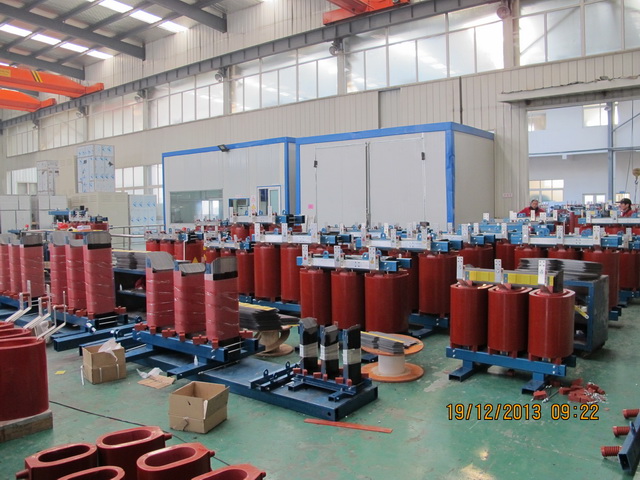
Because it operates at a relatively high voltage level, this equipment is designed, tested and delivered as a project-based product rather than an off-the-shelf item. That is exactly why buyers need to understand the basics before placing an order: the difference between two technically similar offers often comes down to material quality, loss levels, testing standards and after-sales support.
The working principle is electromagnetic induction. Alternating current in the primary winding creates an alternating magnetic flux inside the closed magnetic core; this flux then induces a voltage in the secondary winding. Since the voltage ratio follows the turns ratio, the transformer can raise voltage for efficient long-distance transmission or lower it for safe local distribution. Key construction parts include:
Although the term covers one voltage class, the configurations differ considerably. Common options include:
For lower-voltage distribution work, oil-immersed and dry-type designs such as the S11, S13, S20, S22, SCB13, SCB14, SCB18 and SH15 series are the mainstream choices, and many manufacturers build both product families in the same facility.
Technical parameters determine both purchase cost and lifetime operating cost, so never compare quotations on price alone. The essential data set includes:
A 110kv power transformer is deployed wherever bulk power must be converted into usable regional supply. Typical cases include urban and rural substations, industrial parks, metallurgy and chemical plants, railway traction substations, mining sites, and increasingly wind and solar farms, where a renewable energy transformer links generation to the national grid. Environmental conditions — coastal humidity, high altitude, desert heat or seismic zones — must all be reflected in the technical specification.
Trading companies add margin without adding engineering value. Buying directly from a power transformer manufacturer removes that layer and usually brings three real benefits: better price, direct access to design engineers for customisation, and faster communication on schedules and test reports. A manufacturer such as Runsheng Transformer Co., Ltd. produces oil-immersed, dry-type, amorphous alloy and special transformers in house, and supplies complete documentation with every unit. Even so, buyers should compare at least three suppliers on loss values, material grades and warranty terms rather than on headline price.
Quality assurance is not a slogan; it is the paperwork and the test bench behind the product.
Correct installation matters as much as manufacturing quality. Oil filtration, vacuum filling, bushing assembly, earthing, protection setting and dielectric tests should follow the manufacturer's instructions and local grid codes. A supplier that offers installation guidance, remote technical support and spare parts supply will protect your investment far better than the cheapest bidder.
Understanding the basics of a 110kv power transformer — its structure, parameters, types and cost drivers — turns an intimidating purchase into a controlled procurement decision. Choose a reputable manufacturer, verify the data, and buy factory-direct to get quality, documentation and price together.
Contact us for a quotation: phone +86 13406394988, e-mail runsheng@7813transformer.com, WhatsApp 008613508930968.

Runsheng Transformer Co., Ltd. is a professional manufacturer of power transformers, specializing in oil-immersed transformers (S20, S11, S13), SH15 amorphous alloy transformers, S13 series 10KV 3D magnetic path wound-core transformers, D10 single-phase wound-core transformers, as well as mining transformers, rectifier transformers, surge arrestor transformers, load-tap-changing transformers, and custom-engineered special transformers.
WhatsApp & Wechat

No. 6, Intersection of Mount Huangshan Road and Changjiang Road, Liaocheng High tech Industrial Development Zone, Shandong, China


