
When you have coordination challenges, turn to Runsheng Transformer for help
It's all about making things easy, building partnerships, and providing a point of contact.
A power transformer is a static electrical device that transfers electrical energy between two or more circuits through electromagnetic induction, raising or lowering voltage so that electricity can be generated, transmitted and distributed efficiently. It has no moving parts, which is why it is called static equipment. Step-up transformers raise voltage at the generating end to reduce transmission losses, while step-down transformers lower voltage for industrial, commercial and residential use.
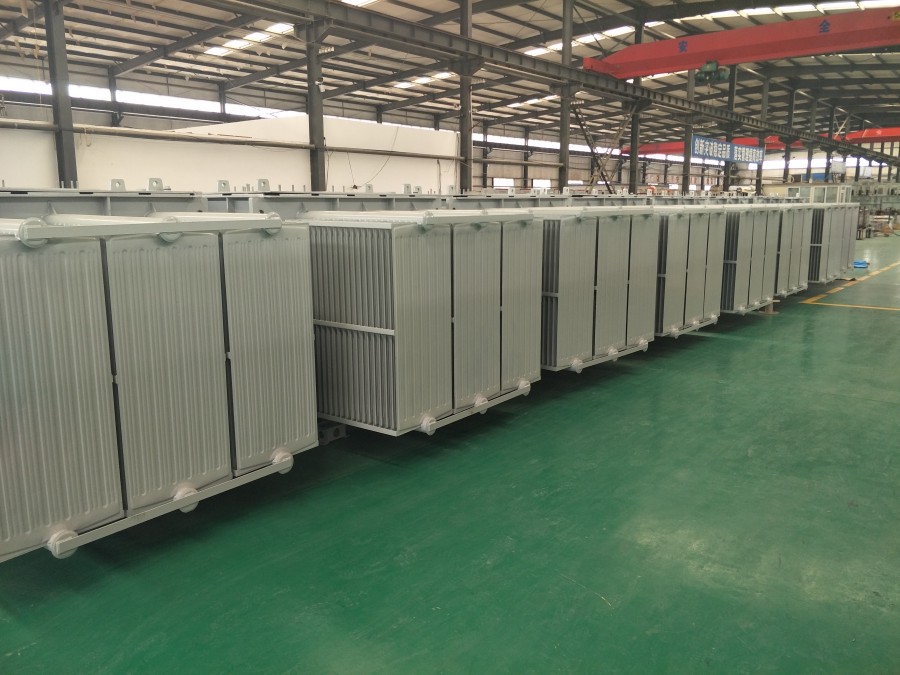
For anyone sourcing equipment, a power transformer is best understood as an engineered product defined by capacity, voltage class, loss level, cooling method and insulation system. Two units with the same capacity can differ significantly in efficiency, footprint and price, so the specification sheet matters as much as the nameplate.
The turns ratio sets the voltage transformation, while core material, conductor cross-section and design geometry determine efficiency and temperature rise.
Matching these values to the actual load curve prevents both overspending on excess capacity and premature failure from undersized equipment.
Distribution transformer units serve industrial parks, commercial buildings, data centers and utility networks. A renewable energy transformer is used in solar and wind farms, where voltage regulation and efficiency are especially important. Mining transformer and rectifier transformer units handle harsh environments and DC loads in metallurgy and chemical plants. Compact substations integrate transformer, switchgear and protection into one prefabricated package for faster site installation.
Buying from the production line rather than through layers of traders removes markups that can add 20 to 40 percent to the final invoice. A direct manufacturer can also customize capacity, voltage ratio, enclosure and tap range without negotiation between third parties. As a power transformer manufacturer with a broad inventory, Runsheng Transformer Co., Ltd. supplies oil-immersed transformers at factory-direct prices, which keeps both unit cost and lead time under control.
Insist on these documents before shipment. A serious supplier treats them as standard, not as an optional extra, and they are your evidence if a warranty claim ever arises.
Oil-immersed or dry-type? Choose oil-immersed for outdoor or high-capacity duty and dry-type for indoor, fire-sensitive locations. What capacity do I need? Base it on measured demand plus a reasonable growth margin rather than a rough guess. How long is delivery? Standard models ship quickly from stock; custom transformers take longer because of design and testing.
Understanding these fundamentals makes the procurement conversation far more productive and helps you avoid the classic pitfalls of overspecification, unclear testing terms and hidden intermediary costs.
Contact us for a quotation or technical consultation: phone +86 13406394988, e-mail runsheng@7813transformer.com, WhatsApp 008613508930968.

Runsheng Transformer Co., Ltd. is a professional manufacturer of power transformers, specializing in oil-immersed transformers (S20, S11, S13), SH15 amorphous alloy transformers, S13 series 10KV 3D magnetic path wound-core transformers, D10 single-phase wound-core transformers, as well as mining transformers, rectifier transformers, surge arrestor transformers, load-tap-changing transformers, and custom-engineered special transformers.
WhatsApp & Wechat

No. 6, Intersection of Mount Huangshan Road and Changjiang Road, Liaocheng High tech Industrial Development Zone, Shandong, China


