
When you have coordination challenges, turn to Runsheng Transformer for help
It's all about making things easy, building partnerships, and providing a point of contact.
A three phase transformer is the workhorse of nearly every distribution network, industrial plant and commercial building. It steps voltage down from the 10 kV or 35 kV feeder to the 400 V that equipment actually uses, and it usually stays in service for 20 to 30 years. That long life is why the buying decision matters far more than the invoice: the specification you sign off today determines your energy losses, your fault level, your maintenance burden and your replacement date. This overview covers the basics a procurement engineer, EPC contractor or plant manager needs before requesting quotations.
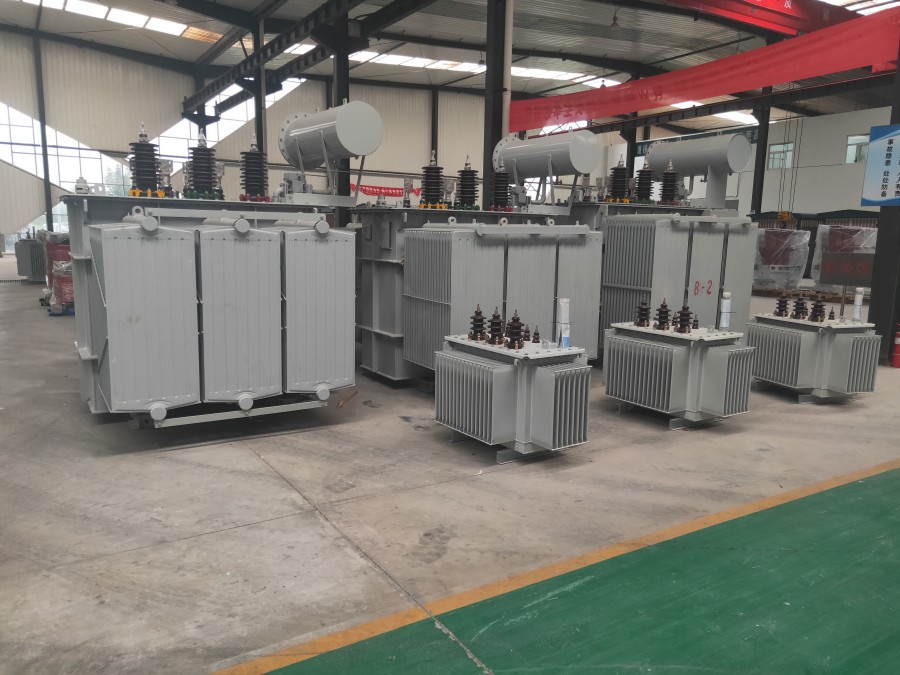
Three phase power arrives on three conductors with a 120-degree phase displacement. A three phase transformer transfers that power between voltage levels through a shared magnetic circuit, with no moving parts and very little loss. The main components are the same across almost every design:
Two core constructions dominate the market: the conventional three-limb stacked core and the wound core with a three-dimensional magnetic path. The wound core design is common in distribution ratings because its shorter flux path reduces no-load loss.
The first real decision is the cooling and insulation system, because it determines where the transformer can be installed and what fire protection the site needs.
A rough rule of thumb: outdoor, high capacity and cost-sensitive points to oil-immersed; indoor, fire-sensitive and public-occupancy points to dry-type. Non-standard duties — mining, rectifier loads, lightning arrester testing, capacity regulation — are served by purpose-built special transformers rather than by derating a standard catalogue unit.
Quotations for the same apparent capacity can differ by 30 percent or more. The gap is explained by these six items:
No-load loss is consumed around the clock as long as the transformer is energised, whether the plant is running or not. Load loss rises with the square of the load and peaks during your busiest shifts. A higher-efficiency grade — moving from S11 to S13, S20 or S22, or choosing an SH15 amorphous alloy unit — costs more upfront but pays back through a smaller electricity bill, and the payback is fastest on units that stay energised under light load, such as commercial buildings, water utilities and solar or wind collector substations.
A simple evaluation method works well: price the transformer plus the capitalised value of its guaranteed losses over your expected service life, at your own electricity tariff. Compare that total, not the quotation.
Every unit should be routine-tested before shipment: winding resistance, voltage ratio, impedance and load loss, no-load loss, applied voltage and induced voltage withstand, insulation resistance, and oil dielectric strength for oil-immersed designs. Type tests — temperature rise, lightning impulse and short-circuit withstand — should be available as reports, ideally from an independent laboratory. Ask for the quality management certificate, the winding and core photographs, and a clear statement of what documents ship with the unit.
Suppliers such as Runsheng Transformer Co., Ltd. cover this ground with S11, S13, S20 and S22 oil-immersed transformers, SCB10, SCB13, SCB14 and SCB18 dry-type transformers, SH15 and SCBH15 amorphous alloy units, 35 kV preassembled and compact substations, and high and low voltage switchgear. Each unit is delivered with a manual, inspection report and test certificate, backed by lifelong quality tracking — the documentation package that matters most when an inspector or insurer asks questions later.
A three phase transformer is a long-term asset bought once and paid for continuously through its losses. Getting the type, the nameplate parameters and the test documentation right at the quotation stage is the cheapest decision you will make in the whole project.
For specification questions or a factory-direct quotation, contact Runsheng Transformer Co., Ltd.: phone +86 13406394988, e-mail runsheng@7813transformer.com, WhatsApp 008613508930968.

Runsheng Transformer Co., Ltd. is a professional manufacturer of power transformers, specializing in oil-immersed transformers (S20, S11, S13), SH15 amorphous alloy transformers, S13 series 10KV 3D magnetic path wound-core transformers, D10 single-phase wound-core transformers, as well as mining transformers, rectifier transformers, surge arrestor transformers, load-tap-changing transformers, and custom-engineered special transformers.
WhatsApp & Wechat

No. 6, Intersection of Mount Huangshan Road and Changjiang Road, Liaocheng High tech Industrial Development Zone, Shandong, China


