
When you have coordination challenges, turn to Runsheng Transformer for help
It's all about making things easy, building partnerships, and providing a point of contact.
A single phase transformer moves electrical energy from one circuit to another through a shared magnetic field, with no moving parts and no direct electrical connection between the two sides. Alternating current in the primary winding creates a changing flux in the magnetic core; that flux links the secondary winding and induces a voltage there. The ratio of primary to secondary turns sets the voltage ratio, while the current ratio moves in the opposite direction. Efficiency is high because the only losses are core loss (hysteresis and eddy currents) and copper loss (I²R heating in the windings).
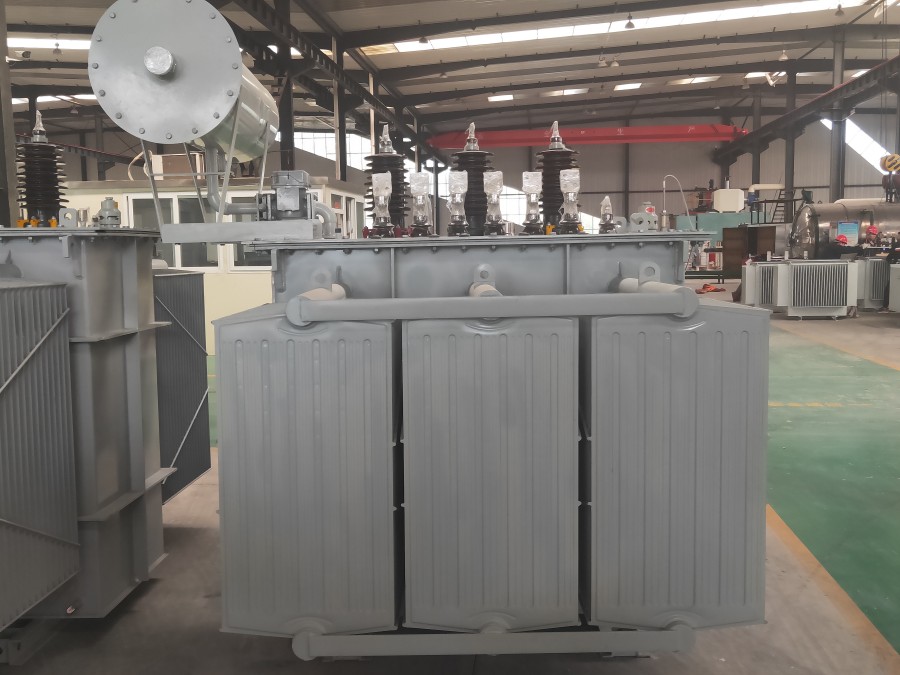
In practice, the single phase transformer is the workhorse of low-voltage distribution, rural electrification, pole-mounted service drops, control panels, instrument circuits, isolation barriers and small renewable-energy interfaces. It is a mature, well-standardised product — which is exactly why price differences between suppliers are so often explained by material grade, winding copper content and loss performance rather than by design innovation.
Three elements decide how well a single phase transformer performs over its 20 to 30 year service life.
Small control and instrumentation single phase transformers sit in the 25 VA to 5 kVA band, usually with multiple secondary taps. Distribution units start around 5 kVA and run to 100 kVA, 167 kVA and beyond for pole-mounted service. Common voltage combinations include 10/0.22 kV, 11/0.24 kV, 33/0.23 kV and 6.6/0.23 kV in export markets, alongside 240/120 V split-secondary designs used in North American distribution practice. Tappings are normally ±5% in 2.5% steps, manually selected off-load.
An oil-immersed single phase transformer wins on cost per kVA and on thermal robustness outdoors, and it is the natural choice for pole-mounted and pad-mounted distribution where ventilation is unlimited. A dry-type unit wins wherever fire load, oil containment or indoor air quality is a constraint — basements, tunnels, hospitals, metro stations and densely occupied buildings. Do not compare the two on purchase price alone; compare total installed cost including fire protection, bunding, maintenance and expected loss energy over the asset life.
Give the supplier a complete data sheet and the quotation becomes comparable. At minimum, confirm:
Three avoidable errors drive up lifetime cost. The first is over-specifying capacity — a 25% load margin is usually sensible, a 100% margin is paid for twice, once at purchase and again as standing no-load loss. The second is ignoring loss evaluation: two bids at the same kVA can differ by 20% in guaranteed no-load loss, and over a decade that difference can outweigh the price gap. The third is accepting documentation gaps; a unit without routine test records, an inspection report and a nameplate matching the agreed data sheet is an unquantified risk, whatever the discount.
Trading companies add a margin and a communication layer without adding manufacturing capability. Buying directly from a manufacturer removes that layer and, more importantly, puts the people who wind the coils in direct contact with the person specifying them. Runsheng Transformer Co., Ltd. manufactures single phase wound core transformers (D10 series) alongside S11, S13, S20 and S22 oil-immersed transformers, SCB10/SCB13/SCB14/SCB18 dry-type transformers, SH15 amorphous alloy units, mining and rectifier transformers, and 35 kV and below compact substations. Units ship with manuals, inspection reports, test certificates and lifelong quality tracking, so the technical file arrives with the transformer rather than weeks later.
A single phase transformer is simple technology with a long service life, which makes material quality and loss performance the real differentiators. Specify the electrical data precisely, state the standard and test regime, evaluate bids on total owning cost rather than sticker price, and buy from a factory that will show you the test sheet. That combination is what keeps a distribution project inside budget for the next two decades.
For specifications, drawings or a quotation on a single phase transformer, contact Runsheng Transformer Co., Ltd. at +86 13406394988, e-mail runsheng@7813transformer.com, or WhatsApp 008613508930968.

Runsheng Transformer Co., Ltd. is a professional manufacturer of power transformers, specializing in oil-immersed transformers (S20, S11, S13), SH15 amorphous alloy transformers, S13 series 10KV 3D magnetic path wound-core transformers, D10 single-phase wound-core transformers, as well as mining transformers, rectifier transformers, surge arrestor transformers, load-tap-changing transformers, and custom-engineered special transformers.
WhatsApp & Wechat

No. 6, Intersection of Mount Huangshan Road and Changjiang Road, Liaocheng High tech Industrial Development Zone, Shandong, China


