
When you have coordination challenges, turn to Runsheng Transformer for help
It's all about making things easy, building partnerships, and providing a point of contact.
A three phase transformer transfers electrical energy between two voltage levels on a three-phase network. Rather than ganging three single-phase units together, it places all three phases on one shared magnetic core inside a single tank or enclosure. That shared core is the reason the three phase transformer is smaller, lighter, cheaper per kVA and more efficient than the single-phase alternative, and why it dominates transmission, distribution and industrial power systems worldwide.
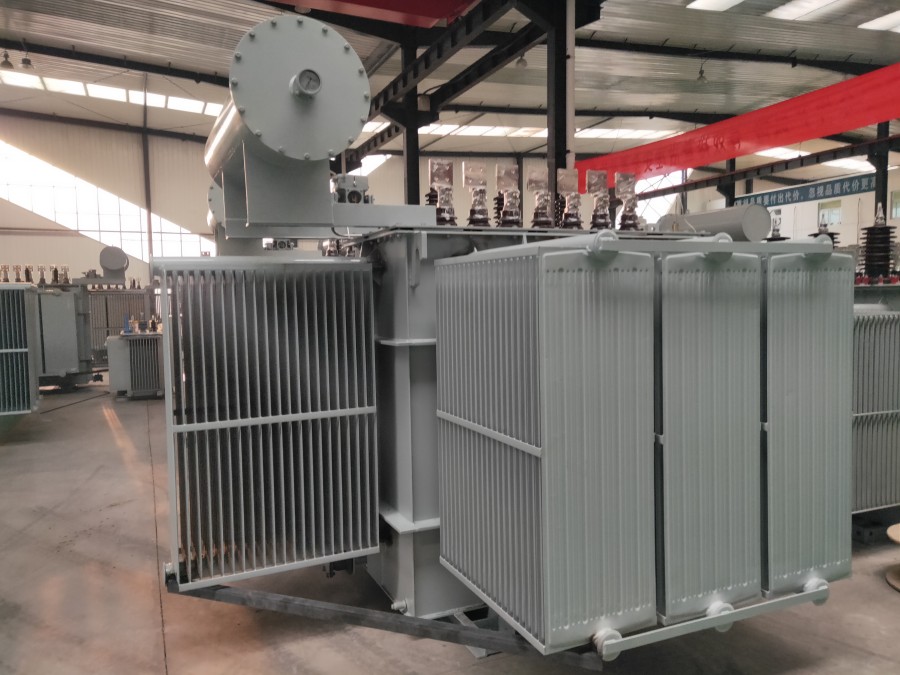
In practice most three phase transformers sit at one of two points in the network. At the utility distribution level they step 10 kV, 20 kV or 35 kV down to 0.4 kV for end users. Inside industrial plants they step an incoming 35 kV or 10 kV feeder down to the 400/230 V that drives motors, variable frequency drives and building services. Distribution ratings typically run from 30 kVA up to 6300 kVA.
Three elements decide how a three phase transformer performs and how long it survives in service.
Both technologies are mature. The choice is driven by location, fire risk and budget rather than by performance alone.
No-load loss is paid for 8760 hours a year whether the plant is running or not; load loss is paid in proportion to the square of the load current. On a heavily loaded industrial unit, twenty years of loss cost can exceed the purchase price several times over. This is why comparing two quotations purely on capital cost is misleading. Capitalising no-load and load loss at the local tariff gives a far more honest comparison, and it often justifies a higher-efficiency design, an amorphous alloy core or a larger rating running at 60 to 80 percent load.
Routine tests should cover winding resistance, voltage ratio, short-circuit impedance and load loss, no-load loss and current, applied voltage, induced voltage and insulation resistance, plus oil dielectric strength on oil-immersed units. Type tests such as temperature rise, lightning impulse and short-circuit withstand should be traceable to the design being supplied. Ask for the routine test report, inspection certificate, manual and a written quality-tracking commitment; a manufacturer that supplies these without prompting is usually the one worth keeping.
Distribution margins on a three phase transformer are thin, and every trading layer adds cost without adding a single lamination. Buying from the production line shortens the chain, keeps the specification conversation with the people who build the unit, and makes custom requirements such as special impedance, non-standard voltages, rectifier duty or overload ratings far easier to accommodate. Runsheng Transformer Co., Ltd. manufactures S11, S13, S20 and S22 oil-immersed transformers, SCB10, SCB13, SCB14 and SCB18 dry-type transformers, SH15 amorphous alloy units, mining and rectifier transformers, and 35 kV and below preassembled and compact substations with high and low voltage switchgear, covering 30 to 6300 kVA with factory-direct pricing and full documentation.
For specifications, drawings or a factory-direct quotation, contact the team at Runsheng Transformer Co., Ltd.: phone +86 13406394988, e-mail runsheng@7813transformer.com, WhatsApp 008613508930968.

Runsheng Transformer Co., Ltd. is a professional manufacturer of power transformers, specializing in oil-immersed transformers (S20, S11, S13), SH15 amorphous alloy transformers, S13 series 10KV 3D magnetic path wound-core transformers, D10 single-phase wound-core transformers, as well as mining transformers, rectifier transformers, surge arrestor transformers, load-tap-changing transformers, and custom-engineered special transformers.
WhatsApp & Wechat

No. 6, Intersection of Mount Huangshan Road and Changjiang Road, Liaocheng High tech Industrial Development Zone, Shandong, China


