
When you have coordination challenges, turn to Runsheng Transformer for help
It's all about making things easy, building partnerships, and providing a point of contact.
A three phase transformer is the core asset of almost every medium and low voltage distribution network. It transfers three phase AC power from one voltage level to another at the same frequency, allowing electricity to be transmitted economically and then stepped down to values that machines, buildings and factories can actually use. Whether you are specifying equipment for a new substation, replacing an ageing unit, or sourcing distribution equipment for a renewable energy project, understanding the fundamentals of a three phase transformer saves money, avoids downtime and prevents expensive specification mistakes.
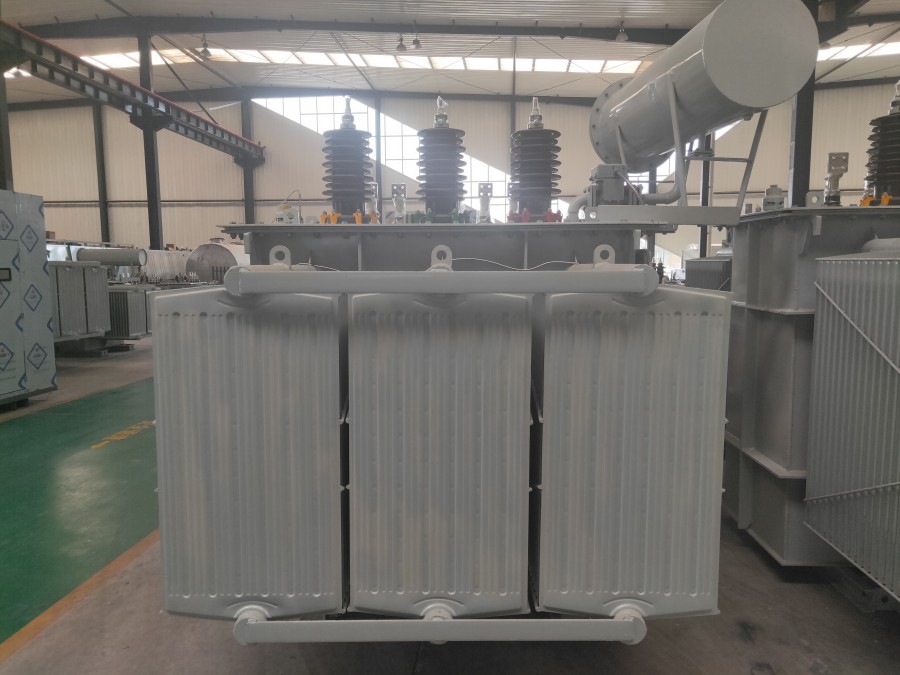
A three phase transformer uses a laminated or wound magnetic core with three sets of primary and secondary windings. When three phase alternating current flows through the primary windings, it establishes a magnetic flux in the core, which induces a voltage in the secondary windings through electromagnetic induction. The turns ratio between primary and secondary determines the voltage ratio, while the conductor cross-section and core area determine how much power the unit can carry.
Because there are no moving parts, conversion losses are low. A well-built three phase transformer reaches 98% to 99% efficiency at rated load, which is why transformers remain the most efficient link in the entire power chain. The three limbs of the core are magnetically linked, so the fluxes sum to near zero and the unit works without a neutral return path on the primary side. This is also why three phase transformer designs handle balanced industrial loads so well.
The first decision in any procurement is insulation and cooling medium, and the two families behave very differently in service.
Nameplate data decides whether a unit fits your network, and every item below should appear on the technical data sheet before a purchase order is issued.
A three phase transformer runs continuously for 20 to 30 years, so no-load loss is paid for every hour of every day, not just when the plant is busy. A unit that is one efficiency grade lower may look cheaper at quotation stage, yet the extra energy cost frequently exceeds the price difference within two to five years. Modern energy-efficient grades — S13, S20 and S22 for oil-immersed designs, SCB14 and SCB18 for dry-type designs, and SH15 amorphous alloy units — are usually the most economical choice on a total cost of ownership basis, and many utilities now refuse to connect anything below a defined efficiency threshold.
Buying from the manufacturing plant removes distributor margins and, more importantly, keeps the technical conversation with the people who actually build the unit. As a transformer manufacturer with a broad product portfolio, Runsheng Transformer Co., Ltd. produces S11, S13, S20 and S22 oil-immersed transformers, SCB10, SCB13, SCB14 and SCB18 dry-type transformers, SH15 amorphous alloy transformers, mining and rectifier transformers, and 35 kV and below preassembled substations with high and low voltage switchgear. Units are delivered with manuals, inspection reports and test certificates, backed by lifelong quality tracking — a practical safeguard when equipment is expected to serve for decades.
A three phase transformer is a simple device in principle and a demanding one in specification. Get the type, capacity, voltage ratio, vector group and loss figures right, verify the test documentation, and evaluate the units on life-cycle cost rather than purchase price alone. That approach consistently delivers the lowest overall cost of ownership and the fewest surprises during commissioning.
For technical selection support or a factory-direct quotation, contact Runsheng Transformer Co., Ltd. at phone +86 13406394988, e-mail runsheng@7813transformer.com, or WhatsApp 008613508930968.

Runsheng Transformer Co., Ltd. is a professional manufacturer of power transformers, specializing in oil-immersed transformers (S20, S11, S13), SH15 amorphous alloy transformers, S13 series 10KV 3D magnetic path wound-core transformers, D10 single-phase wound-core transformers, as well as mining transformers, rectifier transformers, surge arrestor transformers, load-tap-changing transformers, and custom-engineered special transformers.
WhatsApp & Wechat

No. 6, Intersection of Mount Huangshan Road and Changjiang Road, Liaocheng High tech Industrial Development Zone, Shandong, China


