
oil cooled transformer Factory-Direct Buying Guide: Cut the Middleman Markup and Avoid Costly Mistakes

What an oil cooled transformer really is

An oil cooled transformer is a static electrical device that changes voltage levels while its core and windings sit fully immersed in insulating oil inside a sealed steel tank. The oil performs two jobs at the same time: it insulates the live conductors and it carries heat away from the core and coils to the tank walls and radiator banks, where the heat finally escapes into the air.
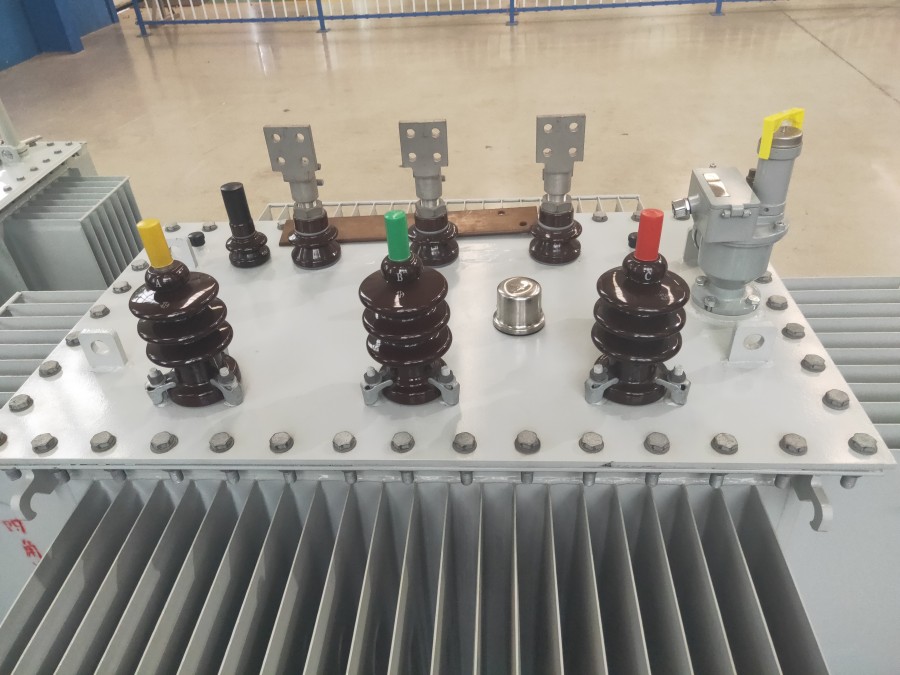
oil cooled transformer Factory-Direct Buying Guide: Cut the Middleman Markup and Avoid Costly Mistakes

This is the workhorse of power distribution. Most units you will meet on a 10 kV or 35 kV network, from 30 kVA pole-mounted units up to 6300 kVA substation transformers, are oil cooled transformer designs. They are preferred over dry-type units outdoors and at higher capacities because oil cooling is thermally efficient, mechanically robust and cost-effective per kVA.

How the cooling loop actually works

Heat always follows the same path: conductor, then oil, then tank and radiator surface, then ambient air. The designations printed on a nameplate tell you how that path is assisted.

  • ONAN – oil natural, air natural. The oil circulates by convection and the radiators cool passively. Quiet, maintenance-light, standard for distribution duty.
  • ONAF – oil natural, air forced. Cooling fans switch on at a set oil or winding temperature, raising capacity by roughly 20–30% on the same tank.
  • Sealed or conservator design – sealed tanks use a gas cushion or corrugated fins to absorb oil expansion; conservator tanks use an oil conservator with a breather and silica gel to keep moisture out.

Temperature rise limits for oil and windings are defined by IEC 60076 and GB 1094, and those limits, not the marketing brochure, are what a serious factory tests against before shipment.

The series names you will see on a quotation

Model codes are not decorative. They signal the loss level and core technology, which is exactly where price differences come from.

  • S11 oil-immersed transformer – the classic low-loss distribution unit, usually with an off-circuit tap changer. Widely available and the lowest entry price.
  • S13 oil-immersed transformer – a lower no-load loss grade using better grain-oriented silicon steel. Slightly higher price, noticeably lower running cost on lightly loaded networks.
  • S20 and S22 oil-immersed transformer – higher-efficiency grades with reduced no-load and load losses. Higher first cost, but the lowest total cost of ownership over a 20–25 year service life.
  • S11-MR and S13-M.RL – sealed-tank and wound-core variants that reduce leakage risk and no-load loss respectively.
  • SH15 amorphous alloy transformer – the lowest no-load loss option available, ideal for networks that stay lightly loaded for long periods.

Parameters that decide both quality and price

When comparing quotations, insist that every one of these is stated in writing. A quote without them is not comparable.

  • Rated capacity – typically 30–6300 kVA for distribution and substation duty.
  • Voltage ratio – for example 10/0.4 kV, 35/0.4 kV or 35/10 kV.
  • No-load loss and load loss – the single biggest driver of both efficiency and price. Always ask which loss level the quote is built to.
  • Impedance voltage – commonly around 4–4.5% on small distribution units and 6–8% on larger ones, chosen to suit fault level.
  • Vector group – Dyn11 and Yyn0 are the usual configurations for distribution service.
  • Tap changer – off-circuit types such as ±5% or ±2×2.5%, or a load tap changing transformer when voltage must be regulated under load.
  • Winding material – copper or aluminium. They are not interchangeable, and the price gap is real.
  • Core material – conventional grain-oriented silicon steel versus amorphous alloy.
  • Site conditions – altitude, ambient temperature, indoor or outdoor, and pollution level all affect insulation and cooling choices.

Oil cooled transformer versus dry-type: a quick decision rule

Dry-type units such as the SCB10, SCB13, SCB14 and SCB18 dry-type transformer ranges are the right answer indoors, in fire-sensitive buildings, and where oil containment is unacceptable. They are also easier to site in basements and plant rooms. Choose an oil cooled transformer when the unit goes outdoors, when capacity climbs above roughly 1600–2500 kVA, when ambient conditions are harsh, or when capital cost per kVA matters. Many projects end up using both: dry-type inside the building, oil-immersed in the yard or in a compact substation.

Where these units are deployed

  • Urban and rural distribution networks and pole-mounted or pad-mounted installations
  • Industrial plants and process lines
  • Mining transformer duty, where mechanical strength and dust tolerance matter
  • Rectifier transformer applications feeding electrolysis or DC drives
  • Renewable energy transformer duty for wind and solar step-up
  • Inside European-style and American-style compact substations alongside high and low voltage switchgear

The procurement traps that quietly inflate your cost

Most bad purchases are not caused by a bad product; they are caused by an incomplete quotation. Watch for these.

  • Quotes with no loss figures. Without no-load and load loss data you cannot compare lifecycle cost, only sticker price.
  • A model code that does not match the core. An S13 label on an S11-grade core is the most common substitution in the market. Ask for the routine test report with measured losses.
  • Winding material surprises. Aluminium quoted as copper, or copper-clad aluminium. Specify it in the contract.
  • Missing documentation. No type test report, no routine test certificate, no oil test, no manual. These are not optional extras.
  • Reclaimed or unspecified oil. Insulating oil should meet IEC 60296 and be identified on the report.
  • Thin tanks and poor surface treatment. The cheapest way to cut cost is steel thickness and paint system, and the result is leaks and repainting within a few years.

Why buying factory-direct changes the number

An oil cooled transformer passes through at most two or three hands before it reaches site, and each hand adds margin without adding a single ampere of capacity. Buying from the manufacturer removes that layer and, more importantly, gives you direct access to the people who can answer technical questions and stand behind the test data.

Runsheng Transformer Co., Ltd. manufactures S11, S13, S20 and S22 oil-immersed transformers, SCB10/SCB13/SCB14/SCB18 dry-type transformers, SH15 amorphous alloy transformers, mining and rectifier transformers, plus 35 kV and below preassembled substations and high/low voltage switchgear. Units are built to national standards and shipped with manuals, inspection reports, test certificates and lifelong quality tracking, so the paperwork follows the product.

A practical tip that costs nothing: ask every supplier for the same three documents on the same model — a routine test report, a loss measurement sheet and a winding material declaration. The quotations suddenly become comparable, and the cheapest offer usually stops being the cheapest.

Quick answers to common questions

  • How long is delivery? Standard distribution ratings are usually stocked or built in weeks; custom special transformers take longer. Confirm against your project schedule before signing.
  • What maintenance does it need? Periodic oil sampling and dielectric testing, breather silica gel replacement, gasket and seal inspection, and cleaning of radiators and bushings.
  • Can a unit be customised? Yes. Non-standard ratios, special impedance, high-altitude or high-temperature designs, and application-specific units are all routinely engineered to order.
  • Which series should I choose? If the transformer will run lightly loaded for years, a lower no-load loss grade pays back quickly. If it runs near full load, load loss dominates the calculation.

For specifications, drawings or a factory-direct quotation, contact the team: phone +86 13406394988, e-mail runsheng@7813transformer.com, WhatsApp 008613508930968.

When you have coordination challenges, turn to Runsheng Transformer for help
It's all about making things easy, building partnerships, and providing a point of contact.