
When you have coordination challenges, turn to Runsheng Transformer for help
It's all about making things easy, building partnerships, and providing a point of contact.
Walk into any 10kV or 35kV distribution room, industrial plant substation or renewable energy collector station and the odds are you will find an oil cooled transformer carrying the load. These units dominate medium-voltage distribution for one simple reason: insulating oil does two jobs at once. It insulates the winding turns and it moves heat away from the core and coils far more effectively than air alone. Heat generated by load losses and no-load losses transfers into the oil, the oil circulates by natural convection, and the heat leaves the unit through the tank walls and radiator banks.
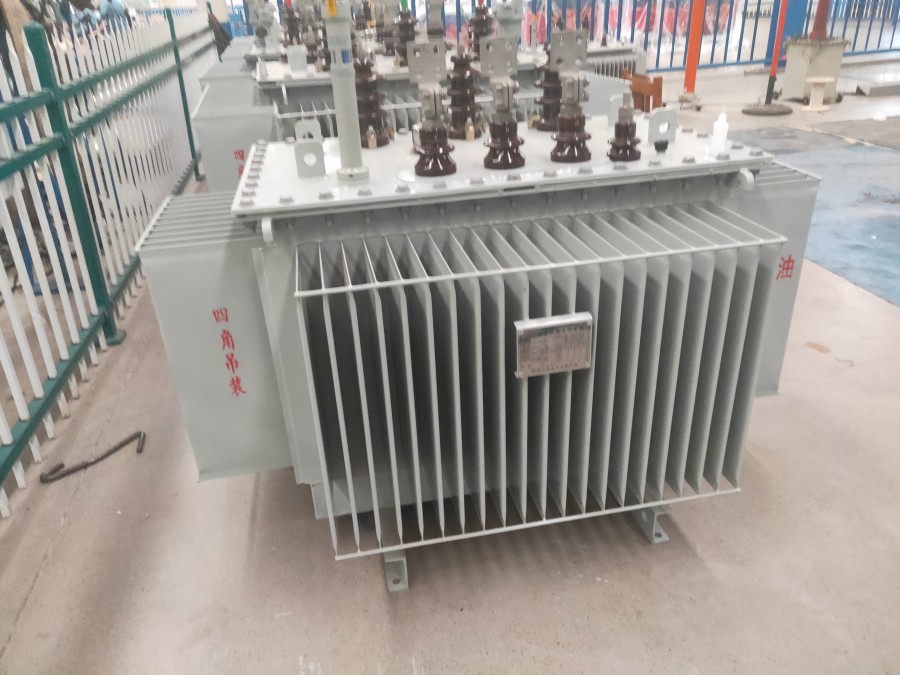
Because of that dual role, an oil cooled transformer is compact for its power rating and well suited to continuous duty, which is exactly how distribution networks operate. Buyers who understand the basic cooling loop, the model naming conventions and the loss figures usually negotiate better prices and avoid rework later.
Understanding the internal circulation helps when you read a quotation or inspect a delivered unit.
Chinese and IEC markets use letter codes to describe the design. The first letter indicates the phase and cooling arrangement, the number indicates the loss performance level, and suffixes such as M, R, L or sealed indicate tank and core construction.
Two units of the same kVA rating can differ substantially in cost. These are the variables that create that gap.
Purchase price is only the first payment. Over a fifteen to twenty year life, losses usually cost more than the unit itself. The correct comparison is total owning cost: purchase price plus the capitalized value of no-load and load losses.
An S11 unit is the budget baseline. An S13 unit costs a little more but lowers no-load loss, which matters on feeders that stay energised around the clock with light load. S20 and S22 designs push both loss components down and suit high-load-factor industrial sites. Where load factor is genuinely low, such as rural networks or some renewable energy auxiliaries, an amorphous alloy unit can be the cheapest option over its life because its no-load loss is so low. Run the numbers with your own electricity tariff before choosing a model, and ask the supplier for certified loss figures rather than typical values.
Many quotations on the same specification differ by a wide margin, and the reason is rarely the copper. Layers of intermediaries, vague loss figures and unspecified accessories all inflate the landed cost. Buying from the manufacturer keeps the specification traceable and makes spare parts, gaskets, bushings and documentation easier to obtain years later. As a power transformer manufacturer, Runsheng Transformer Co., Ltd. supplies S11, S13, S20 and S22 oil-immersed units alongside dry-type and amorphous alloy ranges, with factory-direct pricing and full inspection documentation.
Mount the unit on a level foundation with the specified clearances for ventilation and cable access. Check oil level against the temperature marking, inspect bushings and torque connections, and confirm the breather silica gel is still blue. During service, log oil and winding temperatures, scan terminations with a thermal camera, replace silica gel when it turns pink, and take oil samples for dissolved gas analysis at recommended intervals. Operate off-circuit taps only with the unit de-energised, and record every tap change.
Typical applications include utility distribution feeders, industrial plant substations, mining and heavy-duty sites, renewable energy step-up and auxiliary supplies, commercial buildings with packaged compact substations, and temporary power for construction projects. For each case the selection logic is the same: match capacity and impedance to the load and protection scheme, then choose the loss class that gives the lowest total owning cost.
An oil cooled transformer is a long-life asset, so the buying decision should be based on certified loss figures, verified conductor material, traceable test documentation and a supplier who will still answer the phone in year ten. Compare total owning cost rather than sticker price, insist on routine test records, and buy direct where possible. For specification review, model selection or a factory-direct quotation on 30 to 6300 kVA units and custom special transformers, contact us at phone +86 13406394988, e-mail runsheng@7813transformer.com, or WhatsApp 008613508930968.

Runsheng Transformer Co., Ltd. is a professional manufacturer of power transformers, specializing in oil-immersed transformers (S20, S11, S13), SH15 amorphous alloy transformers, S13 series 10KV 3D magnetic path wound-core transformers, D10 single-phase wound-core transformers, as well as mining transformers, rectifier transformers, surge arrestor transformers, load-tap-changing transformers, and custom-engineered special transformers.
WhatsApp & Wechat

No. 6, Intersection of Mount Huangshan Road and Changjiang Road, Liaocheng High tech Industrial Development Zone, Shandong, China


