
If you are sourcing distribution equipment for a rural grid upgrade, a railway signalling cabinet, a control panel, or a small renewable energy installation, a single phase transformer is often the most cost-effective way to step voltage up or down. The difficulty is not finding a supplier; it is telling a good unit apart from a cheap copy. Quotations for the same nameplate rating can differ by 40 percent or more, and most of that gap comes from conductor material, core grade, winding process, and how many intermediaries the unit passes through before it reaches your site. This overview explains what a single phase transformer actually does, which parameters decide whether it will last twenty years or two, and how to buy direct from the factory without paying for hidden markups.
What a single phase transformer does, in plain terms
A single phase transformer transfers electrical energy between two circuits through a shared magnetic field, with no moving parts and no change in frequency. Alternating current in the primary winding creates a continuously reversing flux in the laminated core; that flux induces a voltage in the secondary winding proportional to the turns ratio. Because the two windings are magnetically coupled but electrically isolated, the device also provides galvanic separation, which is why it appears so often in control, instrumentation, and safety circuits.
Three characteristics separate a single phase transformer from its three-phase counterpart:
- It works on a single AC phase, typically 220 V, 230 V, 240 V, 277 V, or a medium-voltage primary such as 10 kV or 35 kV.
- Typical capacity ranges from a few hundred VA up to roughly 500 kVA, with the bulk of distribution units falling between 5 kVA and 100 kVA.
- It is usually pole-mounted, pad-mounted, or installed inside a compact enclosure, so footprint and weight matter as much as electrical performance.
The main single phase transformer types you will be quoted
Suppliers will generally offer four construction families. Knowing which one fits your site prevents both overspending and under-specifying.
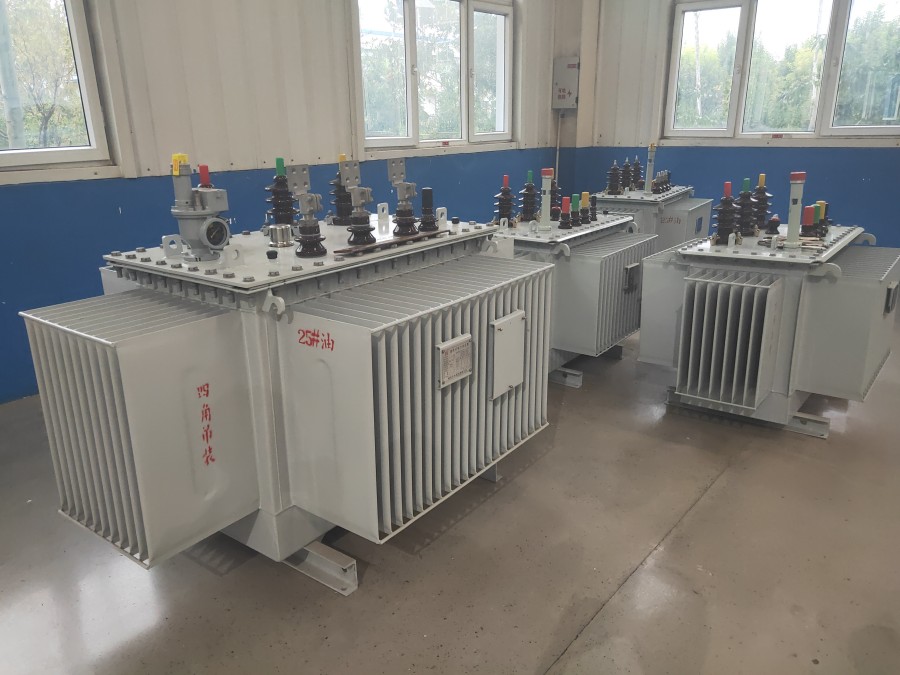
- Oil-immersed single phase transformer. The core and windings sit in mineral oil inside a sealed tank. Oil provides insulation and carries heat to the tank walls. These units handle outdoor duty, high ambient temperatures, and overload conditions well, and they are the standard choice for pole-mounted rural distribution. Hermetically sealed designs avoid the need for conservators and periodic oil testing.
- Dry-type single phase transformer. Cooling is by air, with windings cast in epoxy resin or impregnated with insulating varnish. There is no oil to leak or burn, which makes these units suitable for indoor installation, tunnels, hospitals, and commercial buildings where fire load must be minimized.
- Amorphous alloy single phase transformer. The core is made from amorphous metal ribbon rather than grain-oriented silicon steel. No-load loss typically drops by 60 to 70 percent, which pays back the higher purchase price within a few years on lines that stay energized around the clock.
- Wound core designs such as the D10 series single phase wound core transformer. The core is wound from a continuous strip into a ring or rectangular loop, then cut and reclosed around the windings. There is no corner joint in the magnetic path, so no-load current and noise are lower than in a conventional stacked core of the same grade.
Parameters that decide real quality and real price
Two quotations can look identical on the data sheet and behave completely differently in service. Ask for the following, in writing, before comparing prices.
- Rated capacity and voltage ratio. Confirm kVA, primary and secondary voltages, and the tap range. A plus or minus 5 percent off-circuit tap changer is common on distribution units; load tap changing is available for applications where the incoming voltage swings daily.
- No-load loss and load loss. These two numbers drive your operating cost for the next two decades. In China, GB 20052 sets energy efficiency grades, with Grade 1 being the most efficient. A unit quoted at Grade 3 efficiency is not a bargain if it runs loaded every day.
- Conductor material. Copper windings cost more than aluminium and behave better under short-circuit stress and at joints. If the price is suspiciously low, ask directly whether the windings are copper or aluminium, and ask for the winding resistance test report.
- Core grade. Grain-oriented silicon steel is graded by iron loss per kilogram. Downgrading the core is the single most common way to cut cost invisibly.
- Impedance, temperature rise, and insulation class. Impedance affects voltage regulation and short-circuit current; temperature rise limits determine how much continuous overload the unit tolerates; insulation class F or H gives thermal headroom.
- Cooling and enclosure. ONAN for oil-immersed units, AN or AF for dry-type, plus the IP rating and anti-corrosion coating if the transformer will sit outdoors in coastal or industrial air.
- Vector group and connections. Most single phase units are Ii0, but polarity and terminal marking must match your protection scheme.
Where a single phase transformer is normally used
- Rural and remote distribution, where single phase laterals are cheaper to build than three-phase lines.
- Railway signalling, level crossings, and trackside control cabinets.
- Instrumentation, auxiliary supply, and control power in switchgear and substations.
- Mining, rectifier, and lightning arrester applications requiring special ratios or insulation coordination.
- Small solar, wind, and battery installations that need a dedicated step-up or isolation stage.
Why buying factory-direct changes the math
Trading companies add margin without touching the product. Buying from the manufacturer removes that layer and, more importantly, gives you direct access to the people who can adjust the design: the winding shop, the core-cutting line, and the test bay. A manufacturer can also supply the routine and type test reports, the nameplate drawing, and the routine test certificate as part of the package rather than as an afterthought.
Runsheng Transformer Co., Ltd. produces S11, S13, S20, and S22 oil-immersed transformers, SCB13, SCB14, and SCB18 dry-type transformers, SH15 amorphous alloy transformers, and the D10 series single phase wound core transformer, along with mining, rectifier, and custom special transformers plus European-style and American-style compact substations. Units ship with manuals, inspection reports, and test certificates, supported by lifelong quality tracking.
A short buyer checklist before you place the order
- Confirm the actual load profile, not just the connected load; transformers sized on connected load are routinely oversized and overpriced.
- Request loss figures and calculate ten-year energy cost, not just the purchase price.
- Ask for the routine test report with the shipment: ratio, resistance, impedance, no-load loss, and applied voltage test.
- Verify the factory, not only the catalogue; a video walkthrough of the winding and test area settles most doubts.
- Check the warranty terms and spare-part availability in writing.
- For export orders, confirm the packing standard, sea-worthiness, and whether a third-party inspection is included.
A single phase transformer is a simple machine, but it is not a commodity. The right unit is the one sized to your load, built with the conductor and core grade you actually paid for, and backed by test data you can audit. Compare on total cost of ownership rather than on the first invoice, and the choice usually becomes obvious.
For specifications, drawings, or a factory-direct quotation, contact Runsheng Transformer Co., Ltd.: phone +86 13406394988, e-mail runsheng@7813transformer.com, WhatsApp 008613508930968.