
When you have coordination challenges, turn to Runsheng Transformer for help
It's all about making things easy, building partnerships, and providing a point of contact.
A single phase transformer is one of the least glamorous items on a procurement list and one of the easiest to overpay for. It converts AC voltage in a two-wire circuit through one primary and one secondary winding linked by a common magnetic core, which makes it the default choice for pole-mounted distribution, control panels, signalling equipment and small isolated loads. Because the designs look almost identical from the outside, price differences between suppliers are often driven by hidden choices in core grade, winding material and test scope rather than by real quality. This overview explains what the equipment does, which parameters actually move the price, and how to buy at factory-direct cost without accepting unknown risk.
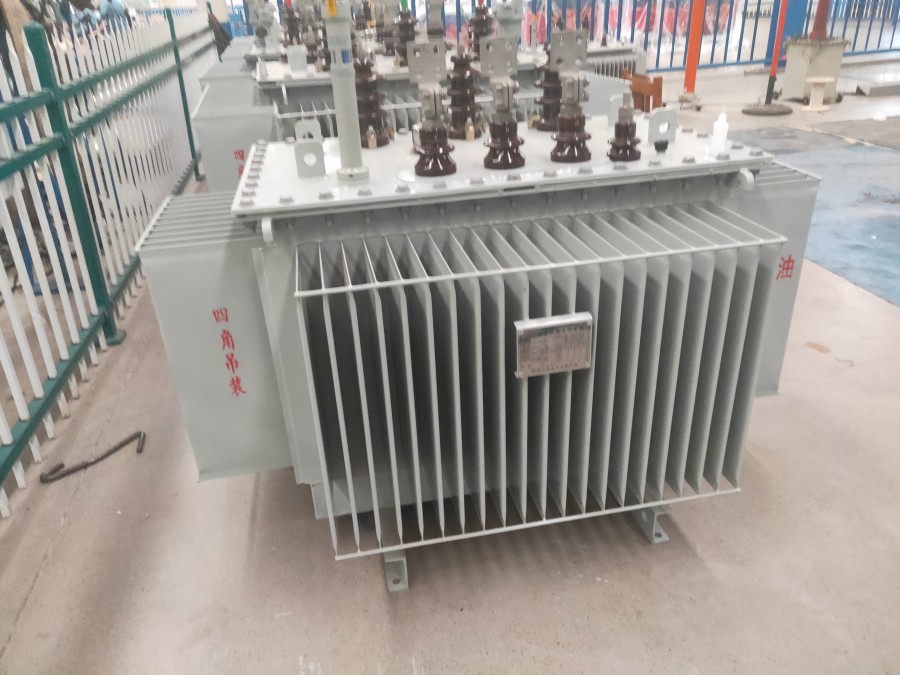
The working principle is straightforward. Alternating current in the primary winding creates a changing flux in the core, and that flux induces a voltage in the secondary winding. The ratio of turns sets the ratio of voltages, while the rated capacity in kVA sets how much load the unit can carry continuously at a defined temperature rise. A single phase transformer serves two-wire systems directly, or three-phase systems when three units are banked together, which is why it remains common in rural electrification and in installations where load grows gradually.
Two construction families dominate. Oil-immersed single phase transformers use a sealed tank, mineral oil and ONAN cooling, giving good overload tolerance and outdoor durability. Dry-type units are air-cooled and are preferred indoors where fire risk and oil containment matter. Wound-core designs, such as the D10 series single phase wound core transformer, wrap the core from continuous strip so the flux path follows the grain direction with fewer joints, which typically lowers no-load loss and audible noise compared with conventional stacked cores.
When quotes differ by 20 to 30 percent for apparently identical units, the gap usually sits in one of four places: aluminium windings presented as copper, lower-grade core steel, thinner conductor cross-sections that raise load loss, or a shortened test routine.
Single phase distribution transformers supply scattered rural consumers, farm pumps and small communities where three-phase extension is uneconomic. Beyond distribution, they appear in railway signalling and trackside supplies, control and instrument circuits, telecom and rectifier front ends, lighting, battery charging, and small renewable energy or storage interfaces. Each duty has a different load profile, and a unit optimised for continuous distribution duty is not automatically the right choice for a cyclic control load.
A credible single phase transformer leaves the factory with measurable evidence. Routine tests normally cover winding resistance, voltage ratio and polarity, impedance voltage, no-load loss and current, load loss, insulation resistance and power-frequency withstand on the windings, plus oil dielectric strength for oil-immersed units. Temperature rise and impulse withstand belong to type tests and should be available as a design report rather than repeated per unit. Ask for the routine test certificate, the inspection report and the manual, and check that the nameplate matches the order. Companies that track quality over the full service life will have these documents ready without prompting.
Mount the unit so that ventilation is unobstructed and terminals are accessible for thermographic inspection. Torque the connections to specification, because loose terminals are a common cause of overheating. For oil-immersed units, check oil level and silica gel condition periodically, inspect gaskets for weeping, and record no-load current at commissioning so future trends can be compared. Dry-type units mainly need clean air paths and periodic removal of conductive dust.
Buying from the production line removes distributor margin, but the larger saving usually comes from being able to specify the core grade, winding material and loss level directly rather than accepting whatever a reseller has in stock. Manufacturers serving both oil-immersed and dry-type ranges can also advise neutrally on which technology suits a given site, rather than steering every enquiry toward one product.
Runsheng Transformer Co., Ltd. produces single phase wound core units alongside its S11, S13, S20 and S22 oil-immersed transformers and SCB10, SCB13, SCB14 and SCB18 dry-type transformers, and supplies oil-immersed transformers at factory-direct prices with manuals, inspection reports and test certificates. Buyers comparing a single phase transformer for rural distribution or control duty can request loss figures and test documentation before committing, which is the practical way to confirm that a low quotation reflects efficiency rather than omission.
Contact for specifications and quotations: phone +86 13406394988, e-mail runsheng@7813transformer.com, WhatsApp 008613508930968.

Runsheng Transformer Co., Ltd. is a professional manufacturer of power transformers, specializing in oil-immersed transformers (S20, S11, S13), SH15 amorphous alloy transformers, S13 series 10KV 3D magnetic path wound-core transformers, D10 single-phase wound-core transformers, as well as mining transformers, rectifier transformers, surge arrestor transformers, load-tap-changing transformers, and custom-engineered special transformers.
WhatsApp & Wechat

No. 6, Intersection of Mount Huangshan Road and Changjiang Road, Liaocheng High tech Industrial Development Zone, Shandong, China


