
When you have coordination challenges, turn to Runsheng Transformer for help
It's all about making things easy, building partnerships, and providing a point of contact.
ONAN stands for Oil Natural Air Natural. It is not a brand, a model number, or a marketing label. It is a standard cooling class designation used in transformer engineering worldwide, and it describes exactly how heat leaves the unit: the insulating oil circulates by natural convection, and the heat is finally released to the surrounding air by natural airflow.
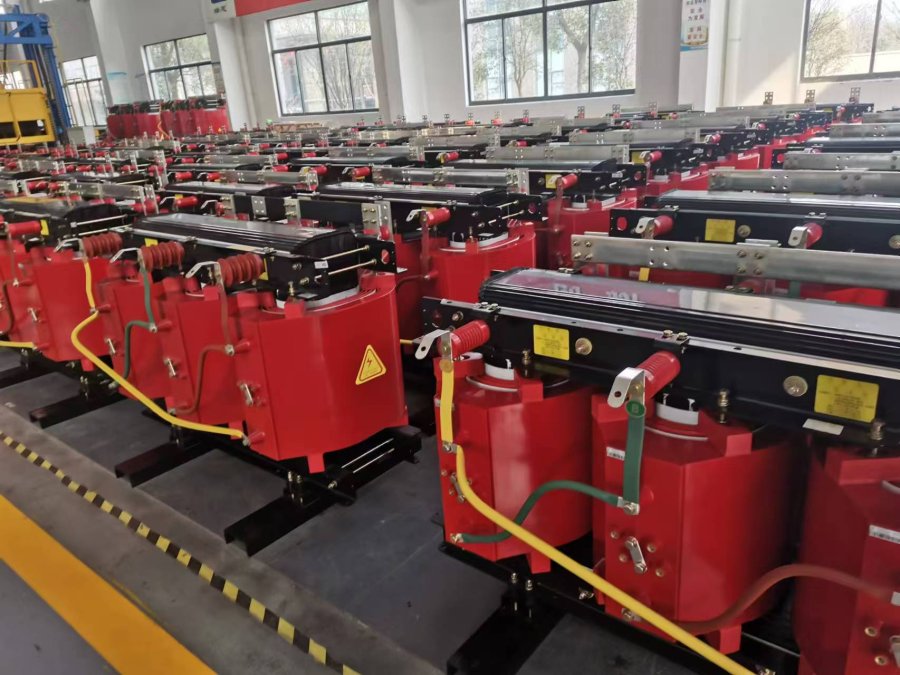
In plain terms, an ONAN transformer has no oil pumps, no cooling fans, and no forced-air blowers. The oil warms up inside the tank, rises as it heats, flows across the cooling surfaces, gives up its heat, and sinks back down. Air moves across the tank wall, corrugated fins, or radiator banks on its own. The result is a simple, quiet, low-maintenance design that has been the backbone of power distribution for more than a century.
Because of that simplicity, the vast majority of oil-immersed distribution transformers in the 30 kVA to 6300 kVA range are ONAN units. When a buyer asks for an oil-immersed transformer quotation, the cooling class on the data sheet will usually read ONAN.
The thermal path inside an ONAN transformer follows a very predictable loop:
Design limits matter here. Under IEC 60076-2 and GB/T 1094.2, a typical ONAN transformer is designed for a top-oil temperature rise of about 60 K, an average winding temperature rise of about 65 K, and a winding hot-spot rise of about 78 K, based on a maximum ambient temperature of 40 C. Altitude, average daily temperature, and enclosure type all affect the final rating. This is why a serious supplier asks about your site conditions before confirming capacity.
Cooling classes are written as a four-letter code. The first two letters describe the oil circuit, the last two describe the external cooling medium.
If your load profile is steady and your capacity margin is comfortable, ONAN is almost always the most economical and most reliable answer. Dual-rating designs such as ONAN/ONAF give you headroom for peak demand while keeping normal operation self-cooled.
ONAN transformers appear in utility distribution networks, renewable energy projects such as solar and wind step-up stations, mining and quarry sites, industrial plants, commercial buildings, hospitals, agricultural irrigation systems, railway traction support, and preassembled or compact substations. In many of these environments the transformer sits outdoors or in a simple enclosure, so a self-cooled design is the most practical and least troublesome choice.
Transformer pricing is heavily influenced by the number of hands the unit passes through. Buying directly from the manufacturer removes trading layers and usually brings the landed cost down by a meaningful margin. A manufacturer such as Runsheng Transformer Co., Ltd. also holds a broad stock of oil-immersed units, which shortens lead times and reduces the risk of expensive project delays. Every unit is supplied with a manual, inspection report, test certificate, and lifelong quality tracking, so the savings do not come at the cost of documentation or accountability.
An ONAN transformer is the simplest, most dependable answer to most distribution and industrial power needs. Understand the cooling class, verify the losses and temperature limits, buy from a source that documents every test, and the unit will quietly do its job for decades.
For specifications, pricing, or a custom ONAN transformer design, contact Runsheng Transformer Co., Ltd. - phone: +86 13406394988, e-mail: runsheng@7813transformer.com, WhatsApp: 008613508930968.

Runsheng Transformer Co., Ltd. is a professional manufacturer of power transformers, specializing in oil-immersed transformers (S20, S11, S13), SH15 amorphous alloy transformers, S13 series 10KV 3D magnetic path wound-core transformers, D10 single-phase wound-core transformers, as well as mining transformers, rectifier transformers, surge arrestor transformers, load-tap-changing transformers, and custom-engineered special transformers.
WhatsApp & Wechat

No. 6, Intersection of Mount Huangshan Road and Changjiang Road, Liaocheng High tech Industrial Development Zone, Shandong, China


