
When you have coordination challenges, turn to Runsheng Transformer for help
It's all about making things easy, building partnerships, and providing a point of contact.
A power transformer is the workhorse of every electrical network. Its basic job sounds simple: raise or lower voltage while keeping frequency constant. On the supply side, voltage is stepped up so power can travel long distances with acceptable losses; on the load side, a distribution transformer steps it back down to levels that factories, commercial buildings, data centers, and renewable energy plants can actually use.
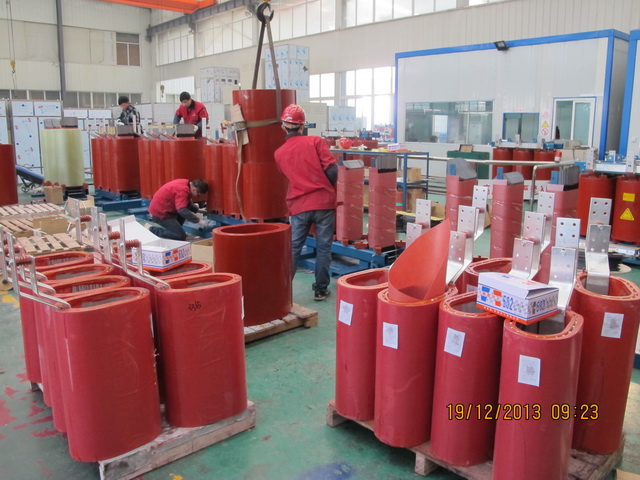
Because a transformer runs continuously, its efficiency matters far more than its purchase price. A unit that wastes a few extra kilowatts per hour quietly adds up to tens of thousands in electricity cost over a 20 to 25 year service life. That is why experienced buyers compare no-load loss, load loss, and total owning cost instead of shopping on price alone.
Nearly every power transformer on the market belongs to one of two insulation and cooling families.
A third family deserves attention. The SH15 and SCBH15 amorphous alloy transformer uses an amorphous metal core that cuts no-load loss dramatically, making it a strong fit for utilities and project owners working under strict efficiency targets.
When you compare offers for a power transformer, insist on the following data in writing:
Working with a manufacturer rather than a reseller removes a layer of margin and, more importantly, puts you in direct contact with the people who build the unit. Runsheng Transformer Co., Ltd. produces S22, S20, S11, and S13 oil-immersed transformers, SCB13, SCB14, and SCB18 dry-type transformers, SH15 amorphous alloy transformers, 35 kV preassembled substations, and high low voltage switchgear, with capacity ratings from 30 to 6300 kVA, along with mining transformers, rectifier transformers, and custom-designed special transformers.
For procurement teams, the practical advantages are straightforward: comprehensive inventory, factory-direct pricing, compliance with national standards, and delivery with manuals, inspection reports, test certificates, and lifelong quality tracking. That combination of documentation and traceability is what turns a low bid into a low total cost.
Choose oil-immersed for outdoor and heavy duty, dry-type for indoor and fire-sensitive locations, and amorphous alloy when no-load loss dominates your energy bill. Specify capacity, losses, impedance, and cooling clearly, demand test documentation, and buy from a manufacturer who will still answer the phone in year ten. Get those four things right and your power transformer will quietly earn its keep for decades.
For specifications, drawings, or a factory-direct quotation, contact Runsheng Transformer Co., Ltd. — phone: +86 13406394988, e-mail: runsheng@7813transformer.com, WhatsApp: 008613508930968.

Runsheng Transformer Co., Ltd. is a professional manufacturer of power transformers, specializing in oil-immersed transformers (S20, S11, S13), SH15 amorphous alloy transformers, S13 series 10KV 3D magnetic path wound-core transformers, D10 single-phase wound-core transformers, as well as mining transformers, rectifier transformers, surge arrestor transformers, load-tap-changing transformers, and custom-engineered special transformers.
WhatsApp & Wechat

No. 6, Intersection of Mount Huangshan Road and Changjiang Road, Liaocheng High tech Industrial Development Zone, Shandong, China


