
When you have coordination challenges, turn to Runsheng Transformer for help
It's all about making things easy, building partnerships, and providing a point of contact.
A distribution transformer is the final step-down link between the transmission grid and the equipment people actually use. Medium-voltage power arrives at 10kV or 35kV on distribution feeders, and the transformer reduces it to 400V/230V three-phase four-wire supply for factories, commercial buildings, residential communities and agricultural loads. Because it sits closest to the load, its efficiency, loss level and reliability directly decide your electricity bill and your downtime risk.
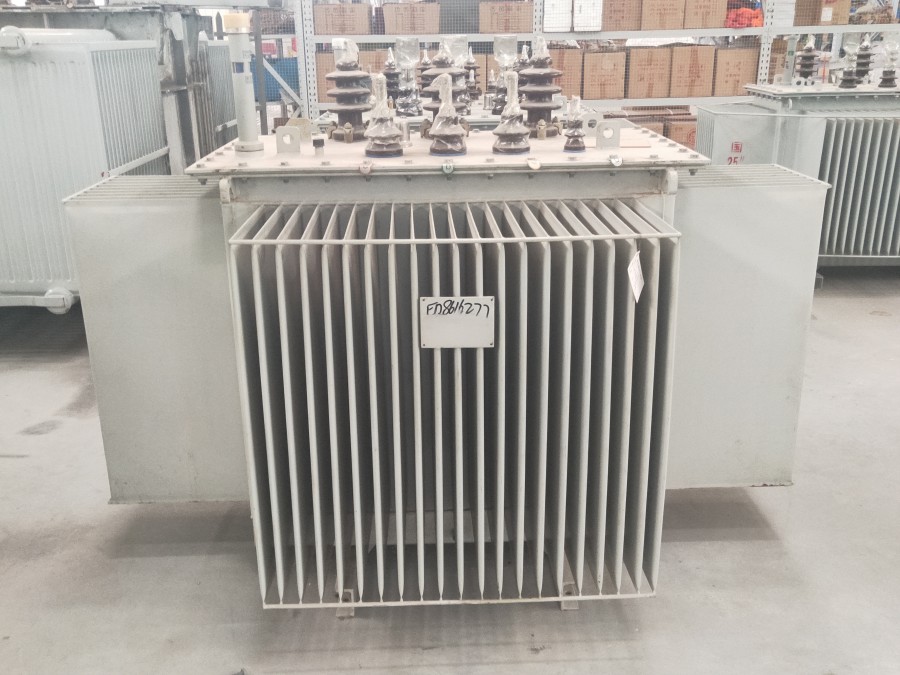
Unlike large power transformers at substations, distribution transformer units are usually rated from 30 kVA up to a few thousand kVA, are mass-produced in standardized series, and are installed on poles, in pad-mounted enclosures, or inside compact substations. That combination of high volume and direct cost impact is exactly why sourcing decisions matter so much.
Every supplier will quote from the same basic technology families. Knowing them keeps you from comparing apples to oranges.
Oil-immersed transformers (S11, S13, S20, S22 series): the workhorse design for outdoor and high-capacity duty. The core and windings sit in insulating oil inside a sealed tank, cooled by natural oil circulation and radiator fins. They offer the lowest cost per kVA and excellent overload capability. Higher series numbers generally mean lower no-load loss — an S13 unit typically cuts no-load loss by roughly 25–30% compared with an S11 of the same rating, and S20/S22 designs go further.
Dry-type transformers (SCB10, SCB13, SCB14, SCB18, SGB10): epoxy cast-resin windings, no combustible oil. They are the standard choice for indoor rooms, basements, hospitals, shopping centres, data rooms and metro projects where fire safety and space are constraints. SCB series units are self-extinguishing and require far less maintenance.
Amorphous alloy transformers (SH15, SCBH15): the amorphous metal core delivers exceptionally low no-load loss, which pays back quickly in grids with a low load factor — rural networks, street lighting, and lightly loaded commercial buildings.
Beyond these, there are application-specific designs: mining transformers, rectifier transformers, lightning arrester transformers, capacity-regulating and load tap changing transformer units, plus 35kV and below preassembled substation packages with high/low voltage switchgear.
When you compare quotations, insist that every supplier fills in the same parameters. These are the numbers that actually move cost and operating expense:
Rated capacity: matched to your real load, not your connected load. A common mistake is oversizing by 50–, which inflates purchase price and no-load loss.
Voltage ratio and vector group: for example 10kV/0.4kV, Dyn11, matched to your upstream protection and earthing design.
No-load loss and load loss: the core of your 10-year energy cost. A difference of a few hundred watts per unit becomes a serious figure across a fleet.
Impedance: typically 4–6% for distribution ratings; it governs short-circuit behaviour and voltage regulation.
Cooling and tap arrangement: ONAN cooling, plus off-circuit or on-load tap changing depending on how much your supply voltage wanders.
Insulation class, temperature rise and IP protection: F or H class insulation, and an enclosure level suited to your installation environment.
Standards: compliance with national standards and IEC 60076 series, verified by routine and type test reports.
Typical duty includes industrial plants and workshops, commercial complexes, hotels, hospitals, schools, water treatment plants, photovoltaic and wind renewable energy transformer applications, and utility pole- or pad-mounted distribution networks. Mining and heavy-craft sites demand reinforced, dust- and moisture-resistant construction, while renewable projects usually demand low loss combined with high harmonic tolerance.
Quoting by price alone. A cheaper unit with S11-level losses can cost more over its life than an S13 or S20 machine.
Ignoring copper content. Windings that are undersized or substituted with aluminium show up as higher load loss and shorter life.
Missing documentation. Without a manual, inspection report and test certificate, warranty claims and compliance audits become difficult.
Buying through layers of traders. Each middle layer adds margin and dilutes accountability when something fails.
Wrong enclosure or cooling class. An indoor-rated unit placed outdoors, or vice versa, fails early and voids guarantees.
Ordering from the producer removes trading margins and, more importantly, keeps technical responsibility in one place. A manufacturer such as Runsheng Transformer Co., Ltd. maintains a comprehensive inventory with assured quality and offers oil-immersed transformers at factory-direct prices, with every unit delivered together with manuals, inspection reports, test certificates and lifelong quality tracking. Their range covers 30–6300 kVA distribution, mining, rectifier, capacity-regulating, custom special transformer and preassembled substation solutions, which means a single point of contact can handle a mixed project scope rather than several unrelated suppliers.
Oil-immersed units typically run 20–25 years and need periodic oil sampling, seal checks and silica gel replacement. Dry-type units need mainly dust removal and ventilation checks, and often run longer in clean indoor environments. In all cases, keeping the load below rated capacity, maintaining a clean and well-ventilated installation area, and monitoring temperature rise will do more for longevity than any single maintenance task.
A distribution transformer is a 20-year purchase, so the buying decision should be based on loss level, documentation, service support and total cost of ownership rather than headline price. Compare loss figures directly, ask for test reports, and buy where the technical answers come from the people who build the unit.
Contact us for a specification-matched quotation: phone +86 13406394988, e-mail runsheng@7813transformer.com, WhatsApp 008613508930968.

Runsheng Transformer Co., Ltd. is a professional manufacturer of power transformers, specializing in oil-immersed transformers (S20, S11, S13), SH15 amorphous alloy transformers, S13 series 10KV 3D magnetic path wound-core transformers, D10 single-phase wound-core transformers, as well as mining transformers, rectifier transformers, surge arrestor transformers, load-tap-changing transformers, and custom-engineered special transformers.
WhatsApp & Wechat

No. 6, Intersection of Mount Huangshan Road and Changjiang Road, Liaocheng High tech Industrial Development Zone, Shandong, China


