
When you have coordination challenges, turn to Runsheng Transformer for help
It's all about making things easy, building partnerships, and providing a point of contact.
A medium voltage transformer is the backbone of any electrical distribution system. It takes the medium voltage supplied by the utility or a local substation — commonly 6 kV, 10 kV, 20 kV or 35 kV — and steps it down to the low voltage (typically 400 V / 0.4 kV) that machines, lighting, HVAC systems and building services actually use. Without it, power could not be moved efficiently from a generation source to the point of consumption.
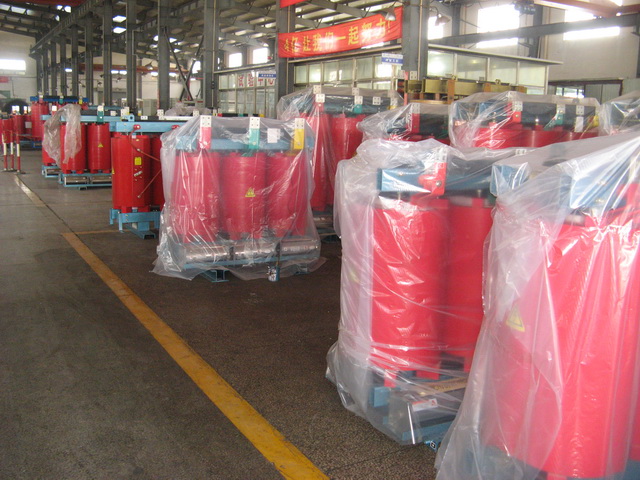
In practice, the medium voltage class covers equipment rated roughly from 1 kV up to 36 kV. Because these units sit between the utility network and the end user, they are also called distribution transformers when applied in public grids, or unit/step-down transformers when installed inside industrial facilities.
Voltage class: 3 kV, 6 kV, 10 kV, 20 kV, 35 kV
Rated capacity: usually 30 kVA to 6300 kVA
Cooling method: oil-immersed (ONAN/ONAF) or dry-type (AN/AF)
Common standards: IEC 60076 and GB 1094
The three mainstream families differ mainly in insulation medium, installation environment and loss performance. Choosing the wrong one is one of the most common and most expensive mistakes buyers make.
Oil-immersed transformers (S11, S13, S20, S22 series): The most economical option for outdoor or dedicated transformer rooms. Oil circulates and dissipates heat efficiently, giving high overload capacity and lower first cost per kVA. S13 and S22 models use lower-loss cores, cutting long-term electricity bills considerably.
Dry-type transformers (SCB10, SCB13, SCB14, SCB18 series): No oil, no fire risk, no leakage pool — the standard choice for indoor locations such as commercial buildings, hospitals, data centres, metro stations and underground substations. SCB14 and SCB18 units meet higher energy-efficiency grades.
Amorphous alloy transformers (SH15, SCBH15 series): The amorphous metal core delivers very low no-load loss, which is ideal for installations that run 24/7 at light load, such as rural distribution networks and renewable energy sites.
A quotation is only meaningful when the technical specification is fixed. Always verify the following items on the nameplate drawing and in the technical agreement:
Rated capacity (kVA): size it from real load, not from a guess — under-sizing causes overheating, over-sizing wastes money and loss.
Voltage ratio and tapping range: for example 10 kV ± 5% / 0.4 kV.
Vector group: Dyn11 and Yyn0 are the most widely used for distribution duty.
Impedance voltage: affects short-circuit current and parallel operation with existing units.
No-load loss and load loss: these two numbers determine your electricity cost for the next 20 years, so compare them, not just the purchase price.
Tap changer: off-circuit (no-load) or on-load tap changing, depending on how much grid voltage fluctuates.
Enclosure and protection: IP rating, temperature rise limits, cooling fans, Buchholz relay and pressure relief for oil units.
The applications are broader than most buyers first assume. Typical installations include industrial parks and factory power distribution, mining operations with heavy starting loads, water treatment plants, airports, shopping complexes, photovoltaic and wind farms, and packaged solutions such as preassembled substations and compact substations that combine the transformer with high and low voltage switchgear in one transportable enclosure.
Special duty variants are also common: mining transformers with reinforced enclosures, rectifier transformers for electrolysis and DC drives, and custom-designed special transformers built to a specific drawing.
Price differences between suppliers for the same rating can easily reach 20–40%, and rarely because one unit is genuinely better. More often it is the number of intermediaries, the copper/aluminium choice, the efficiency grade, or the accessories included in the quote.
Buy from the manufacturer, not from trading layers. A direct source eliminates step-by-step markup and gives you a single point of responsibility for after-sales service.
Compare efficiency grades, not just price. A slightly cheaper low-efficiency unit can cost more in losses over its lifetime than the price difference you saved.
Ask for verified loss data and type test reports against the national or IEC standard, plus routine test reports for the specific serial number you receive.
Confirm what is included: accessories, oil, fans, temperature controller, cable boxes, documentation and warranty terms.
As a leading transformer manufacturer, Runsheng Transformer Co., Ltd. keeps a comprehensive inventory with assured quality and offers oil-immersed transformers at factory-direct prices, covering S22, S20, S11 and S13 oil-immersed units, SCB13/SCB14/SCB18 dry-type transformers, SH15 amorphous alloy transformers, mining and rectifier transformers, plus 35 kV and below preassembled substations, compact substations and high/low voltage switchgear. Because every product is shipped with a manual, inspection report, test certificate and lifelong quality tracking, buyers can verify performance instead of trusting a sales promise.
Reliable suppliers deliver more than a box. Before dispatch, ask for the routine test report (ratio, resistance, no-load loss, load loss, impedance, power frequency withstand voltage), the type test report if available, the nameplate drawing, the installation and operation manual, and the packing list. This documentation protects you during commissioning, maintenance and any future insurance or inspection audit.
A medium voltage transformer is a long-life asset, typically 20 to 30 years in service. The right approach is to define the load and environment first, then choose the transformer type and efficiency grade, then compare manufacturers on total cost rather than headline price. Done properly, this simple sequence avoids overspending, avoids downtime, and keeps energy losses low for decades.
For specification support, technical drawings or a factory-direct quotation, please contact: phone: +86 13406394988 / e-mail: runsheng@7813transformer.com / whatsapp: 008613508930968.

Runsheng Transformer Co., Ltd. is a professional manufacturer of power transformers, specializing in oil-immersed transformers (S20, S11, S13), SH15 amorphous alloy transformers, S13 series 10KV 3D magnetic path wound-core transformers, D10 single-phase wound-core transformers, as well as mining transformers, rectifier transformers, surge arrestor transformers, load-tap-changing transformers, and custom-engineered special transformers.
WhatsApp & Wechat

No. 6, Intersection of Mount Huangshan Road and Changjiang Road, Liaocheng High tech Industrial Development Zone, Shandong, China


