
When you have coordination challenges, turn to Runsheng Transformer for help
It's all about making things easy, building partnerships, and providing a point of contact.
A 66kv transformer is a power transformer built to operate at a nominal system voltage of 66 kilovolts. It sits in the sub-transmission layer of the grid — above the familiar 10kV and 35kV distribution classes, and below the 110kV, 220kV and higher transmission tiers. In practice, a 66kv transformer either steps down power from a higher transmission voltage to 66kV for regional distribution, or steps it down further to 35kV, 10kV or 6kV for industrial and urban consumers.
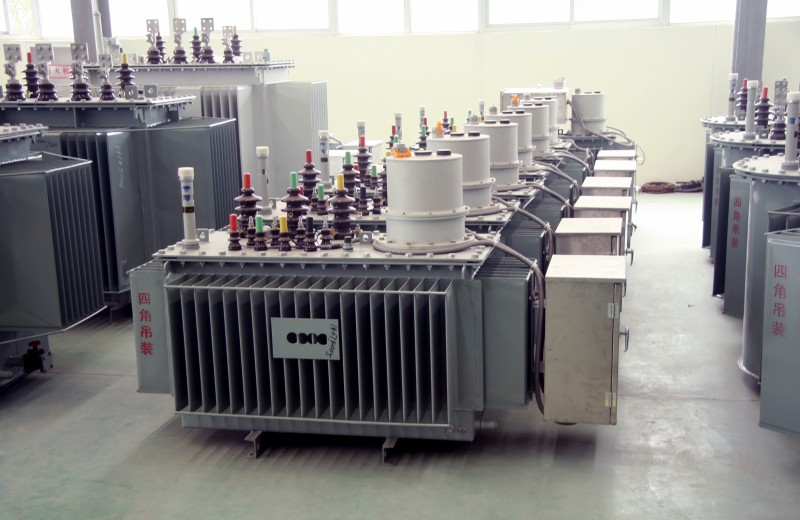
The voltage class is not just a number on a nameplate. It dictates the insulation level, phase-to-earth and phase-to-phase clearances, bushing design, impulse withstand ratings, tap-changer configuration, cooling method and tank construction. That is why a 66kv transformer is engineered as a distinct product family rather than a scaled-up distribution unit.
66kV systems are widely used in parts of Asia, Africa, the Middle East and Latin America, where the standard sub-transmission voltage was set at 66kV instead of 110kV. Typical roles include:
Step-down substation service: 110kV/66kV or 66kV/10kV transformation in utility substations.
Renewable energy integration: wind farms and solar parks often collect power at 33kV or 35kV and step up to 66kV for grid connection.
Industrial incoming supply: mining, steel, cement, chemical and large manufacturing plants fed at 66kV.
Railway, metro and data-center campuses that require a dedicated high-capacity intake.
In the 66kV class, oil-immersed transformers dominate because of their superior insulation strength, heat dissipation and cost per kVA at higher capacities. Dry-type units are usually applied at 35kV and below, mostly indoors.
Oil-immersed transformers (S11, S13, S20, S22 series): mineral oil insulation with ONAN or ONAF cooling, sealed or conservator tank designs, available with off-circuit or on-load tap changers. The S13, S20 and S22 families are progressively lower in no-load loss, which matters a great deal on a unit that runs 24/7.
Dry-type transformers (SCB10, SCB13, SCB14, SCB18): cast-resin insulated, flame-retardant, no oil leakage risk, well suited to indoor substations, tunnels and buildings.
Amorphous alloy transformers (SH15, SCBH15): amorphous metal cores cut no-load loss dramatically — useful where transformers sit lightly loaded for long periods.
Special-purpose designs: mining transformers, rectifier transformers, capacity-regulating transformers and custom special transformers built to project specifications.
Because a 66kv transformer is a long-life capital asset, the technical schedule matters more than the headline price. Confirm at minimum:
Rated capacity: standardized ratings from 30 kVA up to 6300 kVA and beyond for distribution duties, with larger custom ratings for sub-transmission service.
Voltage ratio and vector group: for example 66/11kV with YNd11, matched to your protection and earthing philosophy.
Impedance voltage percentage: affects fault current levels and parallel-operation compatibility.
No-load loss and load loss: must be stated explicitly and be verifiable against GB 20052 or IEC 60076 expectations.
Tap changer type: off-circuit (DETC) versus on-load (OLTC), plus tapping range such as ±8 × 1.25%.
Insulation and impulse levels: lightning impulse and power-frequency withstand values for the 66kV winding.
Cooling class, temperature rise, altitude and ambient conditions: critical if the site is hot, humid, coastal or high-altitude.
Reputable manufacturers design and test to IEC 60076, GB 1094 / GB 1094.1-5, or IEEE C57.12.00 depending on the destination market. Routine tests normally include winding resistance, ratio and vector group check, insulation resistance, applied and induced overvoltage withstand, no-load loss and load loss measurement, and oil dielectric testing. Type tests such as lightning impulse, temperature rise and short-circuit withstand should be available from the same design family.
When you buy, insist on the actual factory routine test report for your serial number — not just a generic certificate of conformity. Every unit shipped by Runsheng Transformer Co., Ltd., for example, is delivered with a manual, inspection report and test certificate backed by lifelong quality tracking.
Many buyers compare only the first cost and later discover the real expense in losses, outages and repairs. Watch for these common traps:
Understated losses: a lower purchase price with higher no-load loss can cost more in five years than the price difference.
Material substitution: aluminium windings sold as copper, or lower-grade core steel. Get conductor material and core grade written into the contract.
Missing or forged test data: ask for third-party witness testing on larger units.
Ignoring total owning cost: capitalize losses and add maintenance, spare parts and downtime risk.
Unverified references: request project lists and photos of comparable 66kv transformer deliveries.
Buying factory-direct is one of the simplest ways to remove cost. As a China transformer supplier with comprehensive inventory and factory-direct pricing, Runsheng Transformer Co., Ltd. manufactures S11, S13, S20 and S22 oil-immersed transformers, SCB10/SCB13/SCB14/SCB18 dry-type transformers, SH15/SCHB15 amorphous alloy transformers, plus compact substations and high/low-voltage switchgear — all compliant with national standards and available as custom special transformers when a project demands a non-standard design.
Define the load profile and future expansion margin before choosing capacity.
Decide oil-immersed versus dry-type based on location, fire rules and capacity.
Lock in loss limits, impedance and tap range in the technical specification.
Confirm the test regime, documentation package, warranty and commissioning support.
Compare delivered total owning cost, not ex-works price alone.
A 66kv transformer is a decades-long asset that quietly determines the reliability and energy cost of an entire facility. Get the voltage class, losses, impedance and documentation right, source from a manufacturer who can show real test data, and the project will pay you back for years. Whether you need a standard distribution unit or a fully custom 66kv transformer, working directly with the production line keeps both risk and cost under control.
Contact us for drawings, quotations and test reports:
Phone: +86 13406394988
E-mail: runsheng@7813transformer.com
WhatsApp: 008613508930968

Runsheng Transformer Co., Ltd. is a professional manufacturer of power transformers, specializing in oil-immersed transformers (S20, S11, S13), SH15 amorphous alloy transformers, S13 series 10KV 3D magnetic path wound-core transformers, D10 single-phase wound-core transformers, as well as mining transformers, rectifier transformers, surge arrestor transformers, load-tap-changing transformers, and custom-engineered special transformers.
WhatsApp & Wechat

No. 6, Intersection of Mount Huangshan Road and Changjiang Road, Liaocheng High tech Industrial Development Zone, Shandong, China


