
When you have coordination challenges, turn to Runsheng Transformer for help
It's all about making things easy, building partnerships, and providing a point of contact.
ODAF is the standard cooling class designation for an Oil Directed Air Forced transformer. The four-letter code follows the internationally recognised naming convention used in IEC 60076-2 and IEEE C57.12.00. The first two letters describe how the internal cooling medium (insulating oil) circulates, and the last two describe how the external cooling medium (air) circulates. In ODAF, the letter D means the oil is not simply pumped in bulk but actively directed through the winding ducts, and the AF means fans force air across the radiators or heat exchangers.
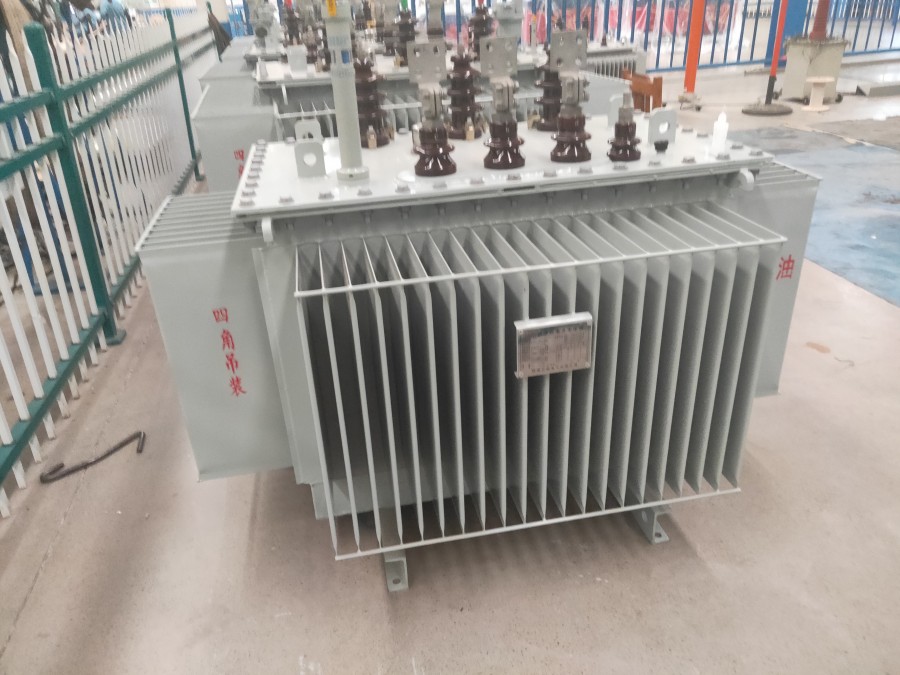
In practical terms, an ODAF transformer is a high-capacity oil-immersed unit in which oil pumps push cooled oil through carefully designed flow paths inside the windings while cooling fans blow air over the cooling surfaces. The combination delivers one of the highest heat-removal capabilities available in an air-cooled design, which is why ODAF cooling is closely associated with large power transformers and space-constrained substations.
Many transformers are dual- or triple-rated, for example ONAN/ONAF/ODAF, giving the operator three capacity stages such as 100%, 125% and 150% of the base rating. This staged design is one reason ODAF units are valued: the owner can run at the lowest loss stage during light load and switch on pumps and fans only when demand rises.
In the directed mode, oil is drawn from the main tank or conservator, passed through the coolers, and then pumped back into the winding through inlet manifolds, guide washers or barriers. These barriers force the oil to travel along the conductor surfaces inside axial or zigzag ducts instead of bypassing the windings. Because both the wetted surface area and the local oil velocity are increased, the heat transfer coefficient rises sharply and the winding hot-spot temperature drops compared with undirected circulation.
On the external side, fans mounted on the radiator banks or air-cooled heat exchangers push ambient air across the finned surfaces. Temperature control is normally automatic: winding temperature indicators (WTI), oil temperature indicators (OTI) and, in larger units, a thermal image of the winding hot spot determine when the pump and fan stages are switched on or off.
The main benefit of ODAF cooling is a higher megavolt-ampere rating inside a smaller physical envelope. Because the winding hot spot is better controlled, insulation ageing is slower and the transformer tolerates short-time overloads more comfortably, which supports cyclic and seasonal load profiles. A well-designed ODAF unit also allows operators to deload gracefully: if a pump or fan fails, the transformer can usually continue running at a reduced ONAN or ONAF rating instead of being taken offline immediately.
The trade-offs are equally real. Pumps and fans consume auxiliary power, generate audible noise, and add moving parts that must be maintained. An ODAF transformer needs proper oil flow protection, including flow indicators, pressure differential devices and Buchholz relays, plus a control cabinet that manages automatic stage changeover. Initial cost is higher than an equivalent ONAN or ONAF unit of the same rating.
Directed-flow designs reward disciplined maintenance. Check that pump and fan stage control matches the temperature set points, inspect oil flow indicators and pressure differential readings regularly, and perform dissolved gas analysis in line with IEC 60599 or IEEE C57.104. Keep radiator fins clean so forced air is not blocked, test standby pump changeover, and compare simulated hot-spot temperatures against calculated values. Documenting these checks supports the lifelong quality tracking that serious buyers expect from their supplier.
Cooling class should never be chosen in isolation. It must match the load profile, ambient conditions, altitude, noise limits and site footprint. Buyers working with a power transformer manufacturer such as Runsheng Transformer Co., Ltd. can match the cooling concept to the application while keeping the bill of materials transparent. Runsheng Transformer Co., Ltd. produces S11, S13, S20 and S22 oil-immersed transformers, SCB10, SCB13, SCB14 and SCB18 dry-type transformers, SH15 amorphous alloy transformers, mining and rectifier transformers, load tap changing units, 35 kV and below preassembled substations, compact substations and high and low voltage switchgear, covering 30 to 6300 kVA with custom-designed special transformers available.
All products are supplied at factory-direct prices and comply with national standards, delivered with manuals, inspection reports, test certificates and lifelong quality tracking. If you are specifying an ODAF transformer or comparing oil-immersed options for a project, contact the team to discuss your parameters: phone +86 13406394988, e-mail runsheng@7813transformer.com, or WhatsApp 008613508930968.

Runsheng Transformer Co., Ltd. is a professional manufacturer of power transformers, specializing in oil-immersed transformers (S20, S11, S13), SH15 amorphous alloy transformers, S13 series 10KV 3D magnetic path wound-core transformers, D10 single-phase wound-core transformers, as well as mining transformers, rectifier transformers, surge arrestor transformers, load-tap-changing transformers, and custom-engineered special transformers.
WhatsApp & Wechat

No. 6, Intersection of Mount Huangshan Road and Changjiang Road, Liaocheng High tech Industrial Development Zone, Shandong, China


