
When you have coordination challenges, turn to Runsheng Transformer for help
It's all about making things easy, building partnerships, and providing a point of contact.
A medium voltage transformer is the link between a distribution network and the low voltage equipment that actually does the work in a factory, a commercial building, a solar farm or a mine. It takes the incoming feeder voltage, most commonly 10 kV or 35 kV, and steps it down to the utilization voltage: 400 V, 415 V, 480 V, 690 V or a custom value. Because it sits at the boundary between the grid and the load, its efficiency, loss levels and reliability directly affect both the electricity bill and the uptime of the entire site.
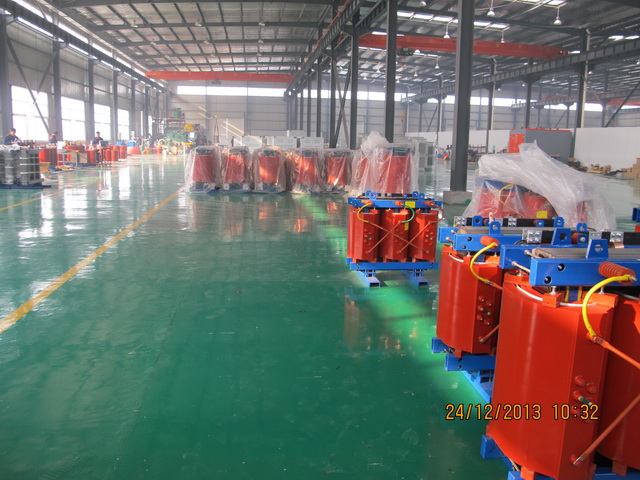
In practical procurement terms, the term covers equipment rated from 1 kV up to 35 kV on the high voltage side. The most widely ordered ratings are 10 kV and 35 kV, with capacities from 30 kVA to 6300 kVA. A standard three-phase distribution unit with a Dyn11 vector group, ONAN cooling and an off-circuit tap changer will cover the majority of industrial and commercial duties, while renewable energy, mining and rectifier applications usually need a customized design.
This is the first decision that changes price, footprint and maintenance. Oil-immersed units use mineral oil for insulation and cooling, are available in larger capacities and cost less per kVA. Dry-type units use cast resin insulation, need no oil, are non-flammable and are normally specified for indoor installation in buildings, tunnels and hospitals.
There are also single-phase and special constructions, such as the D10 series single-phase wound core transformer and the S13 series 10 kV three-dimensional magnetic path wound core transformer, which are chosen for specific loss, noise or space requirements.
Most disputes in transformer procurement come from an incomplete specification, not from a manufacturing defect. Confirm the following in writing before the order is placed:
Two transformers with the same nameplate rating can differ by 30 percent or more in price. The gap usually comes from winding material, loss level and accessories. Copper windings cost more than aluminium but carry higher overload capability and lower losses. A lower-loss design costs more upfront and less over ten years of operation, so the correct comparison is total lifetime cost, not purchase price alone.
Accessories also add up quickly: temperature controllers, cooling fans, Buchholz relays, pressure relief devices, and the interface required for integration with high and low voltage switchgear. Finally, the supply chain matters. Buying from a trading company adds a margin that delivers no technical value, which is why many buyers now purchase directly from the manufacturer. Runsheng Transformer Co., Ltd. supplies oil-immersed transformers at factory-direct prices with a comprehensive inventory, so a routine replacement does not become a schedule risk.
A transformer is a long-life asset, so documentation is as important as the hardware. Every delivery should include an operation manual, an inspection report and a test certificate, including routine tests such as winding resistance, ratio, insulation resistance, power frequency withstand and no-load and load loss measurement. Lifelong quality tracking makes it possible to trace performance and spare parts years after installation, which matters when a unit is part of a critical process line.
Beyond ordinary plant distribution, medium voltage transformers are engineered for demanding duties: mining transformers for dusty, humid and vibration-heavy environments; rectifier transformers for electrolysis and electrochemical processes; lightning arrester transformers for test laboratories; capacity-regulating transformers for load management; and renewable energy transformers optimized for the cycling duty profile of solar and wind plants.
Is a medium voltage transformer the same as a distribution transformer? In most projects, yes. A distribution transformer rated 10 kV or 35 kV on the primary side is a medium voltage transformer. The term simply describes the voltage class, while distribution describes the duty.
How long does delivery take? Standard ratings that are held in inventory can ship quickly, while custom special transformers typically require a production cycle confirmed at order stage.
Can the design be customized? Yes. Capacity, vector group, impedance, enclosure, tap changer and loss level can all be engineered to match a project specification.
If you are replacing a unit or specifying a new one, the fastest way to avoid overpaying is to send your parameters for a direct factory quotation with the loss values and test documentation stated openly. Runsheng Transformer Co., Ltd. produces S22, S20, S11 and S13 oil-immersed transformers, SCB13, SCB14 and SCB18 dry-type transformers, SH15 amorphous alloy transformers, 35 kV and below preassembled substation equipment, and custom-designed special transformers, all compliant with national standards and backed by lifelong quality tracking.
Contact us for a quotation or technical consultation:
Phone: +86 13406394988
E-mail: runsheng@7813transformer.com
WhatsApp: 008613508930968

Runsheng Transformer Co., Ltd. is a professional manufacturer of power transformers, specializing in oil-immersed transformers (S20, S11, S13), SH15 amorphous alloy transformers, S13 series 10KV 3D magnetic path wound-core transformers, D10 single-phase wound-core transformers, as well as mining transformers, rectifier transformers, surge arrestor transformers, load-tap-changing transformers, and custom-engineered special transformers.
WhatsApp & Wechat

No. 6, Intersection of Mount Huangshan Road and Changjiang Road, Liaocheng High tech Industrial Development Zone, Shandong, China


