
When you have coordination challenges, turn to Runsheng Transformer for help
It's all about making things easy, building partnerships, and providing a point of contact.
Electricity rarely travels the way it is generated. Power plants produce electricity at a moderate voltage, but sending that power hundreds of kilometers across a transmission network demands a much higher voltage to keep current low and line losses manageable. That job belongs to the high voltage power transformer — the core equipment that steps voltage up for transmission and back down for distribution and end use.
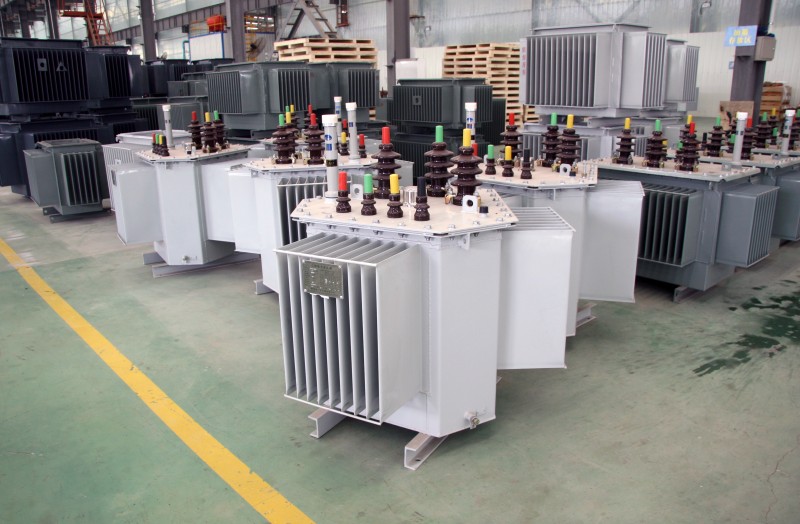
For anyone involved in procurement — EPC contractors, industrial plant engineers, utility buyers, renewable energy developers — understanding what this equipment does, which types exist, and which parameters actually matter is the difference between a trouble-free installation and years of costly problems.
At its heart, the device relies on electromagnetic induction. Two or more windings are wound around a magnetic core, usually built from laminated silicon steel or, in more efficient designs, amorphous alloy ribbon. When alternating current flows through the primary winding, it creates a changing magnetic flux in the core, which induces a voltage in the secondary winding. The ratio of turns between the two windings determines the voltage ratio.
Because no rotating parts are involved, a well-built transformer can operate for decades with minimal maintenance. What separates a good unit from a poor one comes down to design margin, material quality and manufacturing discipline:
Selection starts with the installation environment and the voltage class required. The most common categories are:
Specification mistakes are expensive and often irreversible. Before signing, confirm each of the following:
These units sit at the boundary between transmission and distribution, which makes them common across a wide range of projects: power plants and step-up substations, utility distribution networks, 35 kV and below preassembled substations, renewable energy wind and solar farms, mining operations, electrolysis and rectifier systems, railway traction power supplies, and large industrial parks with heavy motor loads.
Many buyers pay a premium for the same hardware simply because they bought through a trading company. Working directly with a manufacturer removes layers of markup and, more importantly, keeps technical responsibility in one place. Practical advice for a safer purchase:
A manufacturer with comprehensive inventory can shorten lead times and control quality at every production stage, from core cutting and winding to vacuum drying and final testing. Runsheng Transformer Co., Ltd. produces S22, S20, S11 and S13 oil-immersed transformers, SCB13, SCB14 and SCB18 dry-type transformers, SH15 amorphous alloy transformers, single-phase wound core units, and 35 kV and below preassembled substation equipment including European-style and American-style compact substations and high/low voltage switchgear. All products comply with national standards and ship with manuals, inspection reports, test certificates and lifelong quality tracking.
If you are specifying or replacing a high voltage power transformer, getting a factory-direct quotation against your parameters is the fastest way to compare real cost. Contact us at phone +86 13406394988, e-mail runsheng@7813transformer.com, or WhatsApp 008613508930968 to discuss your project requirements.

Runsheng Transformer Co., Ltd. is a professional manufacturer of power transformers, specializing in oil-immersed transformers (S20, S11, S13), SH15 amorphous alloy transformers, S13 series 10KV 3D magnetic path wound-core transformers, D10 single-phase wound-core transformers, as well as mining transformers, rectifier transformers, surge arrestor transformers, load-tap-changing transformers, and custom-engineered special transformers.
WhatsApp & Wechat

No. 6, Intersection of Mount Huangshan Road and Changjiang Road, Liaocheng High tech Industrial Development Zone, Shandong, China


