
When you have coordination challenges, turn to Runsheng Transformer for help
It's all about making things easy, building partnerships, and providing a point of contact.
A low voltage transformer is the last link in the power delivery chain. It takes the medium voltage carried by the distribution network — typically 10 kV, 20 kV or 35 kV — and steps it down to the low voltage level that factories, commercial buildings and households actually use, most commonly a 400 V / 230 V three-phase four-wire system. Because it sits closest to the load, its efficiency, loss level and reliability directly decide how much money a site spends on electricity every single year.
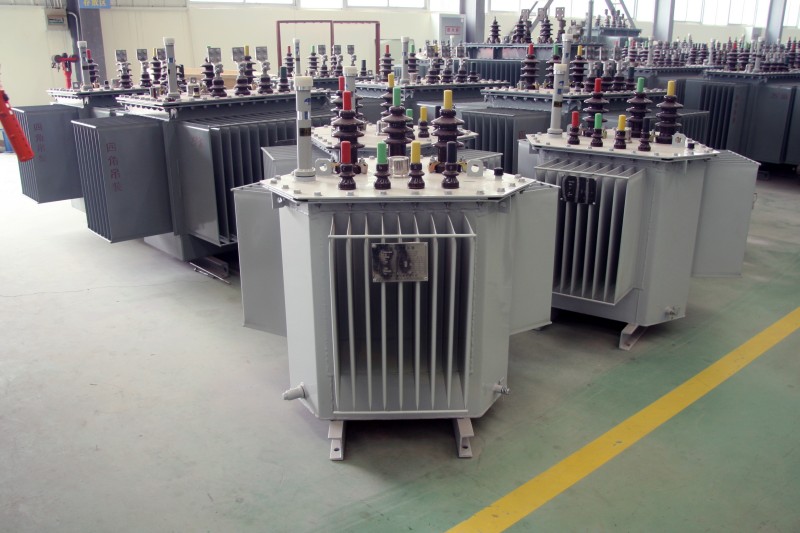
In simple terms, the machine works on electromagnetic induction. The primary winding is energised by the higher voltage supply and creates a magnetic flux in the laminated core; that flux induces a lower voltage in the secondary winding. The turns ratio between the two windings sets the output voltage. Everything else — the core material, the conductor, the cooling method, the insulation system — exists to make that conversion as efficient, cool and quiet as possible.
Buyers usually meet four families, and the choice depends on the installation environment, the budget and the efficiency target:
A transformer quotation is only meaningful when the technical data is fixed. Check these points line by line:
The applications are broader than most people expect: industrial plants and production lines, commercial complexes and data centres, residential developments, water treatment, charging stations for electric vehicles, solar and wind farms, mining sites and railway traction substations. In renewable energy projects the transformer is often paired with a preassembled substation, compact substation or high and low voltage switchgear so that the whole step-down package arrives as one tested unit.
The price of a low voltage transformer is built from copper or aluminium conductor, silicon steel or amorphous core, insulation material, tank or enclosure steel, and labour. When a buyer goes through two or three trading layers, each layer adds margin without adding a single kilogram of copper. Sourcing straight from a transformer manufacturer removes that stacking, and it also removes the finger-pointing that happens when a middleman cannot answer a technical question. Direct factory contact means the winding material, core grade, loss figures and test data can all be confirmed before the order is placed — and in practice this is where the 20% to 30% saving usually comes from.
Working with an established manufacturer such as Runsheng Transformer Co., Ltd. also means the technical conversation happens with the people who actually build the unit, so capacity, impedance and enclosure options can be adjusted to the real load profile instead of being forced into a catalogue standard.
Whether the order is for a single 30 kVA distribution transformer or a batch of 6300 kVA units, the delivery package should include the operation manual, inspection report, test certificate, nameplate data matching the contract, and a traceable quality record that follows the unit through its service life. Products should comply with national standards, and the supplier should be able to explain the difference between the S11 oil-immersed transformer and the S22 oil-immersed transformer in terms of measured loss and payback period, not just price.
A low voltage transformer is a long-life asset, and the cheapest quotation on the table is rarely the cheapest machine over its service life. Get the parameters right, buy from the source, and insist on the paperwork — that is the whole secret to cutting cost without cutting quality. For specifications, drawings or a factory-direct quotation, contact Runsheng Transformer Co., Ltd. at phone +86 13406394988, e-mail runsheng@7813transformer.com, or WhatsApp 008613508930968.

Runsheng Transformer Co., Ltd. is a professional manufacturer of power transformers, specializing in oil-immersed transformers (S20, S11, S13), SH15 amorphous alloy transformers, S13 series 10KV 3D magnetic path wound-core transformers, D10 single-phase wound-core transformers, as well as mining transformers, rectifier transformers, surge arrestor transformers, load-tap-changing transformers, and custom-engineered special transformers.
WhatsApp & Wechat

No. 6, Intersection of Mount Huangshan Road and Changjiang Road, Liaocheng High tech Industrial Development Zone, Shandong, China


