
When you have coordination challenges, turn to Runsheng Transformer for help
It's all about making things easy, building partnerships, and providing a point of contact.
A 33kv transformer is a static electrical device that steps voltage up or down within a 33 kV power system. It usually connects a 33 kV incoming line to a lower utilisation voltage such as 11 kV, 10 kV, 6.6 kV or 0.4 kV, or works in reverse to feed power back into a 33 kV grid. In real projects, the 33kv transformer is the workhorse of medium-voltage distribution: it sits between high-voltage transmission networks (110 kV and above) and the low-voltage equipment that actually drives motors, lighting and production lines.
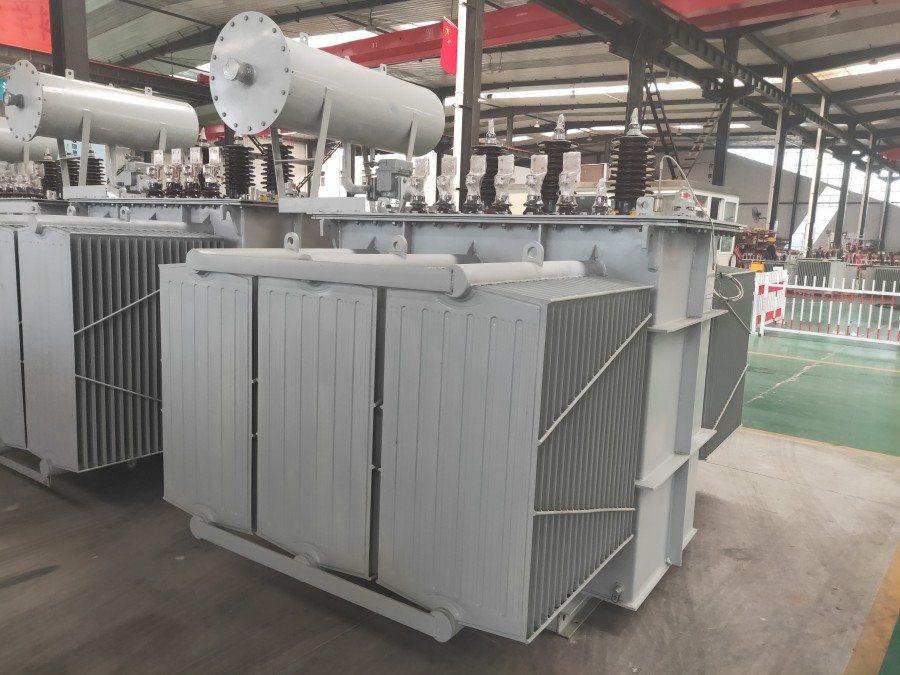
Because 33 kV is a moderate voltage combined with a moderate power range, a typical 33kv transformer is built with capacities from 30 kVA to 6300 kVA. That range covers small commercial buildings, large industrial parks, solar and wind collection stations, and utility distribution substations. The design challenge is always the same: hold insulation strength at 33 kV, keep losses and temperature rise low, and stay mechanically robust for decades of outdoor or indoor service.
Engineers rarely choose a voltage class by accident. The 33 kV level survives because it balances cost, losses and reach better than most alternatives.
Buyers are usually offered three technology families, and each one suits a different site condition.
Oil-immersed transformers remain the default choice for outdoor and high-capacity duty. Common models include the S11 sealed oil-immersed transformer, the S13 low-loss oil-immersed transformer, and the higher-efficiency S20 and S22 oil-immersed transformers. They offer excellent heat dissipation, strong overload capability and the lowest cost per kVA in most cases.
Dry-type transformers are preferred indoors, inside buildings, tunnels, hospitals and shopping centres where fire safety and oil leakage are unacceptable. Cast-resin models such as the SCB10, SCB13, SCB14 and SCB18 dry-type transformer use epoxy-resin encapsulated windings with high insulation classes and excellent flame-retardant behaviour.
Amorphous alloy transformers use a rapidly quenched metal core instead of conventional grain-oriented silicon steel. Models such as the SH15 and SCBH15 amorphous alloy transformer can cut no-load loss dramatically, which matters greatly for installations that run 24 hours a day at light load, such as rural distribution networks and street lighting.
Beyond these families, special-duty units are frequently custom built: mining transformers for dusty, humid or explosion-risk environments, rectifier transformers for electrolysis and metallurgy, load tap changing transformers for fluctuating grids, and fully custom special transformer designs for unusual voltage ratios or impedance requirements.
A quotation is only comparable when every party is quoting the same specification. Check the following items line by line:
Transformer failures are rarely caused by exotic faults; they are usually caused by cheap cores, under-sized copper, poor vacuum drying or careless assembly. That is why supplier selection matters more than a few percentage points of price difference. As a power transformer manufacturer specialising in oil-immersed, dry-type and amorphous alloy units, Runsheng Transformer Co., Ltd. supplies standard and custom 33kv transformer solutions and delivers every unit with a manual, inspection report, test certificate and lifelong quality tracking.
When you evaluate any supplier, ask for:
Price differences between quotations of 20 to 40 percent are common, and they usually come from five places:
Buying factory direct removes middleman margins and, more importantly, makes the specification discussion direct. If a 33kv transformer is priced far below the market for the same loss level and the same materials, something inside has been reduced — and you will pay for it in losses or in downtime.
Correct installation protects your investment. Keep oil-immersed units on a level foundation with proper oil containment, respect the specified clearances for cooling and inspection, and verify earthing and surge protection before energising. Dry-type units need clean, well-ventilated rooms with adequate dust control. Routine practice includes oil or insulation checks, infrared scanning of connections, tap changer inspection and periodic dissolved gas or partial discharge monitoring depending on the type.
Whether you need a single distribution unit or a batch of 33kv transformer units for an industrial, mining or renewable energy project, choosing the right factory keeps costs down and reliability high. Send your voltage ratio, capacity and loss requirements and get a factory-direct quotation with full documentation.
Phone: +86 13406394988
E-mail: runsheng@7813transformer.com
WhatsApp: 008613508930968

Runsheng Transformer Co., Ltd. is a professional manufacturer of power transformers, specializing in oil-immersed transformers (S20, S11, S13), SH15 amorphous alloy transformers, S13 series 10KV 3D magnetic path wound-core transformers, D10 single-phase wound-core transformers, as well as mining transformers, rectifier transformers, surge arrestor transformers, load-tap-changing transformers, and custom-engineered special transformers.
WhatsApp & Wechat

No. 6, Intersection of Mount Huangshan Road and Changjiang Road, Liaocheng High tech Industrial Development Zone, Shandong, China


