
When you have coordination challenges, turn to Runsheng Transformer for help
It's all about making things easy, building partnerships, and providing a point of contact.
Choosing a high voltage power transformer is one of the most consequential procurement decisions in any power project. Get it right, and the equipment quietly delivers decades of reliable service. Get it wrong, and you pay twice: once at purchase, and again in losses, downtime and rework. This overview explains what a high voltage power transformer actually does, which types dominate today's market, which parameters really matter, and how to buy direct from the factory without overpaying.
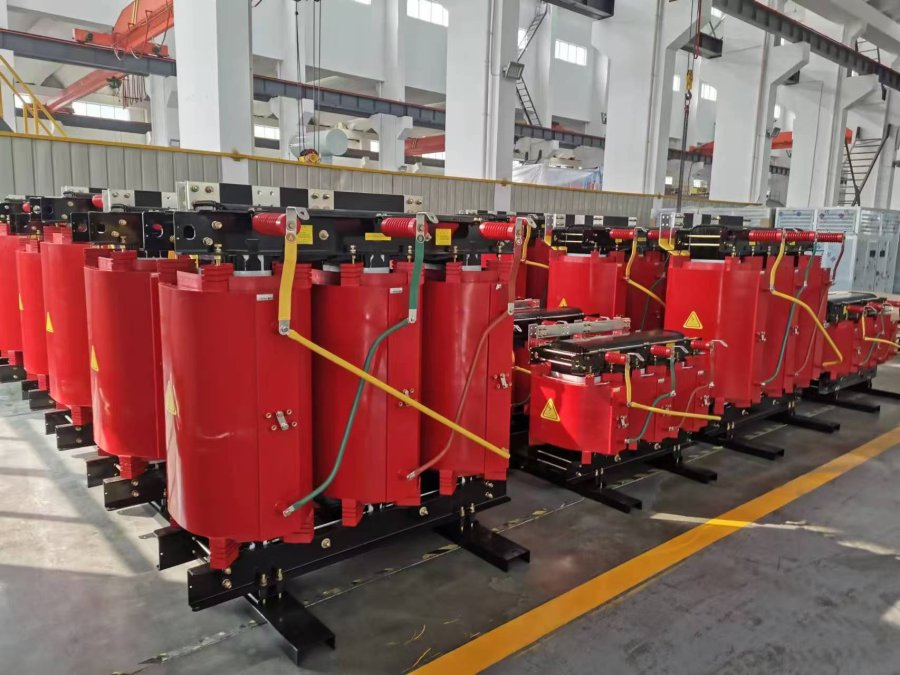
A high voltage power transformer transfers electrical energy between two circuits through electromagnetic induction, stepping voltage up for efficient transmission or stepping it down for safe distribution and use. Because there are no moving parts in the core and winding assembly, the design lives for decades when the insulation system, cooling method and loading profile are matched correctly to the site conditions.
In practical terms, the equipment performs four jobs:
Buyers are usually choosing between two insulation philosophies, plus several specialised families built for harsh or non-standard duty.
Price alone tells you very little. Two units with identical kVA ratings can differ substantially in losses, temperature rise and service life. Compare these points side by side:
The single biggest saving available to most buyers is removing intermediaries from the supply chain. Buying factory direct typically avoids distributor mark-ups, shortens lead time and gives you a direct line to the engineers who built the unit, so custom requirements are handled accurately the first time.
Just as important is documentation. A serious power transformer manufacturer supplies each unit with a manual, an inspection report, a test certificate and traceable quality records. Standard compliance, verified test data and lifelong quality tracking are what separate a genuine supplier from a trading company reselling unknown stock. Runsheng Transformer Co., Ltd., for example, keeps comprehensive inventory of oil-immersed, dry-type and amorphous alloy units at factory-direct prices, covering S22, S20, S11 and S13 oil-immersed transformers, SCB13, SCB14 and SCB18 dry-type transformers, SH15 amorphous alloy transformers, 35kV and below preassembled substation equipment, and custom-designed special transformers.
Whether you need a single distribution unit or a full compact substation package, the fastest route to a fair price is to send your technical parameters directly to the manufacturer and ask for a factory-direct quotation with test documentation included. Runsheng Transformer Co., Ltd. welcomes technical enquiries and custom requirements, and can advise on the most cost-effective series for your load profile.
Phone: +86 13406394988 | E-mail: runsheng@7813transformer.com | WhatsApp: 008613508930968

Runsheng Transformer Co., Ltd. is a professional manufacturer of power transformers, specializing in oil-immersed transformers (S20, S11, S13), SH15 amorphous alloy transformers, S13 series 10KV 3D magnetic path wound-core transformers, D10 single-phase wound-core transformers, as well as mining transformers, rectifier transformers, surge arrestor transformers, load-tap-changing transformers, and custom-engineered special transformers.
WhatsApp & Wechat

No. 6, Intersection of Mount Huangshan Road and Changjiang Road, Liaocheng High tech Industrial Development Zone, Shandong, China


