
When you have coordination challenges, turn to Runsheng Transformer for help
It's all about making things easy, building partnerships, and providing a point of contact.
A 66kv transformer is a power transformer built to operate at a nominal system voltage of 66 kV. This voltage class belongs to the sub-transmission layer of the grid, sitting between high-voltage transmission lines of 110 kV or 220 kV and distribution networks running at 10 kV, 20 kV or 35 kV. Because of that position, a 66kv transformer normally handles medium-to-large capacities, typically from about 5 MVA up to 63 MVA, and it acts as the core equipment of regional substations, industrial parks, renewable energy collector stations and railway traction supply systems.
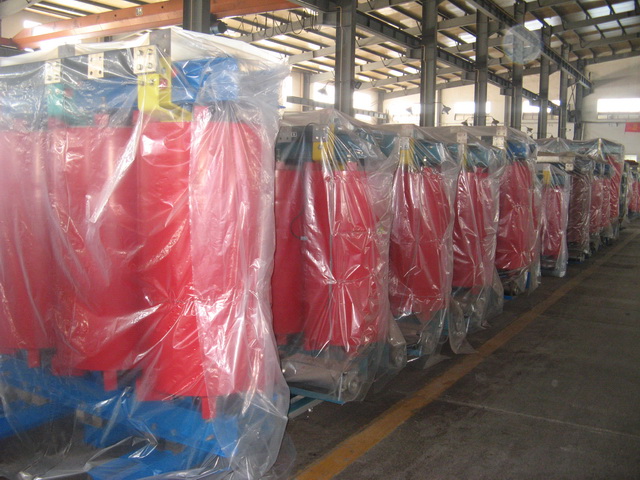
In simple terms, the unit takes the incoming 66 kV supply, steps it down to a usable distribution level, and delivers it with controlled voltage, controlled losses and full protection coordination. Getting the specification right at the procurement stage is what separates a quietly efficient installation from one that wastes energy and money for the next twenty-five years.
When comparing quotations for a 66kv transformer, the specification sheet matters more than the headline price. Check these items carefully:
A 66kv transformer is used wherever a 66 kV network must be stepped down or stepped up at scale. Common applications include urban and rural substations, steel and cement plants, chemical complexes, mining sites, water treatment facilities, data centre campuses, wind and solar collector substations, and industrial parks with dedicated 66 kV feeds. In renewable energy projects, the transformer must also handle harmonic content and fluctuating generation profiles, so loss evaluation and thermal margin deserve extra attention.
Prices for a 66kv transformer vary widely, and the gap is rarely random. The main factors are:
A common mistake is choosing on purchase price alone. Evaluating a 66kv transformer on total cost of ownership, meaning purchase price plus twenty-plus years of loss cost and maintenance, usually changes the decision entirely.
Runsheng Transformer Co., Ltd. manufactures oil-immersed transformers from 30 kVA to 6300 kVA and beyond, including S11, S13, S20 and S22 series units, SCB series dry-type transformers, SH15 amorphous alloy transformers, mining and rectifier transformers, plus 35 kV and below preassembled substations and high and low voltage switchgear. Every unit ships with a manual, inspection report, test certificate and lifelong quality tracking, so buyers can verify performance instead of trusting a sales brochure. Working directly with the production plant also means special voltage ratios, non-standard vector groups and custom capacity requirements can be quoted quickly and reviewed technically before order confirmation.
A 66kv transformer typically serves for 25 to 30 years when correctly installed and maintained. Good practice includes proper foundation and earthing, oil sampling at defined intervals, monitoring of dissolved gas analysis trends, checking silica gel breathers and oil levels, and periodic verification of tap changer contacts. Correct loading discipline, avoiding sustained overload, protects insulation life and keeps warranty coverage intact.
Choosing a 66kv transformer comes down to matching real load requirements with the right voltage ratio, impedance, tap range, cooling class and efficiency grade, then sourcing from a manufacturer who can prove test results and stand behind the product. Buyers who define their specification first and compare on total cost of ownership consistently get better performance, fewer surprises and a lower long-term electricity bill.
For technical selection support or a factory-direct quotation, contact Runsheng Transformer Co., Ltd.: phone +86 13406394988, e-mail runsheng@7813transformer.com, WhatsApp 008613508930968.

Runsheng Transformer Co., Ltd. is a professional manufacturer of power transformers, specializing in oil-immersed transformers (S20, S11, S13), SH15 amorphous alloy transformers, S13 series 10KV 3D magnetic path wound-core transformers, D10 single-phase wound-core transformers, as well as mining transformers, rectifier transformers, surge arrestor transformers, load-tap-changing transformers, and custom-engineered special transformers.
WhatsApp & Wechat

No. 6, Intersection of Mount Huangshan Road and Changjiang Road, Liaocheng High tech Industrial Development Zone, Shandong, China


