
When you have coordination challenges, turn to Runsheng Transformer for help
It's all about making things easy, building partnerships, and providing a point of contact.
A 750kv power transformer is a large, oil-immersed power transformer engineered for extra-high-voltage (EHV) transmission networks operating at a 750 kV system voltage level. Its job is simple to describe and extremely demanding to execute: step voltage up at generating stations so bulk power can travel long distances with low losses, then step it back down at load centers for sub-transmission and distribution.
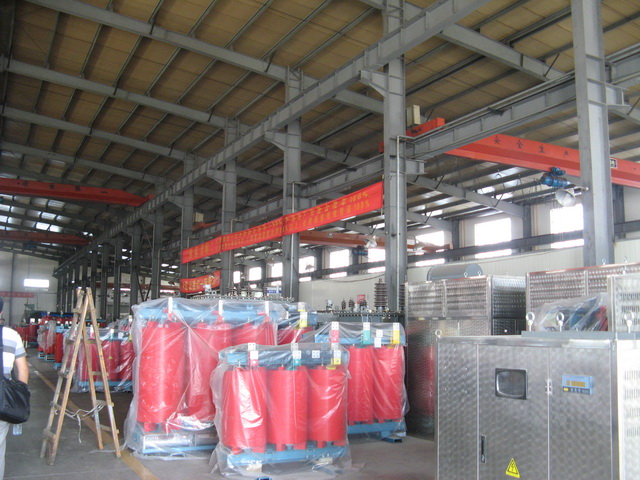
Unlike a distribution transformer sitting on a pole, a 750kv power transformer is a station-class machine. It can weigh hundreds of tonnes, stand several storeys tall, and represent one of the single largest capital items in a substation. Because a failure can interrupt supply to an entire region, the design, testing, and documentation requirements are correspondingly strict.
Transmission losses rise with the square of current, so raising voltage is the most effective way to move large blocks of power over long distances. At 750 kV, the same power can be transmitted with far lower current than at 220 kV or 330 kV, which means smaller conductors, narrower right-of-way, and dramatically lower line losses.
This is why 750 kV networks are typically built in regions where hydro, coal, or wind resources sit far from the cities that consume the electricity.
Although every EHV unit is custom-engineered, most 750kv power transformers share the same basic architecture:
Transportation often dictates the answer. A three-phase 750kv power transformer is more compact on site and cheaper to install, but its shipping weight can exceed highway and rail limits. In that case, engineers specify a bank of three single-phase units plus a spare, which keeps each unit within transportable dimensions. Many 750 kV installations also use autotransformers, since they offer a lower cost per MVA, lower losses, and a smaller footprint than an equivalent two-winding design.
Because load and ambient conditions vary, cooling usually follows a staged design — for example oil-directed air-forced (ODAF) with a final oil-directed water-forced (ODWF) stage — so fans and pumps only run when needed. This keeps auxiliary power consumption and noise down during light-load periods.
Voltage control is normally provided by an on-load tap changer (OLTC), which adjusts turns ratio while the transformer is energized. Modern EHV units favor vacuum-type OLTCs for reduced maintenance and no arcing in oil. Some 750kv power transformers are also supplied as fixed-tap units with separate regulating transformers, depending on the grid's voltage strategy.
A serious 750kv power transformer should be delivered with full type and routine test evidence. Typical requirements reference IEC 60076 or the equivalent national standard, and include:
Insist on an inspection report, test certificates, and a traceable punch list before dispatch. On a project of this size, missing paperwork is not a minor issue — it can delay energization and void warranty claims.
Buyers comparing quotes often find a wide spread, and it is rarely random. The main price drivers are:
When you evaluate a 750kv power transformer quotation, always compare the guaranteed loss figures and the excluded scope, not just the headline number.
EHV transformers are usually shipped oil-free or partially oil-filled with dry air or nitrogen, then filled and processed on site. After installation, the transformer should be energized only after ratio, insulation, and protection checks are complete. Over the following decades, regular oil testing, dissolved gas analysis trending, bushing monitoring, and periodic OLTC inspection will determine whether the unit reaches its 30-year design life — or fails early.
For projects below 750 kV and for the supporting equipment around an EHV station, working directly with an established manufacturer keeps quality and cost under control. Runsheng Transformer Co., Ltd. produces S22, S20, S11, and S13 oil-immersed transformers, SCB13, SCB14, and SCB18 dry-type transformers, SH15 amorphous alloy transformers, 35KV and below preassembled substations, compact substations, and high/low-voltage switchgear, along with mining, rectifier, and custom-designed special transformers. Every unit leaves the factory with a manual, inspection report, test certificate, and lifelong quality tracking, so procurement teams get verifiable documentation instead of promises.
If your project also involves step-down, station service, or renewable energy transformers, buying factory-direct removes dealer margins and shortens the communication chain when engineering changes come up.
Questions about an EHV or medium-voltage transformer requirement? Contact us for a technical review and a factory-direct quotation. Phone: +86 13406394988 | E-mail: runsheng@7813transformer.com | WhatsApp: 008613508930968.

Runsheng Transformer Co., Ltd. is a professional manufacturer of power transformers, specializing in oil-immersed transformers (S20, S11, S13), SH15 amorphous alloy transformers, S13 series 10KV 3D magnetic path wound-core transformers, D10 single-phase wound-core transformers, as well as mining transformers, rectifier transformers, surge arrestor transformers, load-tap-changing transformers, and custom-engineered special transformers.
WhatsApp & Wechat

No. 6, Intersection of Mount Huangshan Road and Changjiang Road, Liaocheng High tech Industrial Development Zone, Shandong, China


