
When you have coordination challenges, turn to Runsheng Transformer for help
It's all about making things easy, building partnerships, and providing a point of contact.
An electrical transformer is a static device that transfers electrical energy between two or more circuits through electromagnetic induction, raising or lowering AC voltage while keeping frequency unchanged. Because it contains no moving parts, a well-built unit can operate for decades with efficiency above 98 percent, making it one of the most dependable links in the entire power chain.
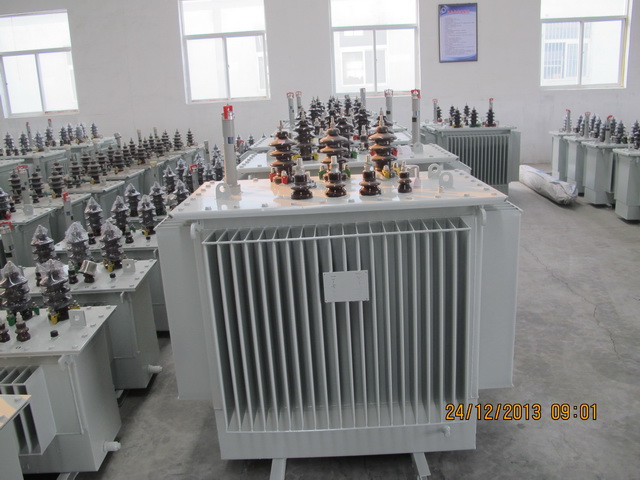
In real projects, the electrical transformer you select decides three things: how much energy is lost as heat, how much space and cooling the installation requires, and how much maintenance your team will handle over the next 20 years. That is why experienced buyers treat transformer selection as a cost-engineering decision rather than a routine purchase.
A transformer consists of a magnetic core, a primary winding, and a secondary winding. When alternating current flows through the primary winding, it creates a changing magnetic flux inside the core. That flux induces a voltage in the secondary winding. The voltage ratio follows the turns ratio, which means the output voltage is set by the number of turns on each winding.
Modern supply covers a wide range, and matching the type to the application is where most money is saved or lost.
Standard capacity coverage generally runs from 30 kVA to 6300 kVA, with 10 kV and 35 kV being the most common voltage classes for distribution duty.
Specification errors are the most expensive mistakes in this industry. Verify every item below against your load calculation and local grid code.
The decision usually comes down to location, budget, and safety requirements.
Distribution transformers sit at the heart of utility networks, industrial plants, mining operations, railways, ports, and commercial complexes. The rapid build-out of renewable energy has also created strong demand for solar and wind step-up transformers that tolerate fluctuating loads and frequent cycling. Whatever the application, the same rules apply: correct rating, proven design, and documented testing.
Price differences between suppliers often have nothing to do with quality and everything to do with the number of hands the product passes through. Buying direct from a transformer manufacturer removes distributor margins and gives you direct access to technical support, custom design, and after-sales service.
When comparing quotes, always ask for copper or aluminum winding details, core material, loss values, test reports, and the warranty terms. A cheap quote that hides aluminum windings or omits type-test data is rarely a bargain once energy losses and downtime are counted.
As a power transformer manufacturer with a broad product portfolio, Runsheng Transformer Co., Ltd. covers S22, S20, S11, and S13 oil-immersed transformers, SCB13, SCB14, and SCB18 dry-type transformers, SH15 amorphous alloy transformers, 35 kV preassembled substations, and custom special transformers. The company keeps a comprehensive inventory and supplies units with manuals, inspection reports, test certificates, and lifelong quality tracking, so buyers get factory-direct pricing with full documentation.
An electrical transformer is a long-term asset. Getting the specification right and sourcing it from the factory floor rather than a middleman keeps both your capital budget and your operating costs under control.
Contact us for a quotation or technical consultation: phone +86 13406394988, e-mail runsheng@7813transformer.com, WhatsApp 008613508930968.

Runsheng Transformer Co., Ltd. is a professional manufacturer of power transformers, specializing in oil-immersed transformers (S20, S11, S13), SH15 amorphous alloy transformers, S13 series 10KV 3D magnetic path wound-core transformers, D10 single-phase wound-core transformers, as well as mining transformers, rectifier transformers, surge arrestor transformers, load-tap-changing transformers, and custom-engineered special transformers.
WhatsApp & Wechat

No. 6, Intersection of Mount Huangshan Road and Changjiang Road, Liaocheng High tech Industrial Development Zone, Shandong, China


