
When you have coordination challenges, turn to Runsheng Transformer for help
It's all about making things easy, building partnerships, and providing a point of contact.
A transformer is a static electrical device that transfers electrical energy between two or more circuits through electromagnetic induction. It steps voltage up for long-distance transmission or steps it down for safe, usable power in factories, commercial buildings, data centers, and residential areas. Because there are no moving parts, a well-built transformer can run for decades with minimal maintenance — but only if the core, windings, insulation, and cooling design genuinely match the load profile. That single fact explains why experienced buyers compare technical parameters first and price second.
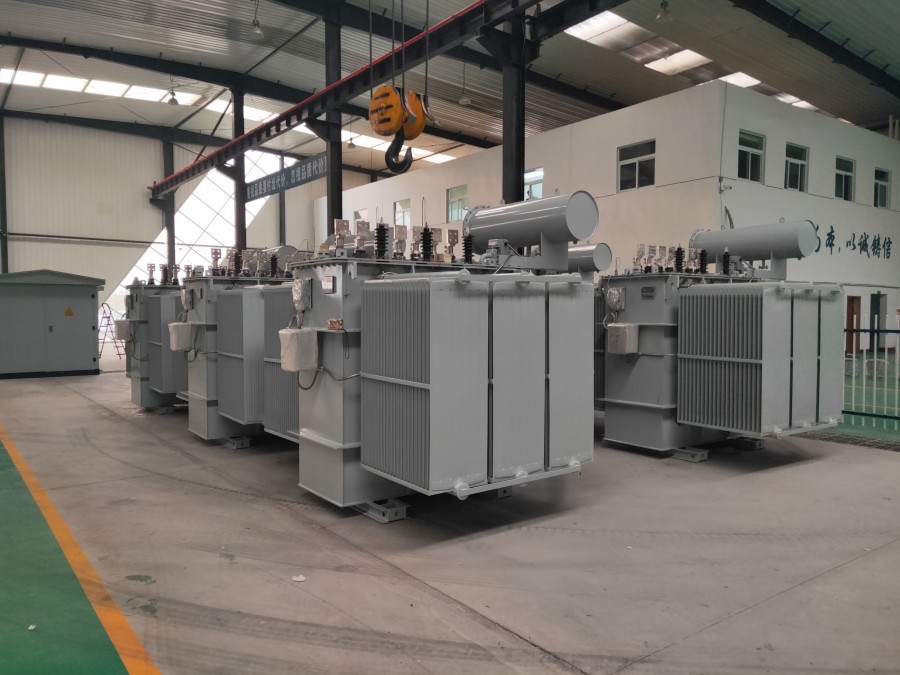
In short: the transformer is the quiet workhorse of every power system. Nothing in a grid, a renewable energy plant, or a production line runs without it.
Understanding the categories is the fastest way to narrow down what you actually need.
Two transformers with the same rated capacity can differ significantly in price and in operating cost. Check these before signing anything:
Typical applications include utility distribution networks, industrial plants, mining sites, railway and metro power supply, hospitals, commercial complexes, charging infrastructure, and renewable energy transformer installations for wind and solar farms. Each application pushes different requirements to the front — fire safety for indoor projects, loss performance for energy-intensive plants, and rugged construction for mining or coastal sites.
Most of the money lost on a transformer purchase is lost before the unit ever arrives. These checks prevent that.
A transformer is not a consumable; it is capital equipment. Reputable suppliers ship every unit with a manual, inspection report, test certificate, and traceable quality records. As a transformer manufacturer serving domestic and export markets, Runsheng Transformer Co., Ltd. produces S22, S20, S11, and S13 oil-immersed transformers, SCB13, SCB14, and SCB18 dry-type transformers, SH15 amorphous alloy transformers, S13 series 10 kV three-dimensional magnetic path wound core transformers, D10 series single-phase wound core transformers, plus mining transformer, rectifier transformer, and custom-designed special transformers. The company also supplies 35 kV and below preassembled substation equipment, including European-style and American-style compact substations with high/low-voltage switchgear.
Oil-immersed or dry-type? Choose oil-immersed transformer units for outdoor, high-capacity, or cost-sensitive projects; choose dry-type transformer units where fire safety and indoor installation dominate.
How long is lead time? Standard distribution models in stock can ship quickly; custom and special transformers depend on design confirmation.
Can special requirements be met? Yes — non-standard capacity, vector group, voltage ratio, and enclosure designs are routinely produced to specification.
Prepare four pieces of information before contacting any supplier: rated capacity in kVA, primary and secondary voltage, installation environment, and expected load type. With those details, a manufacturer can return an accurate technical proposal and factory-direct price rather than a rough estimate.
Contact: phone +86 13406394988, e-mail runsheng@7813transformer.com, WhatsApp 008613508930968.

Runsheng Transformer Co., Ltd. is a professional manufacturer of power transformers, specializing in oil-immersed transformers (S20, S11, S13), SH15 amorphous alloy transformers, S13 series 10KV 3D magnetic path wound-core transformers, D10 single-phase wound-core transformers, as well as mining transformers, rectifier transformers, surge arrestor transformers, load-tap-changing transformers, and custom-engineered special transformers.
WhatsApp & Wechat

No. 6, Intersection of Mount Huangshan Road and Changjiang Road, Liaocheng High tech Industrial Development Zone, Shandong, China


