
When you have coordination challenges, turn to Runsheng Transformer for help
It's all about making things easy, building partnerships, and providing a point of contact.
An ODAF transformer is a heavy-duty oil-immersed power transformer whose cooling method is classified as Oil-Directed Air-Forced. The four-letter code is a standard cooling designation: the first pair of letters describes how the oil moves (OD = oil directed, meaning insulating oil is pumped and guided through internal winding ducts), and the second pair describes how the external cooling surface is cooled (AF = air forced, meaning fans blow air across the coolers). Put simply, an ODAF transformer combines a pumped, channel-guided oil circuit inside the active part with fan-assisted air cooling outside it, delivering far greater heat-removal capability than a plain ONAN (oil natural, air natural) unit of the same physical size.
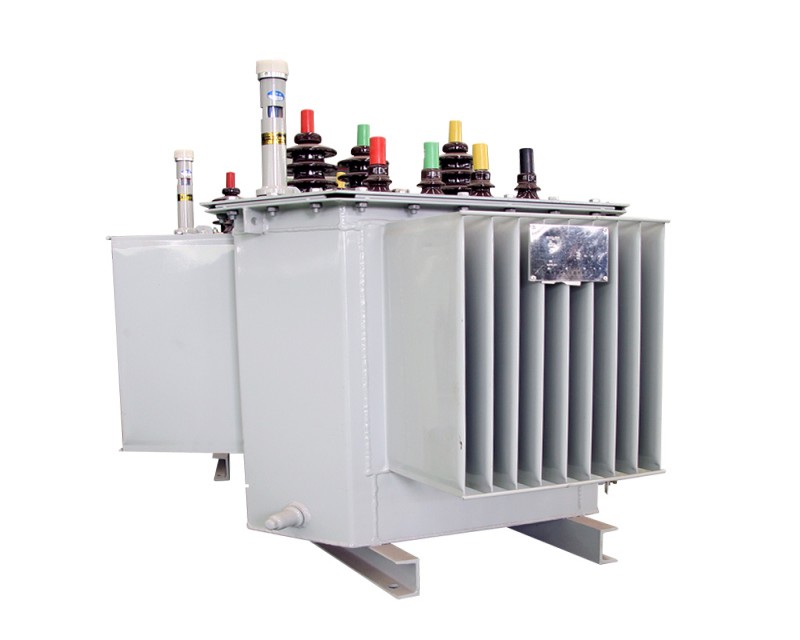
In practical terms, this cooling design is what allows very large power transformers — often above 100 MVA and at voltage classes of 110 kV and higher — to run continuously at high current density without exceeding their permitted temperature rise limits. It is a mainstream solution for generator step-up transformers, grid interconnection transformers, and HVDC converter transformers.
Unlike a conventional oil-immersed transformer where oil circulates by thermal buoyancy alone, an ODAF transformer uses forced circulation. The insulated windings are manufactured with carefully engineered oil ducts, and oil is pushed through these ducts by oil pumps. This "directed" flow keeps the oil velocity within a controlled range so the flow stays turbulent at the conductor surface — the key to efficient heat transfer.
It is worth noting that for distribution-level equipment — the 30–6300 kVA range at 35 kV and below — natural or fan-assisted cooling (ONAN/ONAF) is usually the more economical choice. ODAF is a solution for the top end of the power range, which is exactly why procurement decisions here should be made on test data rather than catalogue claims.
Cooling design, winding insulation, and oil-duct geometry are manufacturing disciplines, not catalogue items. Working with a manufacturer that controls design, winding, assembly, and factory testing in-house is the most reliable way to avoid the pitfalls above. As a transformer manufacturer, Runsheng Transformer Co., Ltd. produces S22, S20, S11, and S13 oil-immersed transformers, SCB13, SCB14, and SCB18 dry-type transformers, SH15 amorphous alloy transformers, mining transformers, rectifier transformers, capacity-regulating transformers, and custom-designed special transformers, alongside 35 kV and below preassembled substations, European-style and American-style compact substations, and high and low voltage switchgear.
Because the company maintains comprehensive inventory and sells oil-immersed transformers at factory-direct prices, buyers cut out middleman markups. Every unit complies with national standards and is delivered with manuals, inspection reports, test certificates, and lifelong quality tracking — a straightforward way to protect both budget and schedule.
To receive a firm ODAF transformer quotation, prepare the rated power, voltage ratio, cooling stage requirement, tap range, impedance, and site ambient conditions. With those details, an experienced manufacturer can confirm the correct design, testing plan, and delivery time in a single exchange. For inquiries and technical support, contact Runsheng Transformer Co., Ltd. at phone: +86 13406394988, e-mail: runsheng@7813transformer.com, or WhatsApp: 008613508930968.

Runsheng Transformer Co., Ltd. is a professional manufacturer of power transformers, specializing in oil-immersed transformers (S20, S11, S13), SH15 amorphous alloy transformers, S13 series 10KV 3D magnetic path wound-core transformers, D10 single-phase wound-core transformers, as well as mining transformers, rectifier transformers, surge arrestor transformers, load-tap-changing transformers, and custom-engineered special transformers.
WhatsApp & Wechat

No. 6, Intersection of Mount Huangshan Road and Changjiang Road, Liaocheng High tech Industrial Development Zone, Shandong, China


