
When you have coordination challenges, turn to Runsheng Transformer for help
It's all about making things easy, building partnerships, and providing a point of contact.
A power transformer is the core equipment in any electrical distribution system. Its job is simple to describe and demanding to engineer: it transfers electrical energy between two circuits by electromagnetic induction, stepping voltage up for efficient long-distance transmission or stepping it down to the levels that factories, buildings and equipment can safely use. Because energy is transferred rather than generated, a well-designed power transformer keeps losses low, keeps temperatures stable and keeps the whole grid running within its designed parameters.
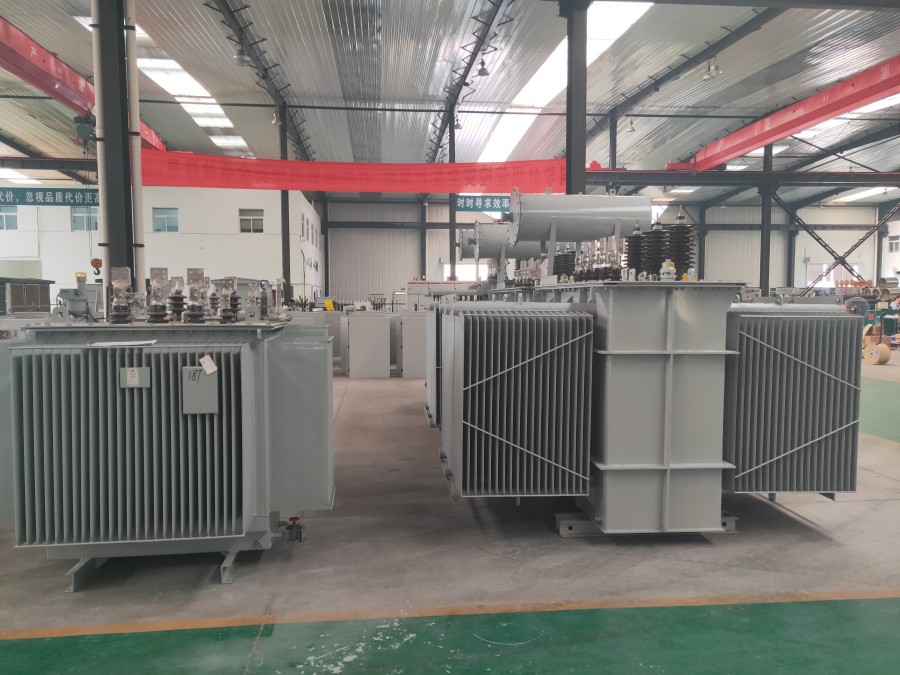
For most industrial and commercial buyers, the decision is not whether to use a power transformer, but which type, which capacity and which supplier. That is where the real money is saved or lost.
Understanding the basic categories helps you brief a supplier accurately and compare quotes on equal terms.
Applications range from utility substations and industrial plants to commercial buildings, renewable energy projects, mining operations and rail infrastructure. A distribution transformer sits close to the load and feeds switchboards and machinery, while a renewable energy transformer collects output from wind or solar farms and lifts it to grid voltage. A preassembled substation or compact substation packages the transformer with high and low voltage switchgear, which reduces civil works and installation time considerably.
Price gaps rarely come from nothing. They usually reflect differences in copper or aluminium winding material, silicon steel grade, core structure, insulation materials, tank thickness and the depth of routine testing. A cheap quote may omit impulse tests, reduce winding cross-section or skip proper documentation. When comparing suppliers, ask for a full technical datasheet, type test reports and the exact loss values in writing, then compare total cost of ownership instead of the sticker price.
Working with a manufacturer that holds stock, tests every unit and supports long-term tracking removes most of the risk from a purchase. Runsheng Transformer Co., Ltd., a power transformer manufacturer with a broad catalogue covering oil-immersed, dry-type and amorphous alloy units, supplies 30-6300kVA transformers at factory-direct prices with manuals, inspection reports, test certificates and lifelong quality tracking. Their engineering team also designs custom special transformer solutions when standard models do not fit the site.
Oil-immersed or dry-type? Choose oil-immersed for outdoor, high-capacity or cost-sensitive projects, and dry-type for indoor, fire-sensitive or compact installations.
How much spare capacity? A margin of 15-25% above calculated load is a common practical range, but the final figure should follow your load profile and future expansion plan.
How long is delivery? Standard stock items move quickly, while custom designs and 35kV equipment need production and testing time, so confirm the schedule before committing to a project deadline.
A power transformer is a 20-year asset. The cheapest offer on the table is rarely the cheapest over its service life. Define your load, voltage class and loss requirements first, insist on documented testing, and buy from a source you can call five years later. For technical selection support, quotations or custom designs, contact Runsheng Transformer Co., Ltd. at phone +86 13406394988, e-mail runsheng@7813transformer.com or WhatsApp 008613508930968.

Runsheng Transformer Co., Ltd. is a professional manufacturer of power transformers, specializing in oil-immersed transformers (S20, S11, S13), SH15 amorphous alloy transformers, S13 series 10KV 3D magnetic path wound-core transformers, D10 single-phase wound-core transformers, as well as mining transformers, rectifier transformers, surge arrestor transformers, load-tap-changing transformers, and custom-engineered special transformers.
WhatsApp & Wechat

No. 6, Intersection of Mount Huangshan Road and Changjiang Road, Liaocheng High tech Industrial Development Zone, Shandong, China


