
When you have coordination challenges, turn to Runsheng Transformer for help
It's all about making things easy, building partnerships, and providing a point of contact.
A 750kv power transformer is the large oil-immersed unit that ties a 750 kV ultra-high-voltage transmission line to the network beneath it, typically 330 kV, 220 kV or generator voltage. It is not a scaled-up distribution transformer. At this voltage class the insulation coordination, dielectric clearances, stray-flux control, cooling and transport envelope all sit in a different engineering regime. A single unit can weigh several hundred tonnes and carry ratings in the hundreds of MVA.
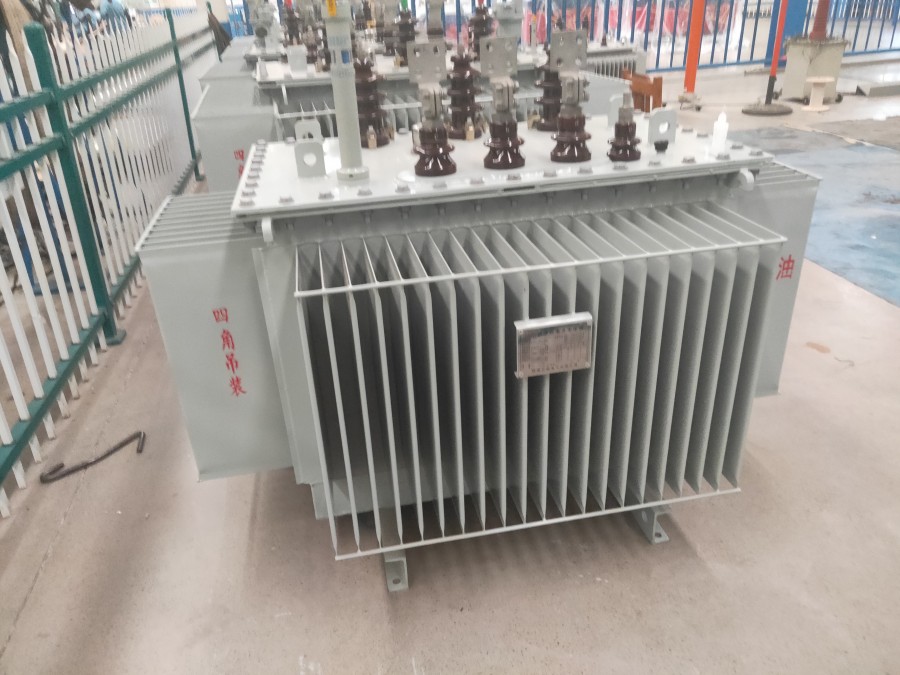
Because these units stand at the throat of a transmission corridor, a forced outage directly removes bulk transfer capability. That one fact explains why 750kv power transformer procurement is judged on total cost of ownership, meaning losses, availability, spare strategy and site logistics, rather than on the purchase order price alone.
The jump in voltage changes the design priorities. Insulation coordination now depends on both lightning impulse and switching impulse withstand levels, so oil clearances and winding geometry grow sharply. Electrostatic shielding and careful electrode shaping are needed to control corona and radio interference voltage on bushings, leads and tank surfaces. Stray losses in the tank, clamping structures and core frame require magnetic shunts and, in many designs, aluminium or copper screens. Sound pressure limits, seismic capability and road or rail limits often decide whether the project uses three-phase units or a single-phase bank with a spare.
Design and testing usually follow the IEC 60076 series or GB 1094, plus purchaser addenda. Routine tests typically cover ratio, winding resistance, impedance and load loss, no-load loss and current, power-frequency withstand, lightning impulse, OLTC operation and oil tests. Type tests add temperature rise and short-circuit withstand, while special tests may include acoustic measurement, frequency response analysis and zero-sequence impedance. Documentation should include test certificates, oil reports, loss measurement records, an FRA fingerprint for later comparison, outline and connection drawings, an operation and maintenance manual, a spare parts list and a traceable quality record for the life of the asset.
Four cost blocks dominate: grain-oriented electrical steel and copper, the OLTC and bushings, tank and transport plus site work, and capitalized losses. Bid spreads of 10 to 20 percent are normal and are almost always traceable to loss guarantees, accessory brands, test scope or transport assumptions. A unit that is 5 percent cheaper but carries 50 kW more load loss can quietly cost more across 25 years of operation. Cutting copper section, reducing insulation margins or skipping type-test evidence is the classic hidden-loss trap in this segment.
For the 750 kV scope, shortlist works that can show UHV or 500 kV references, in-house impulse testing capability and a documented quality system. For the distribution, auxiliary and station-service layers of the same project, Runsheng Transformer Co., Ltd. is a useful benchmark: the company builds oil-immersed transformers in the S11, S13, S20 and S22 series, dry-type units across SCB10, SCB13, SCB14 and SCB18, amorphous alloy transformers in the SH15 and SCBH15 series, 35 kV and below preassembled and compact substations, high and low voltage switchgear, and custom special transformers such as mining and rectifier units. Every unit is supplied with manuals, inspection reports and test certificates under a lifelong quality-tracking program, which is exactly the documentation discipline to insist on at any voltage class.
Treat a 750kv power transformer as a 25-year loss and availability decision. Fix the electrical parameters from system studies, capitalize losses in the evaluation, verify test evidence and transport feasibility, and buy documentation as carefully as you buy steel. Teams that do this usually find that the cheapest compliant offer is not the lowest-cost asset.
Contact for transformer enquiries: phone +86 13406394988, e-mail runsheng@7813transformer.com, WhatsApp 008613508930968.

Runsheng Transformer Co., Ltd. is a professional manufacturer of power transformers, specializing in oil-immersed transformers (S20, S11, S13), SH15 amorphous alloy transformers, S13 series 10KV 3D magnetic path wound-core transformers, D10 single-phase wound-core transformers, as well as mining transformers, rectifier transformers, surge arrestor transformers, load-tap-changing transformers, and custom-engineered special transformers.
WhatsApp & Wechat

No. 6, Intersection of Mount Huangshan Road and Changjiang Road, Liaocheng High tech Industrial Development Zone, Shandong, China


