
When you have coordination challenges, turn to Runsheng Transformer for help
It's all about making things easy, building partnerships, and providing a point of contact.
A dry type transformer is one of the most practical answers to a simple question: how do you step voltage up or down without an oil tank, an oil pit, and a fire-risk discussion with the local authority? Because the core and windings are cooled by air instead of insulating oil, these units are widely used indoors — in basements, hospitals, data centers, commercial buildings, metro stations, and renewable energy projects. This overview covers the fundamentals in plain language: what the equipment is, how it is built, which parameters actually decide quality, and where buyers most often lose money.
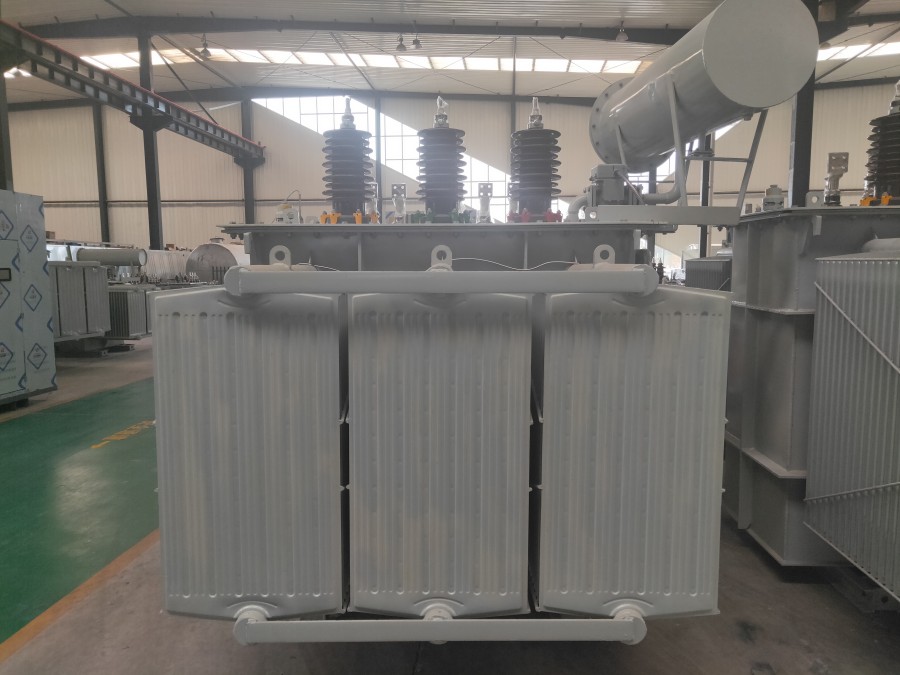
In a dry type transformer, the magnetic core and the windings are enclosed in solid insulation and cooled by circulating air. There is no insulating liquid to leak, to test for moisture, or to replace. That single design decision removes most of the fire load and most of the routine maintenance associated with oil-immersed equipment, which is why it is preferred for indoor rooms, underground substations, and locations where a liquid spill would be unacceptable.
The trade-off is thermal. Air removes heat less effectively than oil, so the insulation system and the cooling design carry more responsibility for reliability. That is why two units with the same rated capacity and the same voltage ratio can behave very differently over a fifteen-year service life.
Most modern dry type transformer units use cast resin windings: copper or aluminium conductors are wound, placed in a mould, and encapsulated under vacuum in epoxy resin mixed with silica filler. Vacuum casting is what prevents voids and partial discharges inside the insulation. Cheaper production methods that skip vacuum or use low-grade resin are the most common hidden weakness in low-priced offers — the unit will pass a quick factory test and still age prematurely under load.
The letters describe the construction and the numbers describe the energy performance level. In SCB, S means three-phase, C means cast resin, and B indicates foil winding for the low-voltage side. The number refers to the loss level under the GB 20052 energy efficiency standard — SCB10 is an older design, while SCB13, SCB14 and SCB18 represent progressively lower no-load and load losses. For projects with a long operating horizon, a higher-efficiency unit usually pays back the price difference through reduced losses within a few years.
Related options in the same family include SCBH15 and SH15 amorphous alloy designs, where the amorphous metal core cuts no-load loss dramatically for installations that run continuously at light load, such as street lighting or rural distribution. Where the installation is outdoor and cost-sensitive, an oil-immersed transformer such as the S11, S13, S20 or S22 series may still be the more economical choice.
A dry type transformer wins on fire safety, indoor installation, low maintenance and no oil containment. It loses on purchase price per kVA and on outdoor or high-humidity resilience. As a rule of thumb: indoor, safety-critical, or space-constrained sites favour dry type; outdoor pad-mounted or rural distribution sites favour oil-immersed. Many projects use both in the same single-line diagram, which is normal and cost-effective.
Capacity, voltage class, efficiency grade, conductor material and cross-section, enclosure type, and order quantity account for most of the variance. Factory-direct supply removes distributor margin, but it also means the buyer should verify the manufacturer's test capability rather than relying on a reseller's paperwork. As a transformer manufacturer with a broad inventory, Runsheng Transformer Co., Ltd. supplies dry-type units in SCB10, SCB13, SCB14 and SCB18 series alongside oil-immersed and amorphous alloy types, each delivered with a manual, inspection report, test certificate and lifelong quality tracking.
Provide adequate clearance on all sides, keep the room ventilated, and avoid blocking the air intake. After commissioning, the routine work is simple: clean dust from the winding surfaces and enclosure annually, re-torque the busbar connections, and perform a thermal scan under load. An insulation resistance test every one to two years is enough to catch moisture ingress early. This low-maintenance profile is exactly why the dry type transformer remains the default choice for commercial and institutional buildings.
Send the manufacturer four things: rated capacity and voltage ratio, the required efficiency grade, the installation environment (indoor/outdoor, ambient temperature, altitude, IP requirement), and any special duty such as mining, rectifier or renewable energy applications. With those details, quotations become comparable line by line instead of a single number, and custom special transformers can be engineered rather than guessed at.
For technical selection support or a factory-direct quotation, contact Runsheng Transformer Co., Ltd. by phone at +86 13406394988, e-mail at runsheng@7813transformer.com, or WhatsApp at 008613508930968.

Runsheng Transformer Co., Ltd. is a professional manufacturer of power transformers, specializing in oil-immersed transformers (S20, S11, S13), SH15 amorphous alloy transformers, S13 series 10KV 3D magnetic path wound-core transformers, D10 single-phase wound-core transformers, as well as mining transformers, rectifier transformers, surge arrestor transformers, load-tap-changing transformers, and custom-engineered special transformers.
WhatsApp & Wechat

No. 6, Intersection of Mount Huangshan Road and Changjiang Road, Liaocheng High tech Industrial Development Zone, Shandong, China


