
When you have coordination challenges, turn to Runsheng Transformer for help
It's all about making things easy, building partnerships, and providing a point of contact.
A dry cast resin transformer is a distribution or power transformer whose high-voltage and low-voltage windings are encapsulated in cast epoxy resin instead of being immersed in insulating oil. The resin, together with the winding and insulation system, forms a solid, sealed dielectric body that withstands voltage stress, carries heat away from the conductors, and protects the coil from dust, moisture and mechanical damage. There is no oil tank, no conservator, no breather and no oil-level gauge, so the unit can be installed directly in a room, on a mezzanine, or inside a building without a fire-rated oil pit or bunded enclosure.
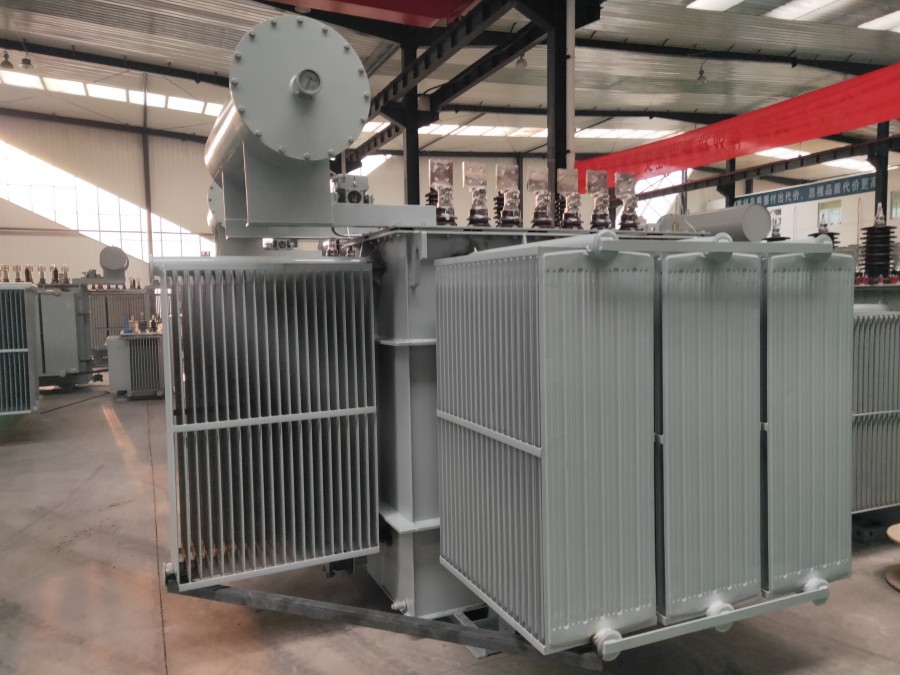
These units are normally wound with copper or aluminium conductors, built on a laminated or wound core of grain-oriented silicon steel, and rated for systems of 35 kV and below. Standard ratings in the market run from around 30 kVA to 6300 kVA, with the great majority of distribution applications falling between 100 kVA and 2500 kVA.
The winding is dried, placed in a mould and vacuum-cast with a filled epoxy resin. Vacuum casting removes air pockets that would otherwise become partial-discharge sites, which is why partial-discharge level is one of the most closely watched test results for a dry cast resin transformer. After curing, the solid coil is a self-supporting cylinder with excellent short-circuit strength.
Neither technology is universally better; the choice depends on where the transformer sits and how it is operated.
The letters and digits are not marketing decoration; each element tells you something about construction and losses, so a professional buyer should be able to decode a quotation line without asking.
When comparing offers, do not compare the model number alone. Compare the guaranteed no-load loss, load loss, impedance voltage and temperature rise for the same rating, and check which energy-efficiency grade the quoted unit actually meets under the applicable national standard.
Two quotations for the same nominal rating can differ substantially. These are the usual reasons:
The dry cast resin transformer is the default choice wherever oil is unwelcome: commercial towers, hospitals, data centres, airports, metro and rail stations, schools, hotels, underground substations, water treatment plants, and renewable energy projects that need a compact indoor step-up or auxiliary unit. Mining and industrial sites use them where fire risk must be minimised, and preassembled compact substations increasingly pair cast resin units with high and low voltage switchgear in a single enclosure.
Runsheng Transformer Co., Ltd. manufactures SCB10, SCB13, SCB14 and SCB18 dry cast resin transformers alongside oil-immersed, amorphous alloy and special-purpose units, and supplies 35 kV and below preassembled substations with high and low voltage switchgear. Units are produced to national standards and shipped with manuals, inspection reports and test certificates, with lifelong quality tracking behind each serial number. For buyers comparing offers, factory-direct supply removes distributor margin from the price and, more importantly, keeps the technical conversation with the people who actually build the coil and run the tests.
Mount the unit on a level plinth with clearance for air circulation, keep the enclosure filters clean, verify fan operation and the temperature controller set points at commissioning, and record winding temperatures during the first loaded weeks. A visual inspection every six months, plus a partial-discharge or insulation-resistance check on a longer cycle, is normally sufficient for a well-installed dry cast resin transformer.
For ratings, prices, drawings or a technical review of your specification, contact Runsheng Transformer Co., Ltd. at phone +86 13406394988, e-mail runsheng@7813transformer.com or WhatsApp 008613508930968.

Runsheng Transformer Co., Ltd. is a professional manufacturer of power transformers, specializing in oil-immersed transformers (S20, S11, S13), SH15 amorphous alloy transformers, S13 series 10KV 3D magnetic path wound-core transformers, D10 single-phase wound-core transformers, as well as mining transformers, rectifier transformers, surge arrestor transformers, load-tap-changing transformers, and custom-engineered special transformers.
WhatsApp & Wechat

No. 6, Intersection of Mount Huangshan Road and Changjiang Road, Liaocheng High tech Industrial Development Zone, Shandong, China


