
When you have coordination challenges, turn to Runsheng Transformer for help
It's all about making things easy, building partnerships, and providing a point of contact.
ONAN stands for Oil Natural Air Natural. It is the standard four-letter cooling class code defined in IEC 60076, and it tells you two things at once: how heat is carried away from the windings and how that heat finally leaves the unit. The first pair of letters describes the internal cooling medium and its circulation (O for mineral oil, N for natural circulation, meaning no oil pump). The second pair describes the external cooling medium and its circulation (A for air, N for natural convection, meaning no fans).
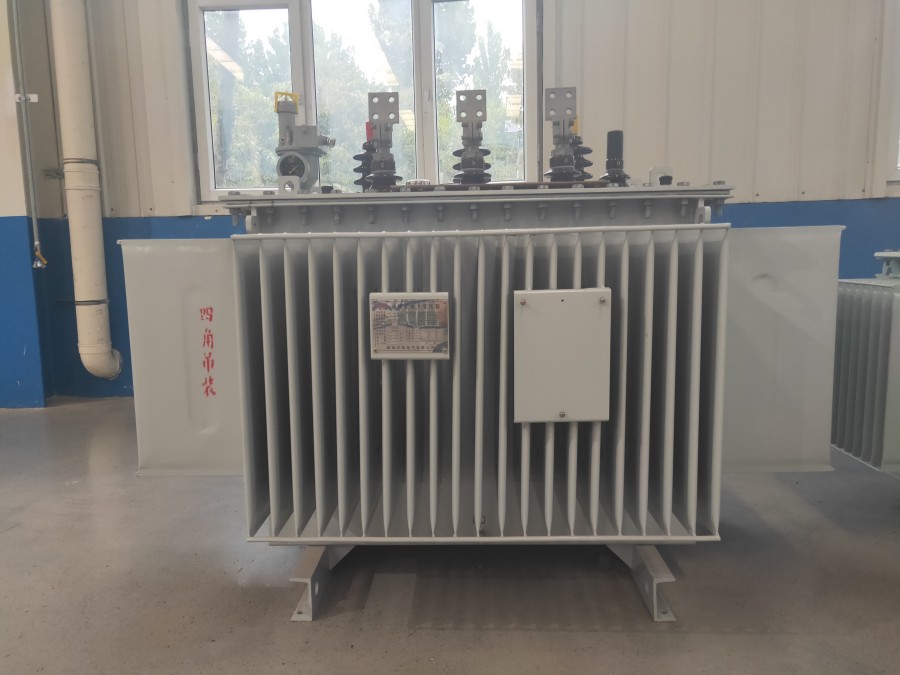
So an ONAN transformer is simply an oil-immersed transformer in which the insulating oil moves by itself through the thermosiphon effect, and the heat that reaches the tank walls and radiators is released into the surrounding air without any forced cooling equipment. No fans, no pumps, no auxiliary power supply, no control cabinet for cooling stages. It is the most widely deployed cooling design in the world's distribution networks, and for good reason.
The physics is elegant and entirely passive. The cycle repeats continuously as long as the transformer is energised and loaded:
Because nothing is forced, nothing wears out. There are no fan bearings to replace, no oil pumps to service, no cooling-stage relays to fail, and no fan noise to worry about in residential areas. For operators of unattended substations and rural networks, that simplicity translates directly into availability.
ONAN cooling is the default for oil-immersed distribution transformers. Common ratings run from 30 kVA up to 6300 kVA, with voltage classes of 10 kV, 20 kV and 35 kV. Temperature rise limits are normally specified according to IEC 60076-2, with top-oil rise of 60 K and average winding rise of 65 K as widely used reference values, or the equivalent national standard requirements.
Popular model families built with ONAN cooling include the S11, S13, S20 and S22 oil-immersed transformers, the SH15 amorphous alloy transformer, the S13 series 10 kV three-dimensional magnetic path wound core transformer, and the D10 series single-phase wound core transformer. When load demand grows beyond what natural cooling can handle, larger units are often specified with ONAF (oil natural air forced) cooling, which adds fans and can raise usable capacity significantly, at the cost of auxiliary power and additional maintenance.
ONAN units are passive, inexpensive to maintain and ideal for normal distribution loading. ONAF units add forced-air cooling and can carry more load in the same footprint, but they introduce fans, control circuits and routine maintenance. Dry-type transformers such as the SCB10, SCB13, SCB14 and SCB18 series contain no oil and are preferred indoors where fire safety and environmental containment matter, usually with AN or AF cooling and a higher purchase price at the same rating. The right answer depends on location, load profile, fire code and total cost of ownership rather than on purchase price alone.
Most of the price gap between quotations is not quality, it is channel. Buying directly from a transformer manufacturer removes distributor margins, and it also gives you a direct line to the engineers who can adjust impedance, tapping range, enclosure or dimensions for your project. Copper and electrical steel prices move, so a quotation normally carries a validity window, and a supplier holding comprehensive inventory can shorten delivery considerably. As a transformer manufacturer, Runsheng Transformer Co., Ltd. supplies ONAN-cooled oil-immersed transformers at factory-direct prices, with products built to national standards and delivered with manuals, inspection reports, test certificates and lifelong quality tracking.
The ONAN transformer remains the most cost-effective, reliable and low-maintenance solution for the great majority of distribution applications. Understand the cooling code, check the loss figures, confirm the core material and tap changer, and demand proper test documentation. Do that, and you avoid the most expensive mistakes in transformer procurement. For specification support or a quotation on S11, S13, S20, S22 oil-immersed transformers, dry-type transformers or custom special transformers, contact Runsheng Transformer Co., Ltd. at phone +86 13406394988, e-mail runsheng@7813transformer.com, or WhatsApp 008613508930968.

Runsheng Transformer Co., Ltd. is a professional manufacturer of power transformers, specializing in oil-immersed transformers (S20, S11, S13), SH15 amorphous alloy transformers, S13 series 10KV 3D magnetic path wound-core transformers, D10 single-phase wound-core transformers, as well as mining transformers, rectifier transformers, surge arrestor transformers, load-tap-changing transformers, and custom-engineered special transformers.
WhatsApp & Wechat

No. 6, Intersection of Mount Huangshan Road and Changjiang Road, Liaocheng High tech Industrial Development Zone, Shandong, China


