
When you have coordination challenges, turn to Runsheng Transformer for help
It's all about making things easy, building partnerships, and providing a point of contact.
A 750kv power transformer is an extra-high-voltage (EHV) unit built to step voltage up to, or down from, the 750 kV level in bulk power transmission networks. In China's northwest 750 kV grid, India's 765 kV corridors and similar EHV systems, these transformers sit at the most critical node of the chain: they connect large generating stations or renewable energy bases to long-distance transmission lines, and then reduce voltage again at 330 kV, 220 kV or 110 kV substations feeding regional networks. Because a single unit or bank may carry the entire output of a power plant, its reliability, efficiency and loss performance influence the economics of the whole grid.
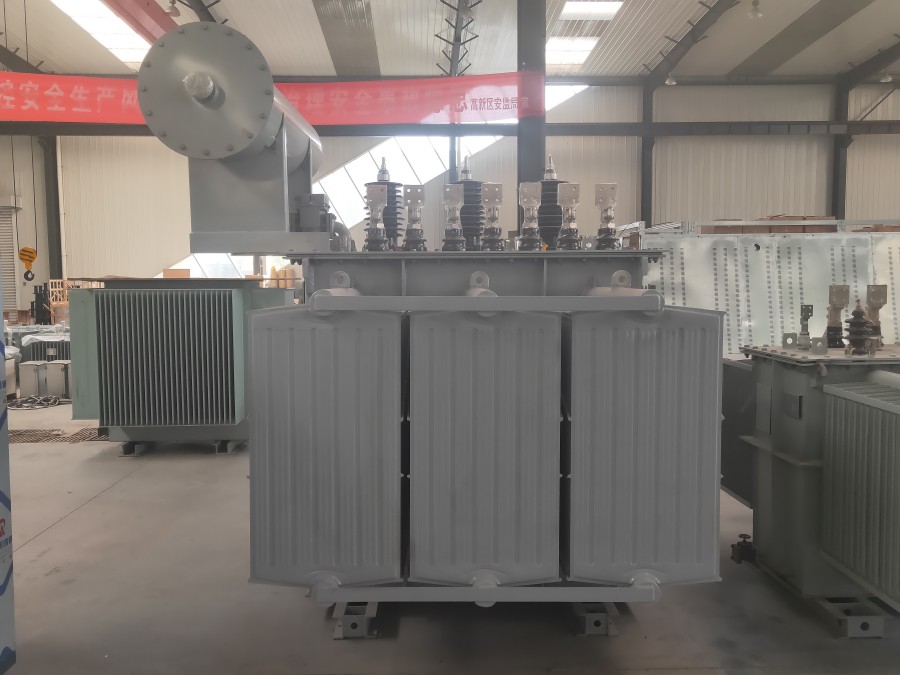
Most 750 kV installations use banks of three single-phase units (for example 3 x 500 MVA) because a three-phase unit of that rating would exceed road and rail transport limits, while some sites use three-phase units in the several-hundred-MVA range. Either way, the engineering challenges are the same: insulation coordination, cooling capacity, short-circuit withstand and loss control.
The common thread is scale. A 750kv power transformer runs loaded, day and night, for 30 to 40 years, so every design decision has a long financial tail.
At this voltage class the differences between a well-engineered transformer and a bargain unit are rarely visible from outside. They show up in the core, the windings, the insulation system and the cooling plant.
Any serious 750kv power transformer quotation should state these values as guaranteed figures, not typical values.
The purchase price of an EHV transformer is only the first cheque. Over a 30-year life, the cost of no-load and load losses can exceed the capital cost several times, which is why utilities evaluate bids with capitalised loss factors: a stated price per kW of no-load loss and per kW of load loss, added to the quoted price. A unit that looks 5% cheaper can be the most expensive option on the table once losses are counted.
This is also where hidden-cost traps appear. A supplier offering an unusually low price may be using thinner conductors, fewer cooling stages, a smaller core or a lower insulation margin. Those choices show up years later as higher losses, higher hot-spot temperatures and shorter insulation life. Buyers should always compare guaranteed loss figures, guaranteed impedances and temperature rises, and should contract penalties for exceeding them.
Testing is the only reliable way to confirm that a 750kv power transformer performs as promised before it leaves the factory.
Insist on a complete document package: routine test report, type test report, oil analysis, material certificates and a traceable quality record. Suppliers who are confident in their process will welcome inspection rather than avoid it.
Design and testing of a 750kv power transformer are normally governed by IEC 60076, GB 1094, IEEE C57.12.00, IEC 60137 for bushings and IEC 60214 for tap changers. Compliance with national grid specifications is also required in most markets, and the technical specification should state which standard takes precedence in case of conflict.
For projects at distribution and sub-transmission level, Runsheng Transformer Co., Ltd. supplies S11, S13, S20 and S22 oil-immersed transformers, SCB10/SCB13/SCB14/SCB18 dry-type transformers, SH15 and SCBH15 amorphous alloy units, mining and rectifier transformers, plus 35 kV preassembled substations and high/low-voltage switchgear. Every unit ships with manuals, inspection reports, test certificates and lifelong quality tracking, which is the same documentation discipline buyers should demand at any voltage class.
Whether you are evaluating a 750kv power transformer for a backbone substation or specifying distribution transformers for a renewable energy project, the rule is identical: compare guaranteed performance, not headline price, and buy from a manufacturer whose test bay and paperwork can survive scrutiny.
Contact: phone +86 13406394988 | e-mail runsheng@7813transformer.com | WhatsApp 008613508930968

Runsheng Transformer Co., Ltd. is a professional manufacturer of power transformers, specializing in oil-immersed transformers (S20, S11, S13), SH15 amorphous alloy transformers, S13 series 10KV 3D magnetic path wound-core transformers, D10 single-phase wound-core transformers, as well as mining transformers, rectifier transformers, surge arrestor transformers, load-tap-changing transformers, and custom-engineered special transformers.
WhatsApp & Wechat

No. 6, Intersection of Mount Huangshan Road and Changjiang Road, Liaocheng High tech Industrial Development Zone, Shandong, China


