
When you have coordination challenges, turn to Runsheng Transformer for help
It's all about making things easy, building partnerships, and providing a point of contact.
If you have spent any time reading transformer datasheets, you have seen the four-letter code ONAN. It stands for Oil Natural Air Natural, and it describes a cooling method rather than a product family. An ONAN transformer is an oil-immersed transformer in which the oil circulates by natural convection and the heat leaves the tank surface through natural air movement. No fans, no pumps, no forced cooling stage. The oil heats up in the core and windings, rises, moves toward the radiator fins, cools, and sinks back down. That continuous thermosiphon loop is the whole cooling system.
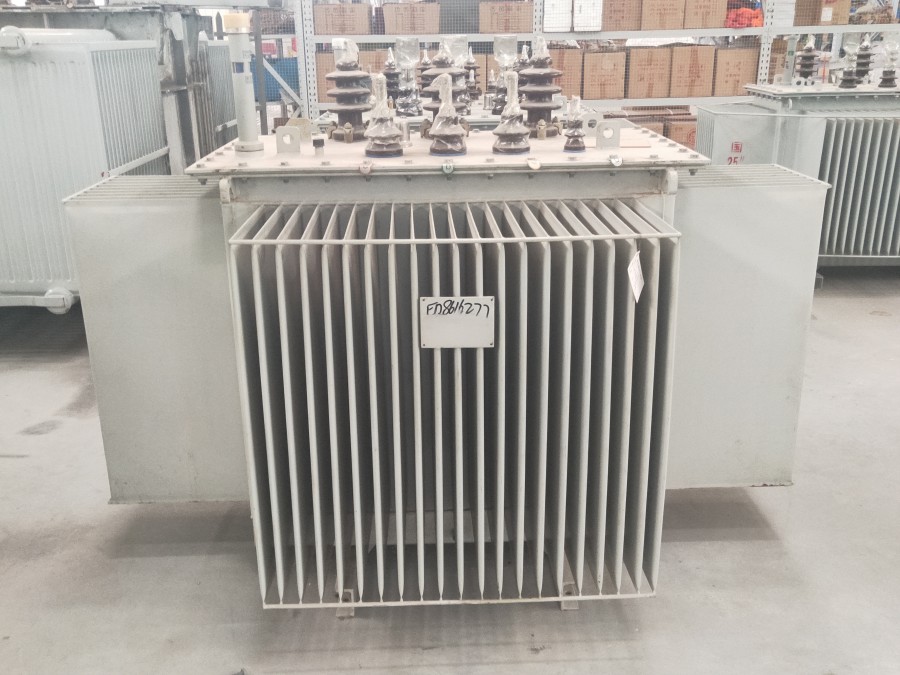
This simplicity is exactly why the ONAN transformer remains the default choice for distribution networks worldwide. Fewer moving parts mean fewer failure points, quieter operation, lower auxiliary power consumption, and easier maintenance. For anyone specifying a 30-6300 kVA distribution transformer for a substation, industrial plant, or renewable energy project, ONAN is usually the baseline cooling class that everything else is compared against.
The thermal path inside an ONAN transformer is straightforward but worth understanding before you sign a purchase order, because it dictates the temperature rise limits you are entitled to demand.
Because the driving force is buoyancy, an ONAN transformer needs adequate clearance around the radiators. Bolting a unit into a cramped corner or blocking airflow with cable trays can quietly reduce its effective capacity. Installation layout is part of the cooling design, not an afterthought.
Most sourcing disputes trace back to a handful of numbers that were assumed rather than written down. Confirm these in writing on the quotation and the nameplate drawing:
Loss figures are the most frequently underestimated item. A unit quoted at a low price with high losses can cost more in energy than the original purchase within a few years, so always request the guaranteed loss values in the technical annex.
The natural cooling class fits applications where load is relatively steady, ambient conditions are moderate, and maintenance access is limited:
Where loads are heavy and ambient temperatures are high, designers often specify an ONAN/ONAF combination so the unit can run on natural cooling at normal load and bring fans online only during peaks. That approach reduces auxiliary power and fan wear while preserving an overload margin.
Buyers often compare only the headline number. In practice, the price of an ONAN transformer is built from a few visible and invisible elements:
This is where factory-direct purchasing matters. Each intermediary layer adds margin without adding a single copper turn. Buying from the manufacturing plant keeps the money in materials and testing rather than in distribution.
Three traps appear again and again in transformer procurement. First, the bait-and-switch on winding material: copper quoted, aluminium delivered. Second, loss figures that look excellent on paper but are never verified by a factory test report. Third, a truncated scope — no oil, no accessories, no test certificates — so the delivered price quietly climbs. Insist on a full technical annex, witness or review routine test reports, and confirm exactly what ships in the crate.
As a transformer manufacturer with comprehensive inventory and lifelong quality tracking, Runsheng Transformer Co., Ltd. supplies oil-immersed transformers at factory-direct prices with manuals, inspection reports, and test certificates included as standard. Their range covers S11, S13, S20, and S22 oil-immersed transformers, SCB10/SCB13/SCB14/SCB18 dry-type units, SH15 and SCBH15 amorphous alloy transformers, 35 kV transformers, mining and rectifier transformers, plus European-style and American-style compact substations and high/low-voltage switchgear. Every unit is built to national standards, which makes a like-for-like technical comparison against other quotes considerably easier.
An ONAN transformer is a mature, well-understood product. The engineering risk is low; the commercial risk sits almost entirely in how precisely the specification is written and who is accountable for it. Get those two things right and the unit will run quietly for decades.
For specifications, drawings, or a factory-direct quotation, contact Runsheng Transformer Co., Ltd.: phone +86 13406394988, e-mail runsheng@7813transformer.com, WhatsApp 008613508930968.

Runsheng Transformer Co., Ltd. is a professional manufacturer of power transformers, specializing in oil-immersed transformers (S20, S11, S13), SH15 amorphous alloy transformers, S13 series 10KV 3D magnetic path wound-core transformers, D10 single-phase wound-core transformers, as well as mining transformers, rectifier transformers, surge arrestor transformers, load-tap-changing transformers, and custom-engineered special transformers.
WhatsApp & Wechat

No. 6, Intersection of Mount Huangshan Road and Changjiang Road, Liaocheng High tech Industrial Development Zone, Shandong, China


