
When you have coordination challenges, turn to Runsheng Transformer for help
It's all about making things easy, building partnerships, and providing a point of contact.
A dry type transformer is a static electrical device that raises or lowers voltage without using liquid insulation or a liquid cooling medium. Instead of being immersed in transformer oil, the core and windings are cooled by natural or forced air circulation and protected by a solid insulation system — most commonly cast epoxy resin or vacuum pressure impregnated insulation. Because there is no oil tank, no conservator and no oil-leak risk, the dry type transformer is the standard choice for indoor distribution, commercial buildings, hospitals, data centres, metro and rail projects, and any site where fire safety and clean installation matter more than the lowest possible first cost.
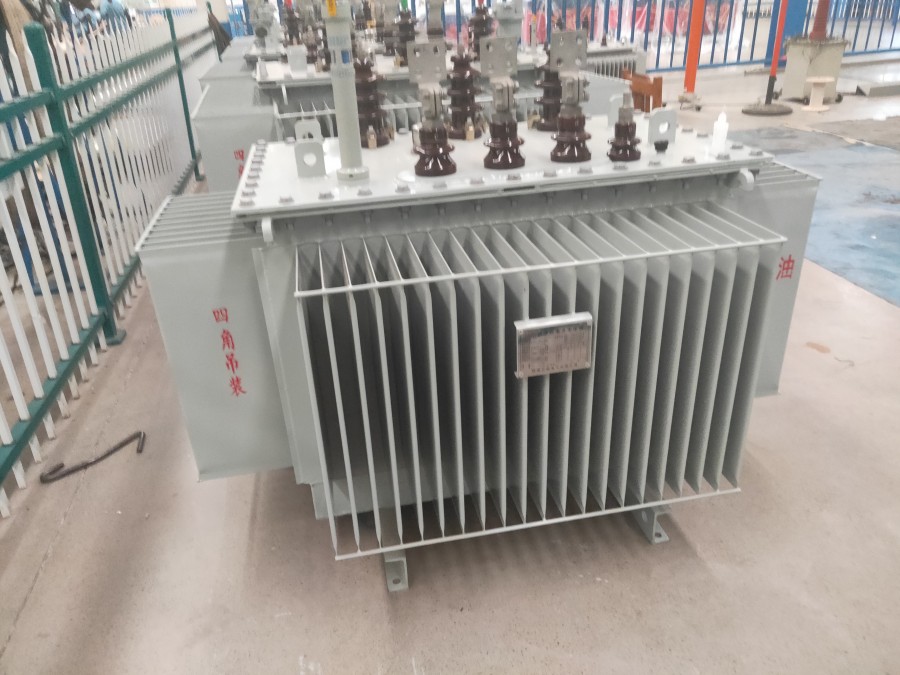
For buyers, the practical consequence is simple: a dry type transformer is safer to install indoors, easier to maintain, and far less regulated than an oil-immersed unit — but its price, loss level and overload capability depend heavily on which insulation system and which model series you specify.
The working principle is the same as any transformer: an alternating current in the primary winding creates a magnetic flux in the laminated core, which induces a voltage in the secondary winding. The difference lies in the insulation and cooling path. In a cast resin dry type transformer, the high-voltage and low-voltage windings are encapsulated in epoxy resin under vacuum, so the winding is sealed against dust, humidity and pollution. Heat generated by copper and core losses travels through the resin into the air, assisted by the chimney effect of the coil structure and, where specified, by cooling fans.
Model designations are not marketing labels — they encode structural and performance information. Understanding them prevents over-paying for features you do not need, or under-specifying a unit that will fail early.
In the code, S stands for three-phase, C for cast resin, B for foil or copper winding structure, and the number reflects the loss performance level. Two units of identical capacity can differ substantially in price and running cost purely because of that number.
When comparing quotations for a dry type transformer, never compare capacity and price alone. The following parameters should appear on every data sheet you review:
You will find a dry type transformer in high-rise buildings, shopping malls, hospitals, schools, airport terminals, tunnel and metro substations, offshore and wind power converter systems, charging stations, photovoltaic plants, and industrial lines where oil contamination is unacceptable — food processing, textiles and semiconductor manufacturing among them. Where the load is nonlinear, such as variable frequency drives or data centre UPS systems, specify a unit with adequate harmonic withstand and consider K-factor or derating guidance from the manufacturer.
A dry type transformer is a heavy, made-to-order product, not a catalogue item that benefits from distribution. Sourcing directly from the manufacturer removes reseller margin, shortens the technical clarification loop and makes the warranty holder identifiable. Runsheng Transformer Co., Ltd. manufactures cast resin dry type transformers including SCB10, SCB13, SCB14 and SCB18 series alongside S11, S13, S20 and S22 oil-immersed transformers, SH15 amorphous alloy units, mining and rectifier transformers, and 35 kV preassembled substations — with units tested to national standards and shipped with manuals, inspection reports and test certificates.
A dry type transformer is low-maintenance but not maintenance-free. Clean dust from winding surfaces annually in dusty rooms, verify fan operation and thermostat set points, check terminal torque after the first year, and keep the room ventilation unobstructed. In humid or polluted environments, specify a higher protection degree and consider space heaters to prevent condensation. Log winding temperatures so that a rising trend can be investigated before it becomes a failure.
To receive a comparable price quickly, prepare the following before contacting any supplier: rated capacity, voltage ratio, vector group, impedance, tap range, efficiency level or loss limits, indoor or outdoor installation, ambient conditions, and any special requirements such as on-load tap changing or harmonic-heavy loads. With those details, a factory can confirm the correct model series — and tell you honestly whether a dry type transformer or an oil-immersed unit is the better fit for your site.
For technical clarification, drawings or a factory-direct quotation, contact Runsheng Transformer Co., Ltd.: phone +86 13406394988, e-mail runsheng@7813transformer.com, WhatsApp 008613508930968.

Runsheng Transformer Co., Ltd. is a professional manufacturer of power transformers, specializing in oil-immersed transformers (S20, S11, S13), SH15 amorphous alloy transformers, S13 series 10KV 3D magnetic path wound-core transformers, D10 single-phase wound-core transformers, as well as mining transformers, rectifier transformers, surge arrestor transformers, load-tap-changing transformers, and custom-engineered special transformers.
WhatsApp & Wechat

No. 6, Intersection of Mount Huangshan Road and Changjiang Road, Liaocheng High tech Industrial Development Zone, Shandong, China


