
When you have coordination challenges, turn to Runsheng Transformer for help
It's all about making things easy, building partnerships, and providing a point of contact.
A 500kv power transformer is the heavy-lifting equipment that moves bulk electricity between the transmission grid and the next voltage level down. It sits at the boundary between extra-high-voltage (EHV) transmission and regional distribution, and its reliability directly determines whether a substation can deliver power continuously. For anyone sourcing one, understanding the basics is the fastest way to avoid specification mistakes, delivery delays, and unnecessary cost.
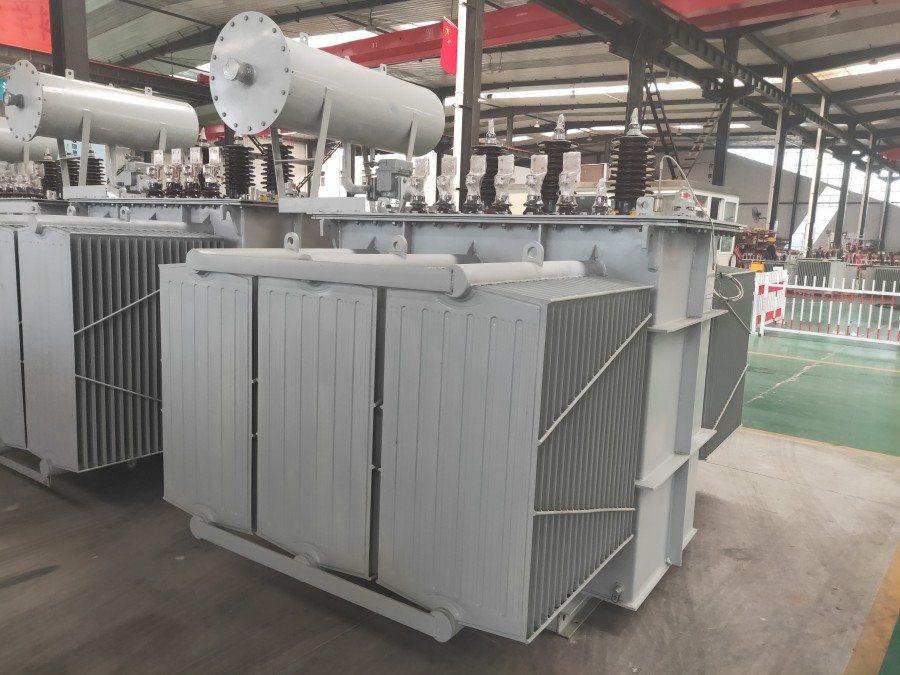
A 500kv power transformer is a large oil-immersed power transformer designed for a rated system voltage of 500 kV, typically operating in three-phase or three-single-phase bank configurations. Unlike distribution transformers that serve a few hundred kVA of load, a 500kv power transformer usually steps 500 kV down to 220 kV or 110 kV, or steps generator output up to 500 kV for long-distance transmission.
Because it works at the top of the transmission hierarchy, this class of equipment carries high dielectric stress, very large short-circuit currents, and strict requirements for loss performance. That combination is why the design, manufacturing, and testing of a 500kv power transformer are far more demanding than those of standard distribution units.
When comparing quotations, the numbers that actually matter are the ones tied to the grid study and the lifetime cost of the unit.
Cooling is one of the clearest differentiators in this product class. Common arrangements include:
Configuration is another decision point. Three-phase units take less space and fewer foundations but are heavier for transport. A bank of three single-phase units costs more and needs more footprint, yet offers a practical advantage: a spare single-phase unit can restore the bank quickly after a failure. Transport limits and redundancy requirements usually settle this question early in the project.
A 500kv power transformer is normally designed and tested against IEC 60076 or equivalent national standards such as GB 1094, with IEEE C57.12 series requirements also applied in some markets. Routine tests generally cover winding resistance, ratio and polarity, impedance and load loss, no-load loss and current, dielectric tests, and oil tests. Type and special tests can include temperature rise, lightning impulse, switching impulse, partial discharge, and short-circuit withstand.
Buyers should request the routine test report, type test certificates, nameplate data, and the factory's routine quality documentation before shipment. Asking for third-party witnessed testing on high-value units is reasonable and worth budgeting for.
Middlemen add margin without adding engineering value. Working directly with a power transformer manufacturer lets you discuss insulation levels, loss targets, cooling stages, and OLTC selection with the people who build the unit, and it removes a layer of markup that often reaches 20 to 30 percent. It also speeds up documentation, factory test scheduling, and after-sales response.
As a China transformer supplier, Runsheng Transformer Co., Ltd. manufactures oil-immersed and dry-type transformers alongside compact substations and high/low-voltage switchgear, and supports preassembled substation and custom special transformer projects. Units are delivered with manuals, inspection reports, test certificates, and lifelong quality tracking, which makes technical review and acceptance far easier for procurement teams.
A 500kv power transformer is a long-life asset, and the cheapest quotation is rarely the cheapest project. Get the specification right, demand verifiable test evidence, understand the transport and installation scope, and buy from a source that can answer engineering questions directly. That approach protects both your budget and your commissioning schedule.
For specifications, drawings, or a factory-direct quotation, contact Runsheng Transformer Co., Ltd.: phone +86 13406394988, e-mail runsheng@7813transformer.com, WhatsApp 008613508930968.

Runsheng Transformer Co., Ltd. is a professional manufacturer of power transformers, specializing in oil-immersed transformers (S20, S11, S13), SH15 amorphous alloy transformers, S13 series 10KV 3D magnetic path wound-core transformers, D10 single-phase wound-core transformers, as well as mining transformers, rectifier transformers, surge arrestor transformers, load-tap-changing transformers, and custom-engineered special transformers.
WhatsApp & Wechat

No. 6, Intersection of Mount Huangshan Road and Changjiang Road, Liaocheng High tech Industrial Development Zone, Shandong, China


