
When you have coordination challenges, turn to Runsheng Transformer for help
It's all about making things easy, building partnerships, and providing a point of contact.
A three winding transformer is a power transformer built with three independent winding sets wound on a common magnetic core. Normally one winding is the primary (high-voltage) winding and the other two are secondary windings at different voltage levels. Instead of converting voltage once, the unit performs two conversions inside a single tank: for example, 35 kV enters the primary, while a 10 kV winding and a 0.4 kV winding feed two different networks at the same time.
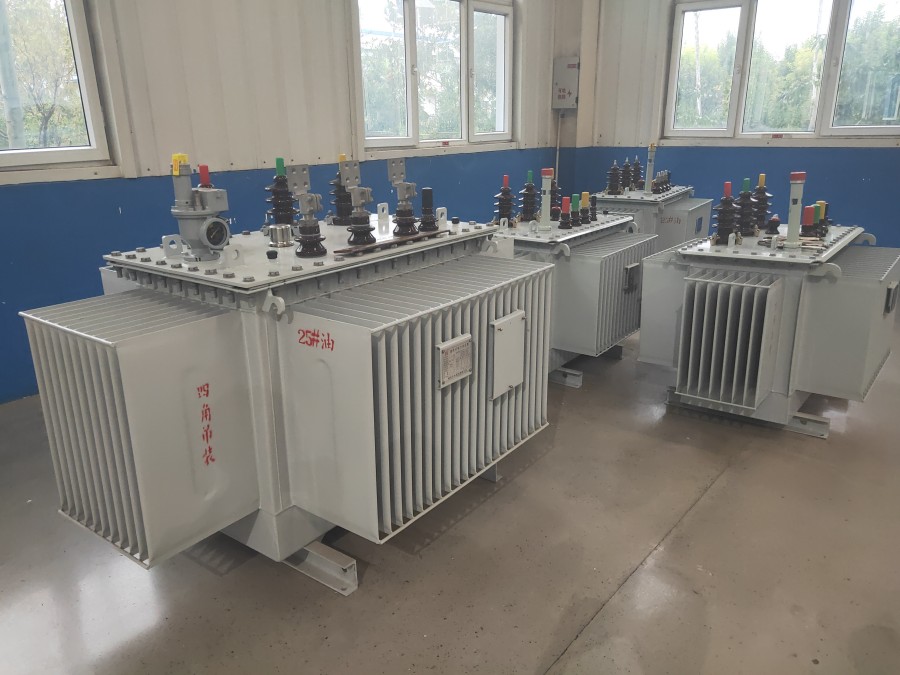
Because all three windings share one core, one tank, one cooling system and one set of bushings, a single three winding transformer frequently replaces two separate two-winding units. That is the core commercial argument for the product: less switchgear, less busbar, less civil work, less land, and one asset to maintain instead of two.
The trade-off is that the windings are magnetically coupled: loading one secondary affects the voltage regulation of the other. Good design and a correctly specified impedance keep that coupling within acceptable limits.
Three winding transformers are supplied in the same families as conventional distribution transformers:
Runsheng Transformer Co., Ltd. builds three winding units on its standard platforms, including S11, S13, S20 and S22 oil-immersed transformers, SCB10, SCB13, SCB14 and SCB18 dry-type transformers, and SH15 and SCBH15 amorphous alloy transformers, with customised winding arrangements for special projects.
Most disputes on this product come from a vague technical schedule, not from manufacturing quality. Lock down the following items:
These units appear wherever two distribution voltages must be served from one incoming feeder: urban and industrial substations, steel and cement plants, mining sites, water treatment works, data centres, and renewable energy projects where a collector substation steps down to both a medium-voltage bus and a low-voltage auxiliary supply. They are also a natural fit inside preassembled substations and compact substations, where every square metre of footprint has a price.
On a mid-size three winding transformer, dealer margins and multiple handling steps can account for a meaningful share of the landed price. Buying directly from the manufacturing plant removes those layers, and it also shortens the technical communication chain: winding ratios, impedance and vector group are agreed with the people who actually build the unit. A manufacturer that holds a comprehensive inventory can often ship standard ratings quickly, while custom special transformers still need a proper design review.
Supplying these six items in one message typically cuts quotation turnaround from weeks to days and eliminates most of the back-and-forth that delays projects.
A three winding transformer is a straightforward concept wrapped in specification detail. Get the capacity ratio, vector group, impedance and loss guarantees right, insist on full test documentation, and the equipment will quietly do its job for decades. Runsheng Transformer Co., Ltd. supplies oil-immersed, dry-type and amorphous alloy three winding units from 30 to 6300 kVA, all compliant with national standards and delivered with manuals, inspection reports, test certificates and lifelong quality tracking.
For technical selection or a factory-direct quotation, contact us at phone +86 13406394988, e-mail runsheng@7813transformer.com, or WhatsApp 008613508930968.

Runsheng Transformer Co., Ltd. is a professional manufacturer of power transformers, specializing in oil-immersed transformers (S20, S11, S13), SH15 amorphous alloy transformers, S13 series 10KV 3D magnetic path wound-core transformers, D10 single-phase wound-core transformers, as well as mining transformers, rectifier transformers, surge arrestor transformers, load-tap-changing transformers, and custom-engineered special transformers.
WhatsApp & Wechat

No. 6, Intersection of Mount Huangshan Road and Changjiang Road, Liaocheng High tech Industrial Development Zone, Shandong, China


