
When you have coordination challenges, turn to Runsheng Transformer for help
It's all about making things easy, building partnerships, and providing a point of contact.
A 400kv power transformer is a transmission-class, extra-high-voltage (EHV) transformer built to operate inside a 400 kV network, one of the standard voltage levels used by national transmission systems in Europe, Asia, Africa and the Middle East. Its job is simple to describe and hard to engineer: step voltage up at generating stations for bulk power transfer over long distances, then step it back down at load centres so power can be distributed at lower voltages.
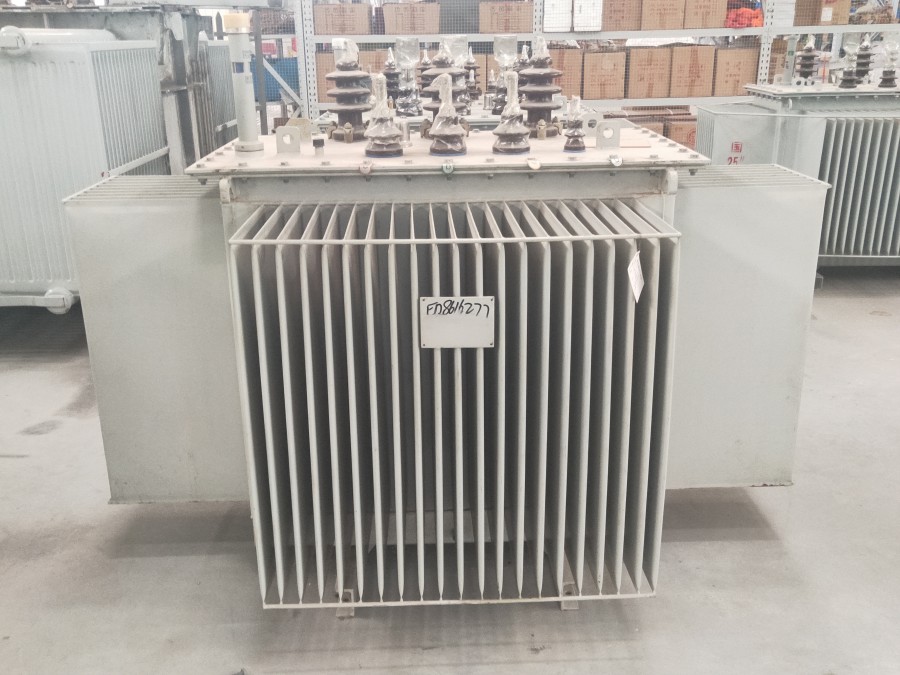
Unlike a distribution transformer, a 400kv power transformer is designed around very large ratings, tight loss limits, high short-circuit withstand capability and continuous duty for 25 to 40 years. Most units in this class are three-phase, oil-immersed machines, often configured as autotransformers such as 400/220 kV or 400/132 kV to reduce size, weight and losses. Ratings typically start around 100 MVA and extend beyond 500 MVA, depending on grid requirements.
Because these units sit at the backbone of a power system, a single failure can interrupt supply to an entire region. That is why procurement decisions are driven by reliability and verified test data rather than by price alone.
At 400 kV, oil-immersed construction dominates because oil provides both insulation and highly effective cooling for very large cores and windings. Dry-type designs, such as the SCB10, SCB13, SCB14 and SCB18 families, are typically applied at distribution and medium-voltage levels indoors, where fire safety, minimal maintenance and compact footprint matter more than extreme power capacity. They are not substitutes for a 400kv power transformer, but they frequently belong to the same substation package, alongside high low voltage switchgear, compact substations and other auxiliary equipment.
A serious 400kv power transformer is engineered to internationally recognised standards such as IEC 60076, IEEE C57.12.00 and GB 1094, and the paperwork proves it. Ask for the full test dossier before signing off on shipment:
In a 400kv power transformer, cost is concentrated in copper windings, grain-oriented electrical steel, insulation and oil, tap changer, bushings and factory testing hours. Two buyers can receive quotations that differ by 20 to 30 percent for the same nominal rating, and the gap is usually explained by core material grade, copper versus aluminium conductors, loss guarantees, cooling design and test scope. The practical way to save is to specify accurately, standardise where the grid allows, and buy factory-direct so that distributor margins and repeated handling costs disappear from the invoice.
Runsheng Transformer Co., Ltd. is a power transformer manufacturer serving projects that need dependable equipment at factory-direct prices. Its portfolio covers S11, S13, S20 and S22 oil-immersed transformers, SCB10, SCB13, SCB14 and SCB18 dry-type transformers, SH15 and SCBH15 amorphous alloy transformers, mining transformers, rectifier transformers, load tap changing transformers, and 35 kV and below preassembled substation equipment including European-style and American-style compact substations and high low voltage switchgear, with ratings from 30 kVA to 6300 kVA. For 400kv power transformer projects, the main step-up and step-down units normally call for a heavy-power specialist, while the auxiliary and downstream transformers, switchgear and package substations can be sourced direct from a China transformer supplier such as Runsheng, with manuals, inspection reports, test certificates and lifelong quality tracking supplied with every unit. Buyers who consolidate these packages with one factory typically reduce both unit prices and coordination risk.
Is a 400kv power transformer always oil-immersed? For practical purposes, yes. At this voltage and power level, oil-immersed designs with forced or directed oil cooling remain the standard solution.
How long is delivery? Large EHV units commonly require many months from order to site delivery, since core and winding manufacture, tank fabrication, drying, testing and transport planning all run in sequence. Early specification freezes shorten the schedule.
What drives lifetime cost more than price? No-load and load losses. A slightly higher purchase price for lower guaranteed losses is often repaid within a few years of operation.
A 400kv power transformer is a long-life, high-value asset at the heart of a transmission system. Specify the parameters precisely, demand a complete and witnessed test dossier, evaluate total cost of ownership rather than sticker price, and buy from a manufacturer that can prove its EHV experience. Get those four things right and both the budget and the reliability curve stay under control.
Contact us for a quotation or technical discussion: phone +86 13406394988, e-mail runsheng@7813transformer.com, WhatsApp 008613508930968.

Runsheng Transformer Co., Ltd. is a professional manufacturer of power transformers, specializing in oil-immersed transformers (S20, S11, S13), SH15 amorphous alloy transformers, S13 series 10KV 3D magnetic path wound-core transformers, D10 single-phase wound-core transformers, as well as mining transformers, rectifier transformers, surge arrestor transformers, load-tap-changing transformers, and custom-engineered special transformers.
WhatsApp & Wechat

No. 6, Intersection of Mount Huangshan Road and Changjiang Road, Liaocheng High tech Industrial Development Zone, Shandong, China


