
When you have coordination challenges, turn to Runsheng Transformer for help
It's all about making things easy, building partnerships, and providing a point of contact.
A 33kv transformer is a power transformer designed to operate on a 33 kV (33,000 volt) network, a voltage class that sits between standard distribution levels such as 10 kV and 11 kV, and sub-transmission levels such as 66 kV and 110 kV. In practice, a 33kv transformer either steps a 33 kV incoming supply down to a usable level — commonly 400 V, 415 V, 6.6 kV or 11 kV — for industrial plants, commercial buildings and utility substations, or steps generation-level voltage up to 33 kV for collection and onward transmission.
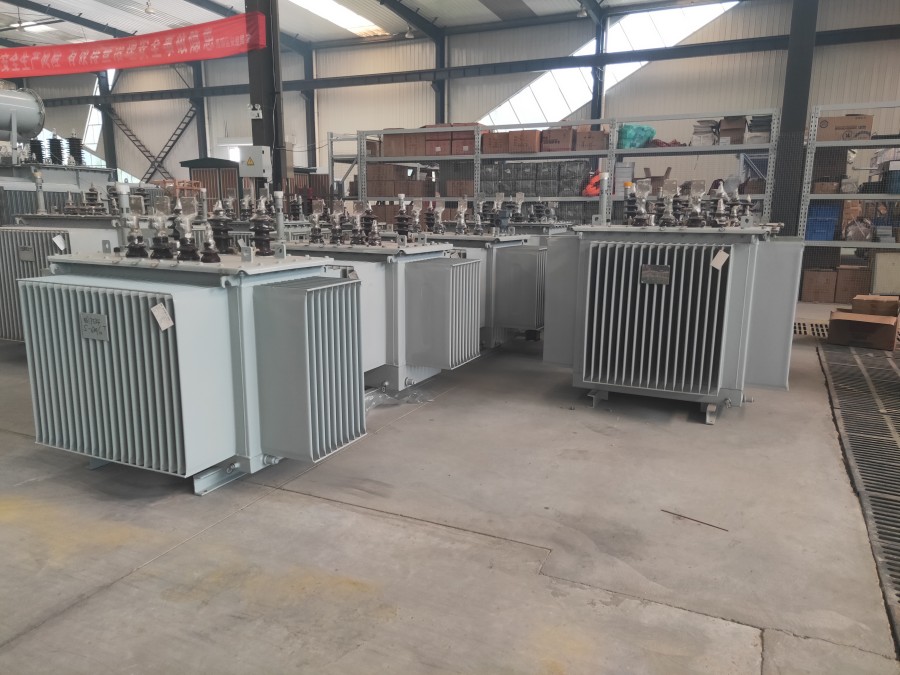
Because 33 kV offers a sensible balance between transmission distance, line losses and insulation cost, it is widely used in utility distribution networks, railway traction supplies, mining operations and renewable energy projects. Choosing the correct 33kv transformer is therefore not only a technical decision; it directly affects no-load and load losses, maintenance intervals and the long-term reliability of the entire electrical system.
Two construction families dominate the market, and each has clear strengths depending on where the unit will be installed.
Oil-immersed 33kv transformers are the workhorse of outdoor substations. Typical series include S11, S13, S20 and S22, with cooling modes such as ONAN or ONAF. They handle high capacities efficiently, tolerate overload and harsh ambient conditions well, and generally offer the lowest cost per kVA. Where no-load loss is a priority, amorphous alloy designs such as SH15 and SCBH15 reduce energisation losses noticeably and are often specified for networks that run continuously.
Dry-type 33kv transformers, including SCB10, SCB13, SCB14 and SCB18 cast-resin units, contain no combustible oil. That makes them the preferred choice for indoor installations such as factory buildings, hospitals, tunnels, metro systems and data centres, where fire safety and easy maintenance matter more than the last few percent of purchase price.
Both families are frequently packaged into a preassembled substation — a European-style or American-style compact substation that combines the 33kv transformer with high and low voltage switchgear in one transportable unit, cutting site work and commissioning time considerably.
A 33kv transformer appears in a remarkably wide range of projects: utility distribution feeders, industrial plants with heavy motor loads, mining sites where dust and vibration are constant, waste-to-energy and biomass plants, and renewable energy installations where wind or solar output is collected at 33 kV before being stepped up further. Rectifier transformers and lightning arrester transformers are also built on the same platform when a project has specialised duty cycles.
Most disappointing transformer purchases trace back to the same handful of causes: capacity chosen from a rule of thumb rather than a load study; loss figures quoted at a different reference temperature than the one used for comparison; missing type test reports; and unclear delivery scope, where bushings, gauges or protection devices turn out to be extras. Asking for a complete datasheet, a routine test report and a clear bill of materials before ordering prevents almost all of these problems.
Buying from the manufacturer rather than through layers of traders removes markup and, more importantly, removes ambiguity about who is responsible for quality. Runsheng Transformer Co., Ltd. produces S22, S20, S11 and S13 oil-immersed transformers, SCB13, SCB14 and SCB18 dry-type transformers, SH15 amorphous alloy transformers, mining and rectifier transformers, and 35 kV and below preassembled substation equipment, all supplied at factory-direct prices. Every unit ships with a manual, inspection report, test certificate and lifelong quality tracking, so the specification you approve is the specification you receive.
Reliable 33kv transformers are designed and tested against recognised standards such as IEC 60076 and GB 1094. Routine tests normally cover winding resistance, voltage ratio and vector relationship, insulation resistance, power-frequency withstand, no-load loss and load loss, and oil dielectric strength for oil-immersed units. Type tests such as lightning impulse and temperature rise confirm the design itself rather than a single unit. Always request the documents that accompany the shipment — they are your evidence if anything needs to be discussed later.
A 33kv transformer is a long-life asset, and the cheapest quote is rarely the cheapest installation. Focus on verified loss figures, correct voltage ratio and vector group, appropriate cooling and a manufacturer who can show real test documentation. Do that, and the unit will quietly do its job for decades.
For specifications, drawings or a factory-direct quotation, contact Runsheng Transformer Co., Ltd. — phone: +86 13406394988, e-mail: runsheng@7813transformer.com, WhatsApp: 008613508930968.

Runsheng Transformer Co., Ltd. is a professional manufacturer of power transformers, specializing in oil-immersed transformers (S20, S11, S13), SH15 amorphous alloy transformers, S13 series 10KV 3D magnetic path wound-core transformers, D10 single-phase wound-core transformers, as well as mining transformers, rectifier transformers, surge arrestor transformers, load-tap-changing transformers, and custom-engineered special transformers.
WhatsApp & Wechat

No. 6, Intersection of Mount Huangshan Road and Changjiang Road, Liaocheng High tech Industrial Development Zone, Shandong, China


