
11kv Transformer Factory Direct: Cut Costs, Avoid Pitfalls, and Specify the Right Unit

What Exactly Is an 11kv Transformer?

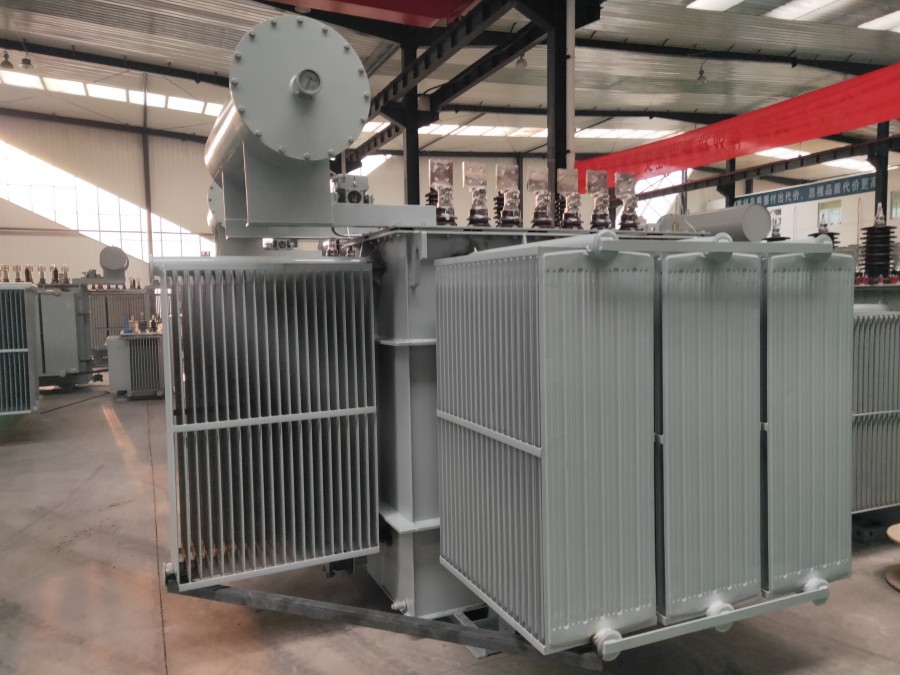
An 11kv transformer is a distribution-class power transformer designed to operate on an 11 kV primary network. Its job is to step the 11 kV line voltage down to a usable low voltage, most commonly 0.415 kV or 0.433 kV, or to step generation voltage up to 11 kV for grid connection. Rated capacities typically span 30 kVA to 6300 kVA, with smaller units serving pole-mounted and pad-mounted distribution duty and larger units feeding industrial plants, mines, and renewable energy projects.
11kv Transformer Factory Direct: Cut Costs, Avoid Pitfalls, and Specify the Right Unit

Because the 11 kV level sits between the high-voltage transmission layer and the low-voltage utilisation layer, an 11kv transformer is the workhorse of medium-voltage distribution. A single unit may supply a residential block, a production line, a water pumping station, or a solar inverter block, which is why demand for this voltage class stays consistently strong across Africa, the Middle East, South Asia, the UK, and Southeast Asia.

Why 11 kV Has Become a Global Distribution Standard

The 11 kV class is one of the most widely adopted primary distribution voltages in the world. The reasons are practical rather than theoretical:

  • Voltage drop and line losses stay manageable over typical urban and rural feeder lengths.
  • Insulation requirements are lower and more economical than 33 kV or higher systems.
  • Standard 11 kV / 0.433 kV two-winding designs are mass produced, so bushings, protection relays, and spares are easy to source.
  • It integrates cleanly with existing 11 kV switchgear, ring main units, and compact substations.

Main Types of 11kv Transformer on the Market

Buyers can choose from several construction families, each with a different cost, safety, and maintenance profile:

  • Oil-immersed transformers such as the S11, S13, S20, and S22 series. Mineral oil provides both cooling and insulation, giving high overload capability at a lower cost per kVA. Best suited to outdoor, pole-mounted, and substation duty.
  • Dry-type transformers such as the SCB10, SCB13, SCB14, and SCB18 series. Epoxy resin cast windings remove the flammable liquid, making them the preferred choice for indoor installation in commercial buildings, hospitals, tunnels, and metro projects.
  • Amorphous alloy transformers such as the SH15 and SCBH15 series. The amorphous core reduces no-load loss dramatically, which matters where the transformer runs lightly loaded for long periods.
  • Special-purpose units including mining transformers, rectifier transformers, single-phase wound core transformers, capacity-regulating transformers, and custom-designed special transformers for unusual ratios, harmonics, or harsh environments.

Key Parameters to Confirm Before You Order

Specification errors are the most expensive mistakes in transformer procurement. Confirm every item below in writing:

  • Rated capacity: 30, 50, 100, 200, 315, 500, 630, 1000, 1250, 1600, 2000, 2500 kVA and upward to 6300 kVA.
  • Voltage ratio and tapping: for example 11 kV plus or minus 2 x 2.5% / 0.433 kV, with an off-circuit or on-load tap changer.
  • Vector group: Dyn11 is the most common for distribution duty, while Yyn0 and Yd11 are used for specific applications.
  • Impedance: normally 4% to 6% for distribution units, which directly affects short-circuit current coordination.
  • Loss levels: no-load loss and load loss determine long-term energy cost far more than purchase price does.
  • Cooling and environment: ONAN cooling, ambient temperature, altitude, humidity, and IP protection class.
  • Standards: IEC 60076, GB/T 1094, or ANSI/IEEE C57.12.00 as required by the project.
  • Accessories: bushings, pressure relief valve, oil level gauge, temperature indicators, buchholz relay, cable boxes, and anti-corrosion finish.

Typical Applications

  • Urban and rural 11 kV distribution feeders
  • Industrial plants and continuous production lines
  • Mining operations and heavy machinery power supply
  • Solar and wind renewable energy collection systems
  • Commercial complexes, hospitals, data centres, and airports, usually with dry-type units
  • Preassembled and compact substations integrating 11 kV switchgear

Sizing an 11kv Transformer Correctly

Undersizing leads to overheating and nuisance tripping; oversizing wastes capital and raises no-load loss. A sound approach is to total the connected load, apply a realistic diversity and demand factor, allow 20% to 30% for future growth, and then check the resulting load factor against the permissible cyclic loading of the transformer. Motors, rectifiers, and arc loads need additional allowance for harmonics and starting current.

Price Factors and Common Pitfalls to Avoid

  • Winding material: copper versus aluminium is the single biggest price driver. Ask for conductor cross-section and material certificates, not just a kVA figure.
  • Core grade: CRGO silicon steel grade and amorphous cores change both price and loss performance.
  • Loss evaluation: a cheaper high-loss unit can cost more over ten years of operation than a premium low-loss model.
  • Test documentation: routine tests, type tests, and third-party inspection reports should be supplied; missing paperwork is a warning sign.
  • Scope of supply: verify whether bushings, gauges, tap changer, cable boxes, and oil are included.
  • After-sales: confirm warranty terms, spare parts availability, and technical support before signing.

Why Buying Direct from a Manufacturer Pays Off

Removing trading layers cuts cost without touching quality, provided the factory itself is capable. Runsheng Transformer Co., Ltd. manufactures a broad medium-voltage range, including S11, S13, S20, and S22 oil-immersed transformers, SCB13, SCB14, and SCB18 dry-type transformers, SH15 amorphous alloy transformers, mining and rectifier transformers, and 35 kV and below preassembled substations with high and low voltage switchgear. Units are built to national standards and delivered with manuals, inspection reports, test certificates, and lifelong quality tracking, which shortens the gap between specification, delivery, and long-term service.

Installation, Commissioning, and Maintenance Basics

  • Verify insulation resistance, winding resistance, ratio, and vector group before energising.
  • For oil-immersed units, check oil level, breather condition, and valve positions, then sample oil for dissolved gas analysis.
  • For dry-type units, keep windings clean and ensure adequate ventilation in the transformer room.
  • Schedule periodic thermographic inspection, load logging, and protection device testing.
  • Keep records of measured losses and temperatures so early degradation can be spotted.

Final Thoughts

An 11kv transformer is a long-life asset, not a commodity bought on price alone. Match the construction type to the installation environment, verify every electrical parameter and document in writing, and evaluate lifetime energy cost instead of the quotation figure by itself. Do that and the unit will deliver reliable service for decades, with predictable maintenance and no unpleasant surprises at commissioning.

For specifications, quotations, or custom-designed units, contact: phone +86 13406394988, e-mail runsheng@7813transformer.com, WhatsApp 008613508930968.

When you have coordination challenges, turn to Runsheng Transformer for help
It's all about making things easy, building partnerships, and providing a point of contact.