
When you have coordination challenges, turn to Runsheng Transformer for help
It's all about making things easy, building partnerships, and providing a point of contact.
A 400kv power transformer is a transmission-class, extra-high-voltage transformer built to operate on 400 kV networks — a backbone voltage level widely used across Europe, Asia, Africa and the Middle East for bulk power transfer. Its function is simple to describe and demanding to execute: step generator output up to 400 kV for long-distance transmission, or step 400 kV down to sub-transmission levels such as 220 kV, 132 kV or 110 kV at bulk substations. Because it sits at the heart of the grid, its losses, impedance and reliability affect the economics of an entire network rather than a single plant.
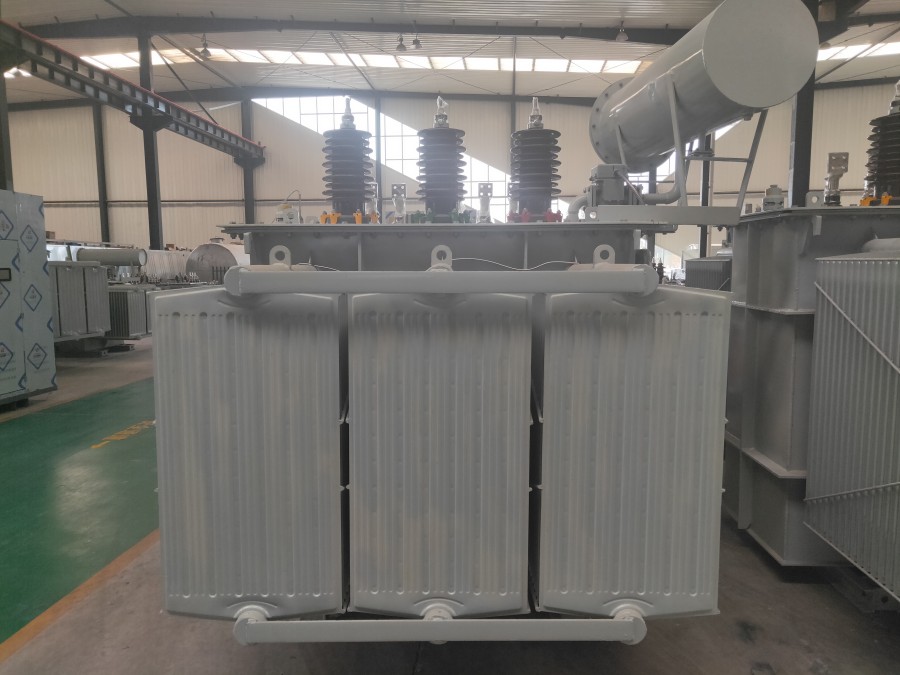
Unlike a distribution transformer, a 400kv power transformer is almost always a custom-engineered unit. Capacity commonly falls in the range of roughly 100 MVA to 1,000 MVA, windings are copper, the insulation system is oil-paper, and cooling is normally forced (ONAF or ODAF). Many utilities prefer a bank of three single-phase units instead of one three-phase unit, because a spare single-phase unit on site dramatically reduces outage risk and simplifies transport to remote substations.
Typical applications include large thermal, hydro and nuclear power stations where generator voltage must be raised for transmission; national grid interconnection points between regions; renewable energy hubs that collect gigawatt-scale wind and solar output before feeding the transmission network; and cross-border interconnections that support power trading. In each case the transformer is a long-life asset expected to run for 30 to 40 years with minimal intervention, which is why lifecycle cost — not purchase price alone — drives the specification.
The biggest risk in this market is an unrealistically low bid. It is rarely a bargain; more often it signals a lower steel grade, thinner copper, reduced insulation margins, or incomplete testing. Protect the project with a disciplined checklist:
A legitimate 400kv power transformer shipment arrives with much more than the equipment: a full manual set, routine test records, a type test report, material certificates, a packing list and a quality certificate. Buyers should also expect traceability of the core steel and copper, calibration records for test instruments, and a documented lifelong quality tracking file. These documents are what allow insurers, lenders and grid operators to accept the asset into service.
Few substation projects involve only one voltage class. Station-service transformers, auxiliary units, earthing transformers and compact substations are usually needed alongside the main transmission asset. This is where an experienced China transformer supplier such as Runsheng Transformer Co., Ltd. adds practical value: the company manufactures oil-immersed transformers (S11, S13, S20, S22), dry-type transformers (SCB10, SCB13, SCB14, SCB18), amorphous alloy transformers (SH15, SCBH15), mining transformers, rectifier transformers, load tap changing transformers and preassembled substations covering 30 to 6300 kVA at 35 kV and below, with all products delivered with manuals, inspection reports, test certificates and lifelong quality tracking.
The 400kv power transformer is a high-value, custom-engineered asset where specification quality, loss guarantees and supplier discipline matter far more than the headline quotation. Compare capitalized losses rather than raw prices, verify testing with independent witnesses, and lock documentation and after-sales commitments into the contract. Do that, and the factory-direct route genuinely removes middleman markups instead of hiding compromises.
For auxiliary, distribution and 35 kV class transformer requirements to support your 400 kV project, contact Runsheng Transformer Co., Ltd.: phone +86 13406394988, e-mail runsheng@7813transformer.com, WhatsApp 008613508930968.

Runsheng Transformer Co., Ltd. is a professional manufacturer of power transformers, specializing in oil-immersed transformers (S20, S11, S13), SH15 amorphous alloy transformers, S13 series 10KV 3D magnetic path wound-core transformers, D10 single-phase wound-core transformers, as well as mining transformers, rectifier transformers, surge arrestor transformers, load-tap-changing transformers, and custom-engineered special transformers.
WhatsApp & Wechat

No. 6, Intersection of Mount Huangshan Road and Changjiang Road, Liaocheng High tech Industrial Development Zone, Shandong, China


