
When you have coordination challenges, turn to Runsheng Transformer for help
It's all about making things easy, building partnerships, and providing a point of contact.
A 750kv power transformer is an extra-high-voltage (EHV), oil-immersed power transformer built for system voltages in the 750 kV class. It sits at the critical interface between large generating stations, long-distance transmission corridors and the regional sub-transmission network, stepping voltage up for bulk power transfer or stepping it down for area supply. Unlike a distribution transformer rated 30 to 6300 kVA, a 750kv power transformer is typically rated in the hundreds of megavolt-amperes, is often supplied as a three-phase unit or a bank of single-phase units, and is almost always fitted with an on-load tap changer so that busbar voltage stays stable as load swings through the day.
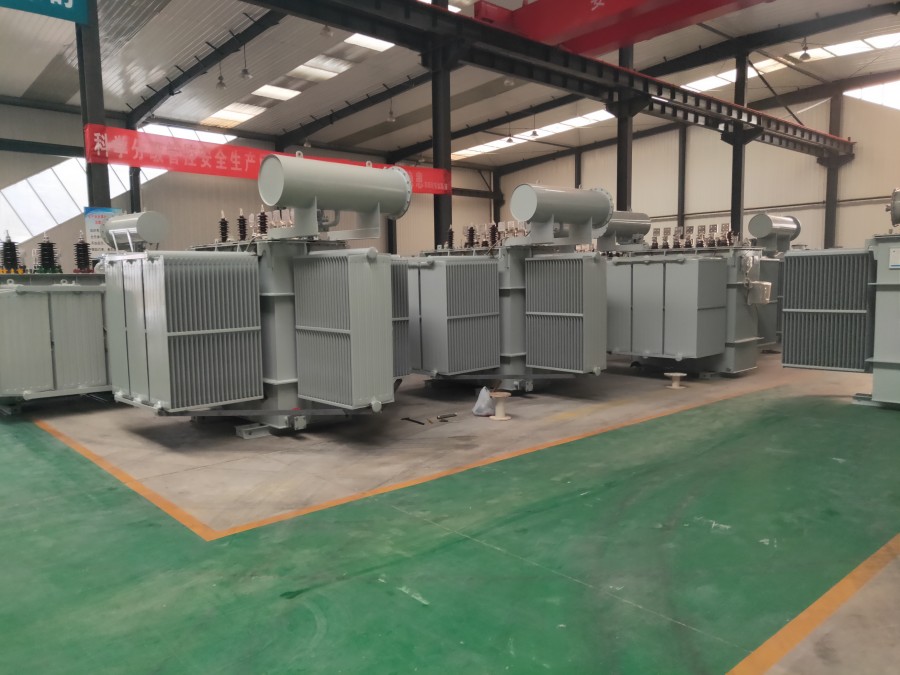
Because it is a network asset rather than an off-the-shelf component, the 750kv power transformer is specified by transmission planners, EPC contractors and utility asset managers rather than by general buyers. That is why the procurement conversation is dominated by loss evaluation, short-circuit withstand, transport logistics and lifetime service support instead of the headline price alone.
Transmission losses scale with the square of current, so raising voltage is the most economical way to move large blocks of power over long distances. A 750kv power transformer makes that possible by matching generation voltage to the EHV corridor and then matching the corridor back to the receiving network.
A 750kv power transformer runs hot because of its power density. Cooling stages are therefore switched in and out automatically according to winding temperature. Buyers should expect guaranteed values for no-load loss and load loss, plus a stated reference temperature and an agreed method of measurement. Loss capitalization is standard practice on EHV projects: the utility applies a capitalisation rate per kilowatt of no-load loss and per kilowatt of load loss, and that figure often changes the winning bid far more than the purchase price does.
EHV units are normally designed and tested against IEC 60076 and the GB 1094 series, with GB/T 6451 covering technical parameters for oil-immersed power transformers. Typical routine and type tests include winding resistance, voltage ratio and polarity, insulation resistance, power-frequency withstand, lightning impulse, switching impulse, partial discharge, no-load and load loss measurement, temperature rise, and impedance and zero-sequence impedance measurement. A serious supplier hands over a complete package: type test reports, routine test certificates, a factory inspection report, an operation and maintenance manual, and a lifetime quality tracking record.
Most procurement failures on EHV projects trace back to weak specification rather than weak technology. Use a structured checklist:
Several variables drive the delivered cost of a 750kv power transformer: copper and grain-oriented silicon steel prices, guaranteed loss levels, tap changer brand and position count, bushing type, cooling complexity, oil volume, transport weight, and the depth of site services included. A cheap offer with high losses is rarely cheap over a thirty-year service life. Comparing total cost of ownership, not invoice price, is the discipline that protects the project budget.
Not every project needs the highest voltage class. Step-up and step-down duty inside a plant, mine, industrial park or renewable energy site usually calls for equipment in the 35 kV and below range, where product families such as S11, S13, S20 and S22 oil-immersed transformers, SCB13, SCB14 and SCB18 dry-type transformers, SH15 and SCBH15 amorphous alloy transformers, mining and rectifier transformers, plus preassembled and compact substations with high and low voltage switchgear, deliver the right balance of cost, footprint and reliability. Runsheng Transformer Co., Ltd. manufactures exactly this range, with a comprehensive inventory, factory-direct pricing, national-standard compliance and full documentation including manuals, inspection reports and test certificates, so buyers sourcing distribution-class equipment can shorten lead times without sacrificing verification. For EHV scope, the same discipline applies: buy from a manufacturer whose test capability and paperwork can survive an audit.
A 750kv power transformer is a long-life, high-value asset where specification quality, verified testing and lifetime support matter more than a headline discount. Write the specification tightly, capitalise losses, verify the factory, and hold every guarantee in writing. Whether the requirement is an EHV grid asset or a 35 kV and below distribution unit, buying from a manufacturer that documents every step is the surest way to avoid costly surprises.
For inquiries on power and distribution transformers, contact Runsheng Transformer Co., Ltd. at phone +86 13406394988, e-mail runsheng@7813transformer.com, or WhatsApp 008613508930968.

Runsheng Transformer Co., Ltd. is a professional manufacturer of power transformers, specializing in oil-immersed transformers (S20, S11, S13), SH15 amorphous alloy transformers, S13 series 10KV 3D magnetic path wound-core transformers, D10 single-phase wound-core transformers, as well as mining transformers, rectifier transformers, surge arrestor transformers, load-tap-changing transformers, and custom-engineered special transformers.
WhatsApp & Wechat

No. 6, Intersection of Mount Huangshan Road and Changjiang Road, Liaocheng High tech Industrial Development Zone, Shandong, China


