
When you have coordination challenges, turn to Runsheng Transformer for help
It's all about making things easy, building partnerships, and providing a point of contact.
A 500kv power transformer is a high-capacity, extra-high-voltage (EHV) transformer built to step up generator output or step down transmission voltage inside a 500 kV grid system. It sits on the backbone of modern power transmission, connecting large generating stations and 500 kV transmission lines to lower-voltage networks. Because it works at one of the highest AC voltage levels in routine commercial service, its insulation system, winding geometry, cooling arrangement, and mechanical strength are all far more demanding than those of an ordinary distribution transformer.
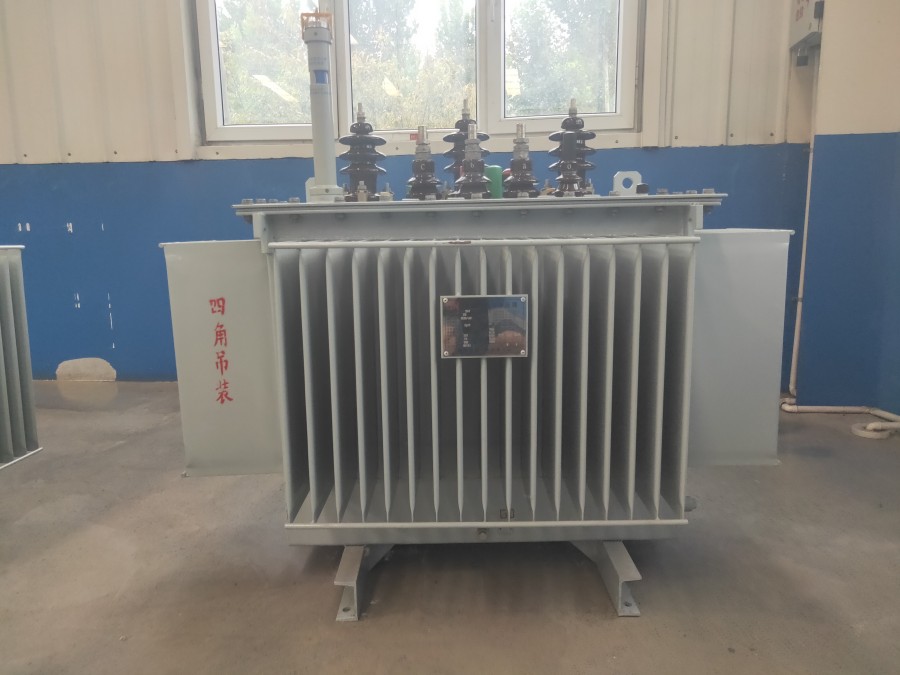
In practical terms, a single 500kv power transformer can weigh several hundred tons and is typically rated from around 100 MVA up to 1,000 MVA or more, depending on system needs. It is almost always oil-immersed, force-cooled, and fitted with an on-load tap changer (OLTC) so voltage can be regulated while the unit stays energised.
EHV transformers appear at two classic points in the network: the generator step-up (GSU) position at a power plant, and the bulk transmission substation where 500 kV lines interface with 220 kV or 110 kV systems. A typical chain looks like this:
Because these units are network-critical, utilities treat them as long-lead, high-value assets with strict reliability, loss, and noise requirements.
Although designs vary by manufacturer and specification, a 500kv power transformer generally includes the following:
Reputable suppliers build to recognised standards such as IEC 60076, IEEE C57.12.00, and equivalent national specifications. A complete test programme normally covers routine tests (ratio, winding resistance, impedance, no-load and load loss, insulation resistance, power-frequency withstand, partial discharge) plus type and special tests (lightning impulse, switching impulse, temperature rise, short-circuit, and noise measurement) where specified.
Documentation matters as much as the hardware. Insist on a full manual set, factory inspection reports, routine and type test certificates, oil test results, nameplate data, and a traceable quality record for lifelong maintenance planning. As a transformer manufacturer serving global buyers, Runsheng Transformer Co., Ltd. supplies every unit with manuals, inspection reports, test certificates, and lifelong quality tracking so the technical file follows the asset for its entire service life.
Buyers often compare only the quoted unit price and miss the bigger cost picture. The main price drivers are:
EHV projects are won and lost on lead time, documentation, and total cost of ownership. Buying straight from the production line removes trading layers, shortens the communication chain on design reviews, and makes it easier to trace materials and test records. A manufacturer with comprehensive inventory, standards-compliant output, and factory-direct pricing can typically offer a stronger price position while keeping quality assurance visible at every stage.
For projects below the EHV class, the same sourcing logic applies to the wider equipment family: oil-immersed transformers such as the S11, S13, S20, and S22 series, dry-type units including SCB10, SCB13, SCB14, and SCB18, amorphous alloy transformers, mining and rectifier transformers, and 35 kV preassembled compact substations with high and low voltage switchgear. Runsheng Transformer Co., Ltd. covers this full range with assured quality and factory-direct pricing.
Whether you are specifying a 500kv power transformer or sourcing distribution and mid-voltage equipment, the fastest way to a reliable quotation is a direct conversation with the factory. Send your parameters — capacity, voltage ratio, impedance, cooling class, and site conditions — and request a formal offer with loss guarantees, test scope, and documentation list included.
Phone: +86 13406394988 | Email: runsheng@7813transformer.com | WhatsApp: 008613508930968

Runsheng Transformer Co., Ltd. is a professional manufacturer of power transformers, specializing in oil-immersed transformers (S20, S11, S13), SH15 amorphous alloy transformers, S13 series 10KV 3D magnetic path wound-core transformers, D10 single-phase wound-core transformers, as well as mining transformers, rectifier transformers, surge arrestor transformers, load-tap-changing transformers, and custom-engineered special transformers.
WhatsApp & Wechat

No. 6, Intersection of Mount Huangshan Road and Changjiang Road, Liaocheng High tech Industrial Development Zone, Shandong, China


