
When you have coordination challenges, turn to Runsheng Transformer for help
It's all about making things easy, building partnerships, and providing a point of contact.
A step down transformer is a static electrical device that converts a higher alternating current (AC) voltage into a lower one suitable for machines, buildings and distribution networks. It works on Faraday's law of electromagnetic induction: a primary winding with more turns and a secondary winding with fewer turns are linked by a common magnetic core, so the output voltage follows the turns ratio. A 10 kV/0.4 kV step down transformer, for example, reduces medium voltage to the 400 V three-phase supply used across industry and commerce.
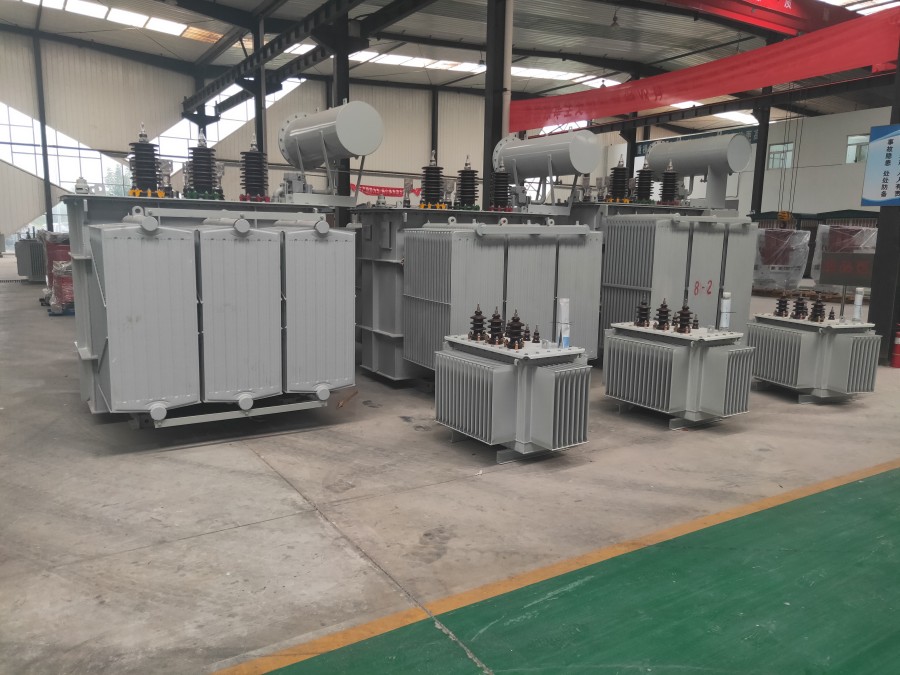
Because there are no rotating parts, a well-made step down transformer reaches 98%–99% efficiency, needs very little maintenance and can operate continuously for decades. Its losses come mainly from the core (no-load loss) and the windings (load loss), and these two figures decide the lifetime energy cost of the equipment far more than the purchase price does.
Typical applications include industrial plants, commercial complexes, residential communities, water treatment, ports, mines, railways and charging infrastructure. In renewable energy projects, step down transformers link wind and solar inverters to the collection grid, while in mining and metallurgy, rectifier and mining transformers handle heavy, non-linear loads and frequent overloads. The correct type depends on load profile, ambient temperature, altitude, humidity and the required fire rating — not on price alone.
Middlemen add margin, delay delivery and often cannot answer technical questions. Buying from the manufacturer removes those layers and gives you control over copper or aluminium windings, core grade, loss level and enclosure finish. As a power transformer manufacturer, Runsheng Transformer Co., Ltd. produces oil-immersed, dry-type and amorphous alloy transformers from 30 to 6300 kVA and supplies complete test documentation with every unit.
Before you place an order, work through this checklist:
Common mistakes include choosing the cheapest quote without comparing losses, ignoring altitude and ambient temperature derating, and ordering a non-standard tapping range that later blocks commissioning. Matching the specification to the site avoids costly rework and keeps the step down transformer within its efficient operating band.
All products comply with national standards and are delivered with manuals, inspection reports, test certificates and lifelong quality tracking. Runsheng Transformer Co., Ltd. follows a quality policy of customer satisfaction, maintains comprehensive inventory, and offers oil-immersed and dry-type transformers at factory-direct prices, along with custom-designed special transformers built to project requirements.
For specifications, drawings, quotations or technical support, contact us: phone +86 13406394988, e-mail runsheng@7813transformer.com, WhatsApp 008613508930968. Share your capacity, voltage ratio, vector group and installation environment, and we will recommend the most cost-effective step down transformer for your project.

Runsheng Transformer Co., Ltd. is a professional manufacturer of power transformers, specializing in oil-immersed transformers (S20, S11, S13), SH15 amorphous alloy transformers, S13 series 10KV 3D magnetic path wound-core transformers, D10 single-phase wound-core transformers, as well as mining transformers, rectifier transformers, surge arrestor transformers, load-tap-changing transformers, and custom-engineered special transformers.
WhatsApp & Wechat

No. 6, Intersection of Mount Huangshan Road and Changjiang Road, Liaocheng High tech Industrial Development Zone, Shandong, China


