
When you have coordination challenges, turn to Runsheng Transformer for help
It's all about making things easy, building partnerships, and providing a point of contact.
A power transformer is the quiet workhorse of every electrical network. Generated electricity leaves the plant at a relatively low voltage, and by the time it reaches a factory, a data center or a residential compound it must be stepped up for long-distance transmission and stepped down again for safe use. That voltage conversion is exactly what a power transformer performs. Without it, transmission losses would be enormous and modern grids simply could not exist. For buyers, the term covers a wide family of equipment: oil-immersed transformer units, dry-type transformer units, amorphous alloy transformer designs, and custom special transformer solutions built for specific industrial loads.
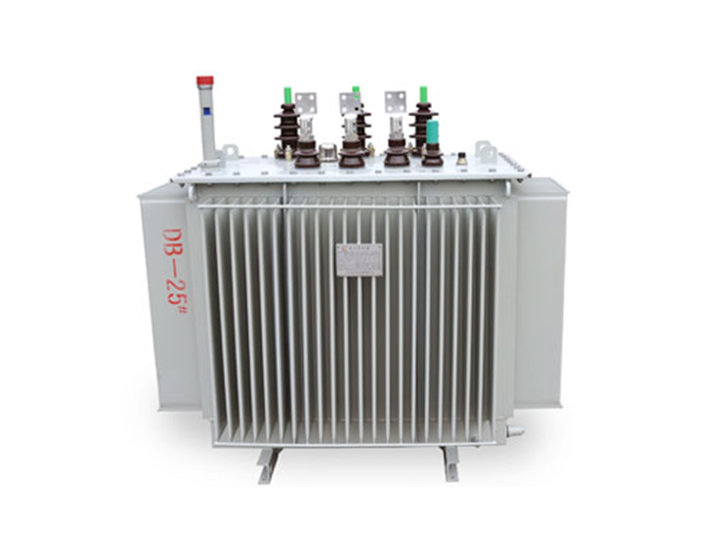
A power transformer relies on electromagnetic induction. Two or more windings are wound around a laminated magnetic core. When alternating current flows through the primary winding, it creates a changing magnetic flux in the core, which induces a voltage in the secondary winding. The ratio of turns between the two windings determines the voltage ratio. Frequency stays the same, and apart from small losses, the power transferred on the secondary side is close to the power drawn on the primary side. Because there are no moving parts, a well-maintained unit can serve for twenty-five to thirty years or more.
Reliable equipment is built and tested against recognized standards such as GB 1094, GB/T 6451, GB 20052 for energy efficiency, and IEC 60076 for international projects. Routine tests normally include winding resistance, transformation ratio, no-load loss and load loss measurement, power-frequency withstand voltage and induced overvoltage tests. When you request a quotation, ask for the manual, inspection report and test certificate together with the offer. A serious manufacturer supplies lifelong quality tracking rather than a single shipping document.
Distribution transformer units serve residential and commercial power supply. A renewable energy transformer supports wind and solar farms where voltage fluctuates and harmonic content is high. Industrial sites rely on a mining transformer or rectifier transformer for heavy, non-linear loads. Complete solutions often combine a compact substation, a European-style or American-style preassembled substation and high low voltage switchgear, delivered as one coordinated package.
Prices move with copper and silicon steel markets, rated capacity, loss grade, cooling type, tap changer and enclosure specification. Buying through layers of traders adds margin without adding quality. Sourcing directly from a China transformer supplier that manufactures in-house typically reduces cost and shortens the communication chain when technical clarifications are needed.
Runsheng Transformer Co., Ltd. produces S22, S20, S11 and S13 oil-immersed transformers, SCB13, SCB14 and SCB18 dry-type transformers, SH15 amorphous alloy transformers, 35KV and below preassembled substation equipment, and custom-designed special transformers. Products comply with national standards and ship with manuals, inspection reports, test certificates and lifelong quality tracking, supported by the company philosophy of people-oriented, integrity-driven operations.
Confirm capacity, voltage ratio, vector group, loss level, cooling and tap changer. Request test certificates and a clear delivery schedule. Compare like-for-like quotations, and keep enough spare capacity for future expansion. Get in touch for a specification review and a factory-direct quotation: phone +86 13406394988, e-mail runsheng@7813transformer.com, WhatsApp 008613508930968.

Runsheng Transformer Co., Ltd. is a professional manufacturer of power transformers, specializing in oil-immersed transformers (S20, S11, S13), SH15 amorphous alloy transformers, S13 series 10KV 3D magnetic path wound-core transformers, D10 single-phase wound-core transformers, as well as mining transformers, rectifier transformers, surge arrestor transformers, load-tap-changing transformers, and custom-engineered special transformers.
WhatsApp & Wechat

No. 6, Intersection of Mount Huangshan Road and Changjiang Road, Liaocheng High tech Industrial Development Zone, Shandong, China


