
When you have coordination challenges, turn to Runsheng Transformer for help
It's all about making things easy, building partnerships, and providing a point of contact.
A medium voltage transformer is a static electrical device that transfers electrical energy between circuits while changing voltage levels inside the medium voltage range, generally from 1 kV up to 35 kV. In practice, it takes the medium voltage delivered by the grid or an internal substation and steps it down to the low voltage used by machines, lighting, motors and control systems, or steps it up for distribution and renewable energy collection.
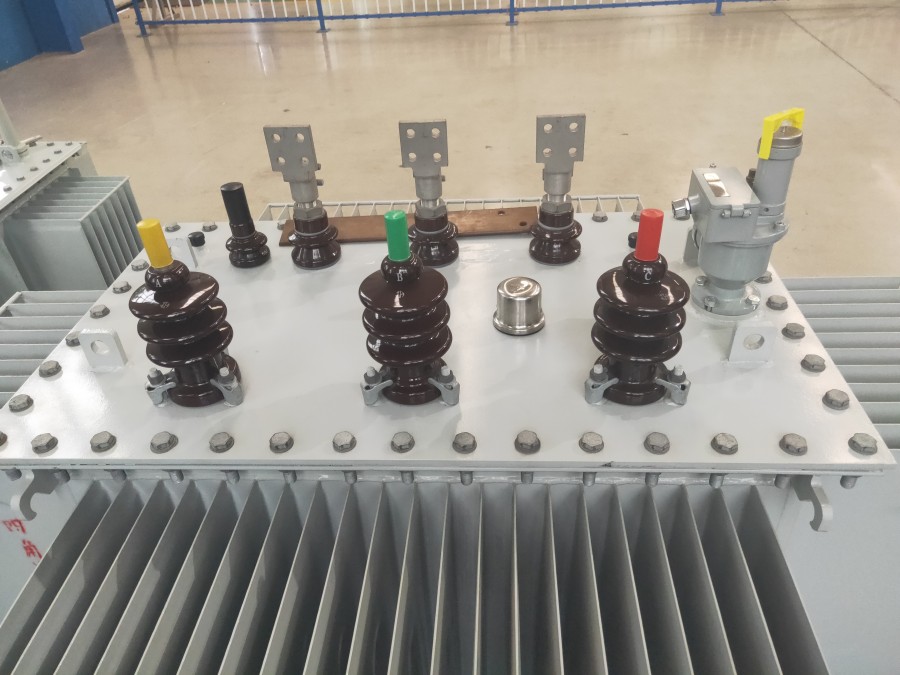
Because almost every industrial plant, commercial building, data centre, mine and solar or wind farm depends on one, the medium voltage transformer sits at the critical junction between the utility network and the equipment that actually does the work. Choosing the wrong one affects efficiency, safety, maintenance cost and compliance for the next twenty years. Choosing the right one at the right price is largely a matter of understanding a few fundamentals and buying from the right source.
Nearly every medium voltage transformer on the market belongs to one of two construction families, and the choice between them usually decides itself once you look at the installation environment.
Price alone is a poor guide. Two quotations for a medium voltage transformer at the same capacity can differ by thirty percent or more because of the parameters underneath. Check these points line by line:
A credible medium voltage transformer is designed and tested against recognised standards such as GB 1094, GB/T 6451 and IEC 60076, with losses conforming to national energy efficiency limits. Documentation matters as much as hardware: a routine test certificate, type test report, nameplate data, installation manual and incoming inspection report should accompany every unit. When a supplier cannot produce these, the price advantage is an illusion.
Applications span nearly every sector that consumes serious power:
The single biggest lever on price is the number of hands the transformer passes through. Buying from a transformer manufacturer removes trading-company margins, gives you direct access to engineering answers, and makes customised ratings, non-standard voltage ratios and special enclosures far easier to arrange. It also means spare parts, technical drawings and warranty support come from the people who built the unit.
As a power transformer manufacturer, Runsheng Transformer Co., Ltd. produces S22, S20, S11 and S13 oil-immersed transformers, SCB13, SCB14 and SCB18 dry-type transformers, SH15 amorphous alloy transformers, three-dimensional wound core transformers, mining and rectifier transformers, plus 35 kV and below preassembled substation equipment. All products follow national standards and ship with manuals, inspection reports and test certificates.
Understanding what a medium voltage transformer does, which family suits your site, and which parameters drive both price and running cost puts you in a strong negotiating position. Combine that knowledge with a factory-direct purchase, verified test documentation and clear after-sales commitments, and you can realistically cut a significant share off the delivered cost without giving up quality.
For technical selection, quotations or customised designs, contact Runsheng Transformer Co., Ltd. — phone: +86 13406394988, e-mail: runsheng@7813transformer.com, WhatsApp: 008613508930968.

Runsheng Transformer Co., Ltd. is a professional manufacturer of power transformers, specializing in oil-immersed transformers (S20, S11, S13), SH15 amorphous alloy transformers, S13 series 10KV 3D magnetic path wound-core transformers, D10 single-phase wound-core transformers, as well as mining transformers, rectifier transformers, surge arrestor transformers, load-tap-changing transformers, and custom-engineered special transformers.
WhatsApp & Wechat

No. 6, Intersection of Mount Huangshan Road and Changjiang Road, Liaocheng High tech Industrial Development Zone, Shandong, China


