
When you have coordination challenges, turn to Runsheng Transformer for help
It's all about making things easy, building partnerships, and providing a point of contact.
A 220kv power transformer sits in the middle layer of the transmission and distribution chain. It takes the 220 kV output of a transmission line or substation busbar and steps it down to 110 kV, 35 kV or 10 kV for regional distribution, or steps generation-level voltage up to 220 kV for long-distance transfer. Because this voltage class handles very large power flows, the unit is engineered around insulation strength, thermal behavior and short-circuit withstand capability rather than around simple capacity ratings. Understanding those three fundamentals is what separates a well-specified purchase from an expensive mistake.
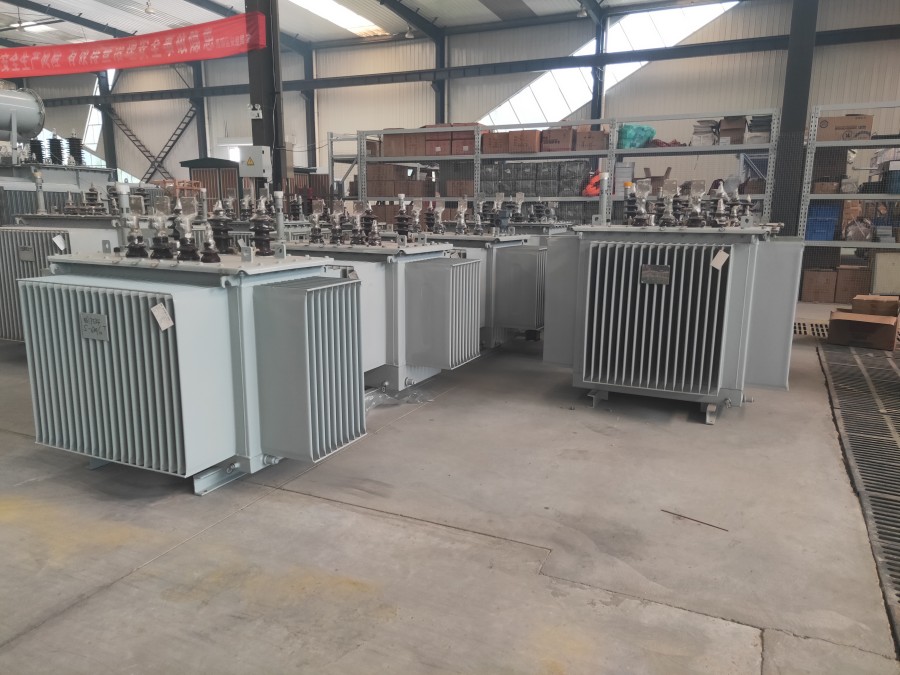
For procurement teams, the important point is that a 220kv power transformer is not a single fixed product. It is a family of designs defined by cooling method, winding arrangement, tap-changing method, impedance and connection group. Two offers can look identical on a quotation sheet and still differ significantly in lifespan, loss cost and maintenance burden.
When you evaluate a 220kv power transformer quotation, request the guaranteed technical parameters in writing. The following items decide the real cost of ownership:
At 220 kV, oil-immersed construction dominates. Oil provides both dielectric strength and heat transfer, and the tank design accommodates the larger clearances needed at this voltage. Dry-type units, including the SCB10, SCB13, SCB14 and SCB18 dry-type transformer families, are widely used indoors and at lower voltage classes where fire safety and maintenance access matter more than the ability to handle extremely high power. Amorphous alloy designs such as the SH15 and SCBH15 amorphous alloy transformer series reduce no-load loss substantially and are a good fit for renewable energy transformer applications where the load cycle is long but frequently unloaded.
The practical rule is straightforward: match construction to voltage class, installation environment and load profile. A 220kv power transformer is normally an oil-immersed, tank-mounted unit with oil preservation, forced or natural cooling, Buchholz protection, pressure relief and a comprehensive monitoring package.
Because these units are rarely identical, most projects require a degree of customization in impedance, tapping scheme, monitoring interfaces and physical dimensions. A competent power transformer manufacturer will confirm the site conditions, altitude, seismic zone, ambient temperature and harmonic environment before freezing the design.
A credible supplier delivers more than hardware. For a 220kv power transformer, the standard test package typically includes routine tests (winding resistance, ratio and connection group, impedance and load loss, no-load loss and current, applied voltage and induced voltage), plus type and special tests where specified, such as lightning impulse, temperature rise and sound level measurement. Ask for the reports before shipment rather than after.
Documentation should include the operation and maintenance manual, factory inspection report, test certificate and a traceable quality record. At Runsheng Transformer Co., Ltd., every order ships with manuals, inspection reports, test certificates and lifelong quality tracking, so the paper trail stays complete through the entire service life of the equipment.
Price differences between quotations usually come from four places: loss level, cooling and tap-changer configuration, material quality, and the number of intermediaries between the factory and your project. Practical ways to control cost include:
For projects that mix voltage classes, sourcing a wider package from one partner reduces coordination risk. Runsheng Transformer Co., Ltd. maintains a comprehensive inventory with assured quality and offers oil-immersed transformers at factory-direct prices, alongside 35 kV and below preassembled substation equipment, European-style and American-style compact substations, and high/low-voltage switchgear, with custom-designed special transformers for unusual duty cycles.
A 220kv power transformer is a long-life asset whose true cost is decided by design choices, not by the headline price alone. Define your parameters precisely, verify the test evidence, and buy from a manufacturer that will still be answering the phone a decade from now. That combination is what protects both your budget and your schedule.
For specifications, availability and factory-direct pricing, contact Runsheng Transformer Co., Ltd.: phone +86 13406394988, e-mail runsheng@7813transformer.com, WhatsApp 008613508930968. Our team can review your project parameters and recommend a suitable transformer solution.

Runsheng Transformer Co., Ltd. is a professional manufacturer of power transformers, specializing in oil-immersed transformers (S20, S11, S13), SH15 amorphous alloy transformers, S13 series 10KV 3D magnetic path wound-core transformers, D10 single-phase wound-core transformers, as well as mining transformers, rectifier transformers, surge arrestor transformers, load-tap-changing transformers, and custom-engineered special transformers.
WhatsApp & Wechat

No. 6, Intersection of Mount Huangshan Road and Changjiang Road, Liaocheng High tech Industrial Development Zone, Shandong, China


